
Finding the right natural gas shop heater depends on shop size, mounting preference, and efficiency. Below is a quick comparison of top options selected for garage and workshop heating performance.
| Product | Brand | BTU | Type |
|---|---|---|---|
| Mr. Heater Big Maxx MHU80NG | Mr. Heater | 80,000 | Unit Heater |
| Reznor UDXC-60 | 1HVAC / Reznor | 60,000 | Indoor Forced Air |
| Modine Hot Dawg HD45 | Modine | 45,000 | Unit/Hot Dawg |
| Mr. Heater MH40NG | Mr. Heater | 40,000 | Infrared |
| Dyna-Glo IR30NMDG-1 | Dyna-Glo | 30,000 | Infrared Wall |
Mr. Heater Big Maxx MHU80NG 80,000 BTU
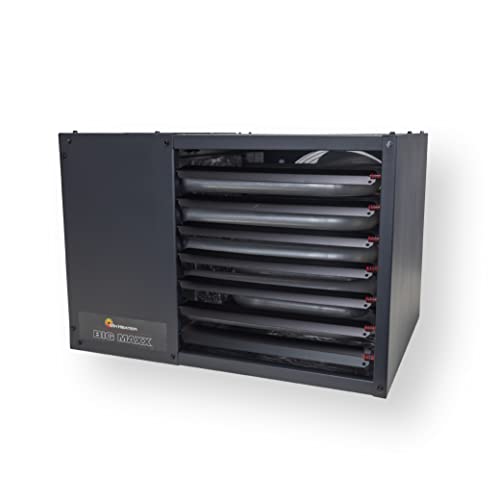
The Mr. Heater Big Maxx MHU80NG is a high-capacity natural gas unit heater rated at 80,000 BTU and designed to cover large workshop spaces up to around 2,000 sq. ft. The package includes two angle brackets and an LP conversion kit; thermostat, hose, and regulator are not included.
Key technical points: unit dimensions are 29.33” L x 15.50” W x 26.37” H, runs on 120 V at 2.3 amps, and requires a minimum 8 ft clearance from floor to base. Venting categories supported include Category 1 vertical and Category 3 horizontal.
Suitable for large garages and high-bay shops where a ceiling- or wall-mounted unit heater with robust output is preferred. Installation considerations include proper venting, adequate clearances, and provision of a compatible thermostat and gas hook-up.
Reznor UDXC-60 60,000 BTU Unit

Call 888-896-7031 for Free Local HVAC Quotes – Compare and Save Today!
The Reznor UDXC-60 is an indoor forced-air natural gas heater built for garages, workshops, warehouses, and similar spaces. It supports two heating output levels with a rated thermal efficiency of 83%.
Performance details: the unit lists multiple outputs including a low-fire and high-fire range (low ~34,860 BTU, high ~49,800 BTU depending on ambient conditions) and is designed for ceiling or hanging mount using threaded nut retainers at four suspension points. Mounting brackets are sold separately.
Typical applications include commercial or residential shops where distributed forced-air heat and quieter operation are desirable. Plan for ceiling suspension points, ducting or airflow clearance, and gas line compatibility during installation.
Modine Hot Dawg HD45 45,000 BTU
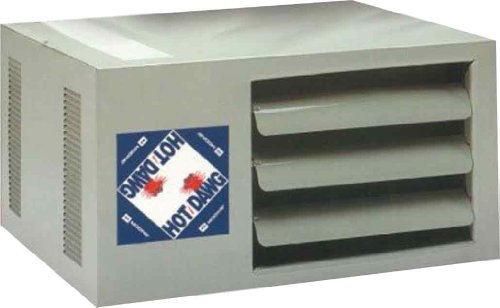
The Modine Hot Dawg HD45 is a compact natural gas heater offering 45,000 BTU capacity and is certified for residential, commercial, and industrial use. It features a low-profile design and neutral finish to blend into workshop ceilings.
Notable attributes include quiet operation and broad certification for indoor applications. The model is well-suited to medium-sized shops where an unobtrusive ceiling-mounted unit providing steady convective heat is required.
Call 888-896-7031 for Free Local HVAC Quotes – Compare and Save Today!
Installation requires typical clearances and a compatible gas supply. The Hot Dawg design emphasizes low noise and reliable performance for environments where occupant comfort and working noise levels matter.
Mr. Heater MH40NG 40,000 BTU Infrared

The Mr. Heater MH40NG is a 40,000 BTU natural gas infrared heater that provides effective infrared radiant heat. It is designed for buildings with 12 to 15 ft ceilings, using infrared technology to warm objects and people rather than heating air only.
Primary features: efficient infrared heat delivery, recommended clearances—Top 36″, Sides & Back 30″, Below 68″. Infrared heaters typically reduce heat loss in partially open or poorly insulated shops because they heat surfaces directly.
Use cases include moderately sized workshops and garages where targeted warmth and reduced convective losses are beneficial. Ensure required clearances and mounting heights for safe operation.
Dyna-Glo IR30NMDG-1 30,000 BTU Wall

The Dyna-Glo IR30NMDG-1 is a natural gas infrared wall heater rated at 30,000 BTU, suitable for targeted heating of up to about 1,000 sq. ft. It uses infrared radiant technology to warm objects and people in the space.
Key features: Natural Gas Ready (no fuel conversion permitted), infrared operation that warms surfaces similar to solar radiation, and coverage suited for small-to-medium shops or specific work areas. Radiant heat can offer faster perceived warmth in focal zones.
Installation is wall-mounted; plan placement to focus radiant energy where occupants work. The unit is effective in spaces where direct object heating is preferred over whole-space air heating.
Buying Guide: Choosing The Right Natural Gas Shop Heater
Selecting the appropriate natural gas heater for a shop depends on several technical and practical factors. Below are key considerations and comparison perspectives to guide a purchase.
1. Heat Output Versus Shop Size
Match BTU output to the volume of your workshop. Larger, poorly insulated spaces need higher BTU ratings (60,000–80,000+ BTU) while small to medium shops can often be served by 30,000–45,000 BTU units. Calculate cubic feet (floor area × ceiling height) and consult manufacturer coverage guidance.
2. Heater Type: Unit, Forced-Air, Infrared, Or Vent-Free
- Unit / Forced-Air Heaters (e.g., Reznor, Mr. Heater Big Maxx): Distribute warm air across the space; good for whole-shop heating and higher ceilings.
- Infrared Heaters (e.g., Mr. Heater MH40NG, Dyna-Glo): Radiant heat warms objects and people directly—effective for targeted zones and spaces with higher ceilings.
- Vent-Free Heaters: Provide high efficiency but require careful consideration of indoor air quality and code compliance; check local regulations.
3. Mounting And Installation
Decide between ceiling-mount, wall-mount, or floor/portable solutions. Ceiling- and wall-mounted units free floor space and are common in garages. Confirm available clearances, suspension points, and required mounting hardware. Some units include brackets; others require separate mounting supplies.
4. Venting, Combustion Air, And Codes
Natural gas heaters may need direct venting, category-specific vent components, or combustion air supply. Review local building codes, permitted venting configurations (vertical vs horizontal), and clearance requirements listed by the manufacturer. Installations typically require a licensed HVAC or gas contractor.
5. Efficiency And Fuel Use
Check thermal efficiency ratings when available (e.g., Reznor’s 83% thermal efficiency). Infrared units often deliver effective perceived heat at lower air temperatures. Efficiency impacts fuel consumption and operating costs but must be balanced with needed BTU output and heating strategy.
6. Noise And Air Movement
Forced-air units provide broader circulation but may produce fan noise. Infrared and some unit heaters operate more quietly. Consider the acceptable noise level for your workspace, and whether airflow distribution or quiet operation is a priority.
7. Safety Features And Clearances
Review required clearances (top, sides, bottom), automatic shutoffs, pilot safety mechanisms, and certified listings for residential or commercial use. Ensure combustible materials are kept outside required clearance zones and follow listed installation instructions.
8. Maintenance And Serviceability
Choose heaters with accessible burners, replaceable parts, and clear service instructions. Periodic inspection of gas connections, burners, and venting is essential. Factor in availability of replacement parts and support from the manufacturer or local service providers.
9. Control Options
Some units are compatible with wall thermostats or include integrated thermostats for temperature regulation. Consider whether remote thermostat control, multiple zone control, or simple manual on/off operation is needed for your shop layout.
10. Application And Use Cases
Compare product strengths by intended application: large open shops and warehouses benefit from high-BTU unit heaters; targeted work bays or shops with high ceilings may prefer infrared radiant heating. Portable or direct-fired units serve construction or temporary sites but may have outdoor-use or ventilation constraints.
Final selection should weigh BTU needs, heater type, venting requirements, mounting constraints, efficiency, and maintenance. Consult product documentation and qualified installers to confirm compliance with local codes and safe installation practices.
Tips for Getting the Best HVAC Prices
- Prioritize Quality Over Cost
The most critical factor in any HVAC project is the quality of the installation. Don’t compromise on contractor expertise just to save money. - Check for Rebates
Always research current rebates and incentives — they can significantly reduce your overall cost. - Compare Multiple Quotes
Request at least three estimates before making your choice. You can click here to get three free quotes from local professionals. These quotes include available rebates and tax credits and automatically exclude unqualified contractors. - Negotiate Smartly
Once you've chosen a contractor, use the proven strategies from our guide — How Homeowners Can Negotiate with HVAC Dealers — to get the best possible final price.