
Finding a true 120-volt oil-filled baseboard heater can be challenging; many baseboard units use electric convection elements while oil-filled radiators are portable. This guide compares relevant 120V baseboard heaters and high-performing oil-filled radiators that serve similar use cases. Below is a quick summary table of the selected models for easy comparison.
| Product | Type | Voltage / Wattage | Key Feature |
|---|---|---|---|
| Cadet F Series 36″ (3F750-1W) | Hardwired Baseboard | 120V / 750W | All-metal construction, requires thermostat |
| KING 4K1210BW K Series 4′ | Hardwired Baseboard | 120V / 1000W | Aluminum ribbon fin element, safety cutout |
| Dayton 60″ Electric Baseboard | Hardwired Baseboard | 120V (length-dependent) | US-made electric heater and accessories |
| Dreo Oil Filled Radiator | Portable Oil-Filled Radiator | 120V / 1500W | Remote control, digital thermostat, safety features |
| Comfort Zone CZ600 (1500W) | Convection Baseboard / Space Heater | 120V / 1500W | Adjustable thermostat, overheat and tip-over protection |
Content Navigation
- Cadet F Series 36″ Electric Baseboard Heater (3F750-1W)
- KING 4K1210BW K Series Baseboard Heater 4′
- Dayton Electric Baseboard Heater 60″ (120V)
- Dreo Oil Filled Radiator Electric Radiant Heater
- Comfort Zone Electric Baseboard Space Heater CZ600
- Buying Guide: Choosing Between Oil-Filled Radiators And 120V Baseboard Heaters
Cadet F Series 36″ Electric Baseboard Heater (3F750-1W)
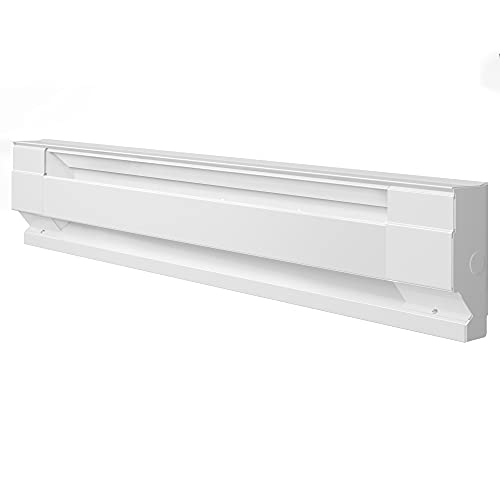
This Cadet F Series model is a hardwired 120-volt baseboard heater rated at 750 watts and designed for wall-mounted convection heating. The unit is constructed from 25-gauge steel with a 20-gauge junction box and grounding, offering durable, all-metal construction with a powder-coated finish.
- Installation: Requires a separate thermostat for temperature control; intended for permanent wiring.
- Durability: All-metal housing and powder coating help resist dents and corrosion.
- Performance: 750W output suitable for small rooms or supplemental heating in a zone-control setup.
- Use Case: Best when integrated into an existing wired heating circuit or paired with a wall thermostat.
KING 4K1210BW K Series Baseboard Heater 4′

The KING 4K1210BW is a 4-foot, 1000-watt, 120-volt baseboard heater intended for hardwiring. It uses an aluminum ribbon fin element for heat distribution and includes a full-length safety cutout to limit overheating.
- Design: Ribbon element promotes even heat transfer across the length of the unit.
- Safety: Full-length cutout provides thermal protection if overheating occurs.
- Installation: Not a plug-in model; requires permanent wiring and proper circuit sizing.
- Application: Suitable for medium-sized rooms where a higher wattage 120V solution is needed.
Dayton Electric Baseboard Heater 60″ (120V)

Call 888-896-7031 for Free Local HVAC Quotes – Compare and Save Today!
The Dayton 60″ baseboard heater is listed under electrician-grade electric heaters and accessories. As a longer 120V unit, it aims to distribute low-profile convection heat along an extended wall length.
- Manufacturer Origin: Listed as manufactured in the United States, which can matter for regional supply and compliance.
- Form Factor: 60-inch length increases the surface area for convective heat transfer.
- Installation: Designed for hardwiring and integration into fixed electrical circuits.
- Intended Use: Longer rooms or spaces where a continuous low-profile heater is preferred.
Dreo Oil Filled Radiator Electric Radiant Heater

The Dreo model is a classic oil-filled radiator operating on standard 120V with 1500W maximum output. It includes a digital thermostat, remote control, timer, and multiple safety features aimed at indoor room heating.
- Heating Method: Radiant and convective heat from oil-filled fins provides steady, long-lasting warmth even after cycling off.
- Controls: Digital thermostat, modes, 24-hour timer, and remote for precise temperature management.
- Safety: Triple overheat protection, tip-over safety, burn-resistant materials, and ETL listing enhance safe operation.
- Use Case: Portable supplemental heating for bedrooms, offices, or living rooms where an oil-filled radiator’s retained heat is preferred.
Comfort Zone Electric Baseboard Space Heater CZ600

The Comfort Zone CZ600 is a 1500W convection-style baseboard/space heater that features an adjustable thermostat, dent-proof end panels, overheat protection, and tip-over switch. Although marketed for room heating, it functions differently than an oil-filled radiator.
- Operation: Convection heating with two heat settings and a manual thermostat for zone control.
- Safety: Overheat protection and tip-over switch reduce fire and burn risks.
- Portability: Designed as a space heater suitable for temporary or supplemental heating rather than permanent baseboard installation.
- Best Fit: Rooms requiring flexible placement and quick warm-up provided by electric convection elements.
Buying Guide: Choosing Between Oil-Filled Radiators And 120V Baseboard Heaters
Below are the key considerations when choosing a heating solution for rooms that might use a 120-volt baseboard or oil-filled unit.
Call 888-896-7031 for Free Local HVAC Quotes – Compare and Save Today!
Heating Method And Comfort
- Oil-Filled Radiators: Provide radiant and convective heat. The oil retains heat and continues to radiate after the element cycles off, producing steady, even warmth and minimal surface turbulence.
- Electric Baseboard (Convection): Rely on convective airflow across a heating element or ribbon fin. They heat faster but can cycle more frequently, leading to noticeable on/off periods.
Installation And Wiring
- Hardwired Baseboards: Require permanent wiring, correct circuit sizing, and often a wall thermostat. Plan for electrician installation and check local code for required clearances.
- Portable Oil Radiators/Plug-In Heaters: Plug into standard outlets (120V) and require no permanent wiring. Ensure outlet and circuit capacity support the wattage to avoid tripping breakers.
Room Size And Wattage
- Estimate required wattage: roughly 10 watts per square foot for average insulation. For example, a 150-square-foot room commonly needs ~1500W under typical conditions.
- Longer baseboard units spread heat across wall lengths, while single radiators concentrate output in one area.
Energy Efficiency And Runtime
- Oil-filled radiators retain heat, potentially allowing less frequent heating element cycling and smoother temperature maintenance.
- Convection baseboards respond quickly to thermostat changes but may run more often to maintain setpoints.
Safety Features
- Look for overheat protection, tip-over switches, and ETL/UL listings. Permanent baseboards should include thermal cutouts and proper junction box grounding.
- Surface temperature and stay-cool bodies reduce burn risk, important in households with children or pets.
Controls And Thermostats
- Wall-mounted thermostats provide centralized control for hardwired baseboards and often better energy management for a whole room or zone.
- Digital thermostats, timers, and remote controls on portable oil-filled heaters increase convenience and allow precise scheduling.
Noise And Comfort Preferences
- Oil-filled radiators run quietly since they lack fans; ideal for bedrooms or offices where noise is a concern.
- Convection baseboards are generally quiet but may produce light airflow sounds as air circulates along the element.
Durability And Maintenance
- All-metal baseboards (powder-coated steel) resist dents and are easy to clean; ribbon elements have fewer exposed coils.
- Oil-filled units are largely maintenance-free; check seals and cords periodically but internal oil is sealed for life in most models.
Comparison Perspectives
- Permanent vs Portable: Choose hardwired baseboards for integrated, wall-mounted heating; choose oil-filled radiators for portable supplemental warmth without rewiring.
- Response vs Persistence: Convection units heat quickly but may cycle; oil-filled radiators heat steadily and retain warmth longer.
- Safety and Codes: Hardwired installations must meet electrical codes and typically require installer knowledge, while plug-in radiators require ensuring outlet and breaker capacity.
When selecting a product, match the unit’s wattage to room size, confirm wiring or outlet capacity for 120V circuits, and prioritize safety certifications and thermostat control that align with your heating strategy.
Tips for Getting the Best HVAC Prices
- Prioritize Quality Over Cost
The most critical factor in any HVAC project is the quality of the installation. Don’t compromise on contractor expertise just to save money. - Check for Rebates
Always research current rebates and incentives — they can significantly reduce your overall cost. - Compare Multiple Quotes
Request at least three estimates before making your choice. You can click here to get three free quotes from local professionals. These quotes include available rebates and tax credits and automatically exclude unqualified contractors. - Negotiate Smartly
Once you've chosen a contractor, use the proven strategies from our guide — How Homeowners Can Negotiate with HVAC Dealers — to get the best possible final price.