
Choosing The Right Overhead Door Heater means balancing installation type, power, safety features, and mounting options. Below is a quick comparison of selected units and related products to help improve heating performance around overhead doors and in attached spaces.
| Product | Type / Mount | Key Feature |
|---|---|---|
| Dr. Infrared Heater DR-966 | Hardwired / Wall Or Ceiling | 3000/6000W Heavy Duty 240V Commercial |
| Dr Infrared Heater DR-238 | Plug-In Infrared / Outdoor Rated | IP55 Rated For Indoor & Outdoor Use |
| Heat Storm HS-1500-PHX-WIFI | Wall Mounted / Wi‑Fi Smart | Wi‑Fi Control, Space-Saving Design |
| Dr Infrared Portable 1500-Watt | Plug-In Portable | Dual Heating System, Tip-Over Protection |
| Pemko Aluminum Door Bottoms 346C52 | Door Threshold / Weather Seal | Aluminum Drip To Reduce Drafts And Moisture |
Content Navigation
- Dr. Infrared Heater DR-966 240-Volt Hardwired Shop Garage Commercial Heater
- Dr Infrared Heater DR-238 Carbon Infrared Outdoor Heater
- Heat Storm HS-1500-PHX-WIFI Infrared Heater, WiFi Wall Mounted
- Dr Infrared Portable Space Heater, 1500-Watt
- Pemko Aluminum Door Bottoms Overhead Rain Top Drip 346C52
- Buying Guide: Choosing An Overhead Door Heater
- 1. Heater Type And Heat Delivery
- 2. Power, Voltage, And Electrical Requirements
- 3. Mounting And Coverage
- 4. Environmental Rating And Durability
- 5. Safety Features And Controls
- 6. Energy Efficiency And Operating Cost Considerations
- 7. Installation And Maintenance
- 8. Complementary Products To Improve Heating Performance
- 9. Match The Heater To Typical Use Patterns
- 10. Safety And Local Codes
Dr. Infrared Heater DR-966 240-Volt Hardwired Shop Garage Commercial Heater

The DR-966 is a 240V hardwired heater designed for heavy-duty garage and shop environments. It offers selectable 3000W or 6000W output, intended for larger spaces where sustained heat is required. The unit supports wall or ceiling mounting and comes with a bracket for flexible installation positions.
Key listed features include UL/CUL listing for safety and commercial use and a design targeted at workshop conditions where higher wattage and hardwired connections are common. Because it is hardwired, professional installation or competent electrical work is recommended to meet local codes and ensure correct circuit sizing.
For overhead door areas, the DR-966 can be positioned to direct heat toward the door opening or workspace. Considerations include ensuring adequate clearance, mounting method, and that your electrical service can support the selected wattage.
Dr Infrared Heater DR-238 Carbon Infrared Outdoor Heater
Call 888-896-7031 for Free Local HVAC Quotes – Compare and Save Today!
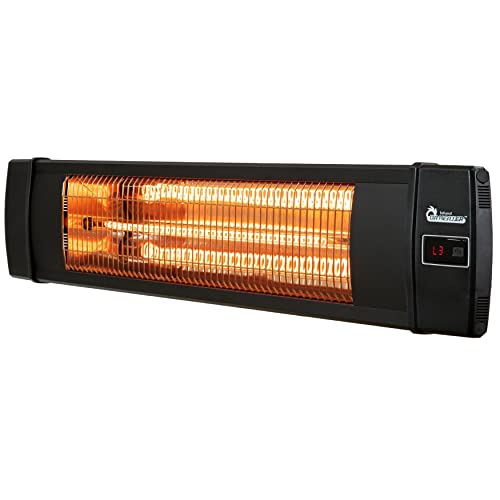
The DR-238 is an infrared-style heater rated IP55 for both indoor and outdoor use, making it suitable for semi-open garages, covered patios, or areas near overhead doors where some exposure may occur. It operates on standard 120V with three power settings (900W, 1200W, 1500W), offering modular heat control.
Infrared heating provides instant, odorless heat that warms objects and people rather than only heating air, which can be useful near overhead openings where conditioned air is quickly lost. The model is plug-and-play with a remote control and can be mounted where it directs radiant heat toward the doorway or workstation.
When using around overhead doors, place the heater where its radiant pattern covers the typical occupied zone. For partially open situations, infrared units can feel more effective than forced-air because they heat surfaces directly.
Heat Storm HS-1500-PHX-WIFI Infrared Heater, WiFi Wall Mounted

The Heat Storm HS-1500 is a wall-mounted infrared heater with Wi‑Fi control, touchscreen thermostat, and a remote. The space-saving design mounts on walls to preserve floor area—helpful in garages crowded with tools or with overhead doors that require floor clearance.
Features include a digital thermostat, tip-over safety (for mounted units this can relate to bracket security), and remote operation via phone for pre-warming spaces before use. Wall mounting allows directing heating toward entryways and work areas without obstruction by floor items.
Call 888-896-7031 for Free Local HVAC Quotes – Compare and Save Today!
For overhead door heating needs, this unit offers convenience controls and targeted radiant output. Ensure mounting height and angle align with the intended coverage area and that Wi‑Fi control is beneficial for preheating before occupancy.
Dr Infrared Portable Space Heater, 1500-Watt
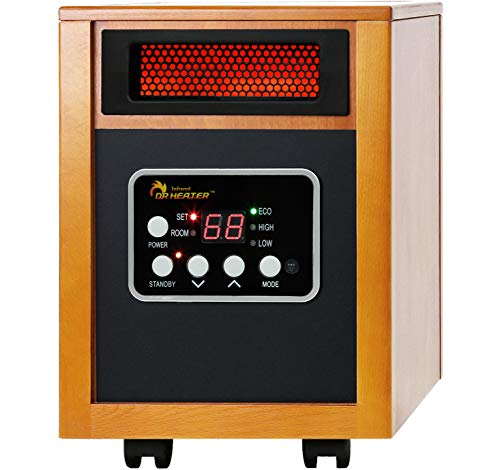
This 1500-watt portable unit uses a dual heating system (infrared quartz tube + PTC) and is designed for large rooms. It includes tip-over and overheat protection and a 12-hour timer, making it a flexible option when a permanent overhead installation isn’t desired.
Portables are useful for temporary supplemental heat near overhead doors during short tasks, or as a localized solution to spot-heat workers standing near the door opening. The unit produces both convective and radiant heat, which can help warm air and surfaces in proximity.
Limitations include portability-related safety clearances and that portable units may struggle to maintain temperature in very large or poorly insulated garage spaces, especially with frequent door openings.
Pemko Aluminum Door Bottoms Overhead Rain Top Drip 346C52

The Pemko 346C52 is an aluminum overhead rain top/drip for door thresholds. While not a heater, this accessory addresses drafts and moisture ingress around doors—factors that significantly affect heating efficiency near overhead doors.
Manufactured in the United States, the unit is a durable hardware item intended to direct water away from door edges and reduce the amount of cold air entering at the bottom of doors. When combined with a heater, proper sealing reduces heat loss and improves overall system performance.
Consider weather-stripping and threshold solutions like this to complement any heating approach for overhead doors. Reducing infiltration often gives larger energy savings than increasing heating output alone.
Buying Guide: Choosing An Overhead Door Heater
This guide covers the key considerations when selecting a heater for overhead door areas such as garages, workshops, and semi-open buildings.
Tips for Getting the Best HVAC Prices
- Prioritize Quality Over Cost
The most critical factor in any HVAC project is the quality of the installation. Don’t compromise on contractor expertise just to save money. - Check for Rebates
Always research current rebates and incentives — they can significantly reduce your overall cost. - Compare Multiple Quotes
Request at least three estimates before making your choice. You can click here to get three free quotes from local professionals. These quotes include available rebates and tax credits and automatically exclude unqualified contractors. - Negotiate Smartly
Once you've chosen a contractor, use the proven strategies from our guide — How Homeowners Can Negotiate with HVAC Dealers — to get the best possible final price.
1. Heater Type And Heat Delivery
- Infrared (Radiant): Heats people and objects directly. Effective for short-term occupancy and spot heating near open doors because it doesn’t rely on heating the entire air volume.
- Forced Air / Convection: Heats air, better when the space is enclosed and insulated. Warmth may be lost quickly with frequent door openings.
- Electric Fan-Assist Or PTC: Provides a mix of radiant and convective heat; useful as a general-purpose unit for garages without heavy insulation.
2. Power, Voltage, And Electrical Requirements
- Confirm voltage (120V vs 240V) and circuit capacity. High-wattage shop heaters often require 240V and dedicated circuits.
- Hardwired commercial units offer higher output but need licensed installation. Plug-in options are simpler but limited by standard outlet amperage.
3. Mounting And Coverage
- Ceiling/Wall Mount units can be positioned to direct heat toward the door opening and reduce obstruction of floor space.
- Portable units can be moved where needed but require safe placement and clearance from flammable materials.
- Estimate coverage area based on manufacturer-rated output and intended use. Infrared models have directional patterns; confirm angle and mounting height.
4. Environmental Rating And Durability
- Choose IP-rated or outdoor-rated units for semi-covered or open garages exposed to moisture or dust.
- For workshops with dust and particulate, select units with sealed housings or that are easy to clean and maintain.
5. Safety Features And Controls
- Look for tip-over, overheat protection, and UL/ETL listings. Hardwired units should be UL/CUL listed for commercial use.
- Programmable thermostats, timers, and remote or Wi‑Fi control help pre-warm spaces and reduce runtime while improving comfort.
6. Energy Efficiency And Operating Cost Considerations
- Infrared heating can feel warmer at lower air temperatures because it warms occupants and surfaces directly. This can save energy when doors open frequently.
- Higher wattage can heat larger spaces faster but draws more current. Balance output with insulation and air leakage reduction measures for best efficiency.
7. Installation And Maintenance
- Hardwired 240V heaters should be installed by a licensed electrician and may need proper support brackets or ceiling reinforcement.
- Periodic cleaning of vents, replacing filters (if applicable), and checking mounts improve performance and safety.
8. Complementary Products To Improve Heating Performance
- Door Seals And Thresholds (like Pemko models) reduce infiltration at the bottom and edges of doors, enhancing overall effectiveness of any heater.
- Awnings Or Overhangs can reduce direct weather exposure to entryways, helping limit heat loss and water ingress for exterior doors adjacent to heated spaces.
9. Match The Heater To Typical Use Patterns
- For short-term use with frequent door openings, consider radiant/infrared or portable spot heating.
- For full-time heating of an insulated garage, a hardwired convection or commercial electric unit with thermostat control is often better.
10. Safety And Local Codes
- Verify local electrical codes for hardwired installations and ensure venting or clearance requirements are met, especially in attached garages where flammables or vehicle fumes may be present.