
Finding the right propane ceiling heater helps keep garages, workshops, and commercial spaces comfortable. Below is a concise comparison of five propane-capable heaters suited for ceiling or high-mount installation and indoor space heating. The list focuses on installation type, BTU output, mounting options, and indoor suitability.
| Product | Type | BTU | Mounting |
|---|---|---|---|
| Mr. Heater Propane Unit Heater 80,000 BTU/Hr. MHU80LP | Unit/Ceiling Mount | 80,000 | Ceiling/angle brackets |
| Mr. Heater Big Maxx MHU80NG (LP Convertible) | Unit Heater (Natural Gas With LP Conversion Kit) | 80,000 | Ceiling/angle brackets |
| Reznor UDXC-60 Propane Garage Heater | Ceiling/Overhead Unit | 60,000 (multi-stage) | Ceiling hang suspension points |
| Mr. Heater MHVFBF20LPT 20,000 BTU Blue Flame | Vent-Free Wall/Ceiling-Adjacent | 20,000 | Wall or high-mount placement |
| Dyna-Glo IR30PMDG-1 30,000 BTU Infrared Vent Free | Vent-Free Wall Heater (LP Ready) | 6,000–30,000 | Wall/High-mount |
Mr. Heater Propane Unit Heater 80,000 BTU

This 80,000 BTU propane unit heater is designed to heat large open spaces, with a stated coverage up to 1,000 square feet. It features a spark ignition with a self-diagnostic control module for reliable startups and troubleshooting indicators. Two included angle brackets simplify ceiling mount installation and positioning.
Key practical points include straightforward mounting hardware and an ignition system that reduces service calls from ignition failures. The unit suits garages, workshops, and similar high-ceiling areas where a forced-air unit heater provides rapid air movement and distributed warmth. For safe operation, follow clearance recommendations and local codes for indoor propane equipment.
Mr. Heater Big Maxx 80,000 BTU Unit Heater
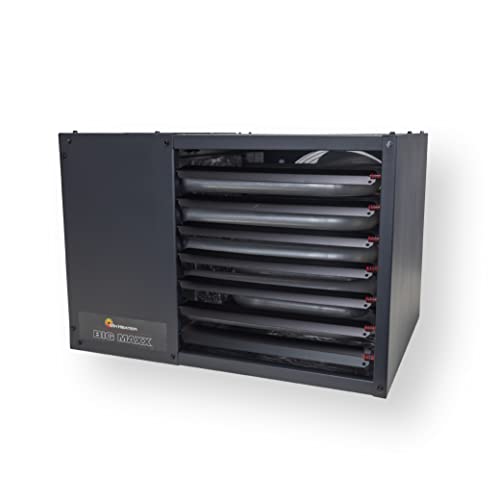
The Mr. Heater Big Maxx unit is specified for 80,000 BTU performance with dimensions suitable for ceiling or high-mounted installation. Although marketed as a natural gas heater, the product listing notes an included Liquid Propane conversion kit, enabling propane use when properly converted by qualified personnel.
Call 888-896-7031 for Free Local HVAC Quotes – Compare and Save Today!
Features include two angle brackets for mounting and a performance spec indicating coverage up to 2,000 sq. ft. (manufacturer-stated). Electrical requirements are modest (120 V), and installation notes include minimum clearance recommendations and compatible venting categories for different venting orientations. Verify local codes for conversion and indoor propane heater use.
Reznor 60,000 BTU Propane Garage Heater UDXC-60

The Reznor UDXC-60 is an indoor propane-fired forced-air unit suited for workshops and warehouses. It provides two heating output levels (noted as low and high fire stages) and a reported 83% thermal efficiency rating. The unit includes suspension points for ceiling mounting, making it adaptable to overhead installations.
Its staged firing offers flexible heat output for variable temperature conditions, which can improve comfort and fuel use in spaces with fluctuating occupancy or intermittent use. Mounting hardware may be sold separately, so plan for suspension brackets and professional gas hook-up. The unit targets indoor, high-mount scenarios rather than outdoor patio use.
Mr. Heater 20,000 BTU Blue Flame Vent Free Heater
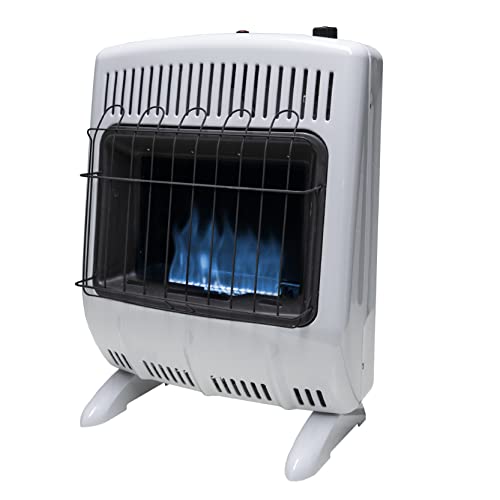
This vent-free blue flame propane heater is intended for wall or high-mount placement in rooms up to about 700 sq. ft. It offers a built-in thermostat and a battery-powered electronic ignition. A factory-standard Oxygen Depletion Sensor (ODS) provides a safety shutoff if oxygen levels drop.
Call 888-896-7031 for Free Local HVAC Quotes – Compare and Save Today!
Vent-free heaters differ from unit ceiling heaters: they release combustion products directly into the room rather than venting outdoors. That can increase delivered heat efficiency for some applications, but it requires attention to indoor air quality, ventilation, and local regulations. Consider room size, occupant activity, and vent-free restrictions when choosing this option.
Dyna-Glo 30,000 BTU Infrared Vent Free Heater

The Dyna-Glo IR30PMDG-1 is a liquid propane-ready infrared vent-free wall heater that radiates heat to objects and people rather than primarily heating air. It offers variable output from 6,000 to 30,000 BTU, making it adaptable to small to mid-size spaces and high-mount placements that act similarly to ceiling heaters when installed high on a wall.
Infrared vent-free units deliver immediate perceived warmth and can be efficient in drafty areas where air-based heat dissipates. As with other vent-free devices, indoor combustion byproducts are present, so review ventilation needs, local code allowances, and recommended clearances for safe operation.
Buying Guide: How To Choose A Propane Ceiling Heater
Selecting the right propane ceiling heater depends on space size, installation type, ventilation, and safety preferences. Below are the primary considerations and comparison perspectives to guide the decision.
1. Heat Output (BTU) And Coverage
- Match BTU To Space Size: Higher BTU models (60,000–80,000) suit large garages and workshops; lower outputs (20,000–30,000) work for smaller rooms or areas that need supplemental heat.
- Ceiling Height And Airflow: High ceilings may require higher output or directional airflow to ensure heat reaches occupancy zones rather than pooling near the ceiling.
2. Mounting Type And Installation
- Ceiling/Overhead Units: Look for included angle brackets or suspension points for secure ceiling mounting. Confirm whether mounting hardware is included or sold separately.
- Wall/High-Mount Devices: Some vent-free wall heaters or infrared units can be mounted high on a wall to act like a ceiling heater. Ensure clearance clearances comply with the manual.
- Professional Gas Hookup: Conversion kits (NG ↔ LP) should be installed by a qualified technician and meet local code requirements.
3. Venting And Combustion Type
- Vent-Free Heaters: Provide high efficiency and instant room heat but release combustion byproducts indoors. They require adequate air exchange and may be restricted in some jurisdictions.
- Direct-Vent Or Vented Units: Exhaust combustion gases outdoors, improving indoor air quality at the cost of more complex venting and installation.
- Forced-Air Unit Heaters: Ceiling-mounted forced-air units distribute warm air and are commonly used in garages and larger open spaces; they typically require clearance and ventilation planning.
4. Safety Features And Certifications
- ODS (Oxygen Depletion Sensor): Important on vent-free units to shut off if oxygen drops below safe levels.
- Self-Diagnostic Ignition Systems: Simplify troubleshooting and reduce downtime for large unit heaters.
- Tip-Over And Overheat Protections: More relevant for portable units but worth noting when comparing safety features.
5. Efficiency And Fuel Consumption
- Infrared Vs Forced-Air: Infrared radiates objects and people directly, often feeling warmer at lower air temperatures. Forced-air heats and circulates room air, useful for larger volumes.
- Staged Or Modulating Output: Multi-stage burners or modulating units adapt output to demand for better fuel economy and comfort control.
6. Indoor Air Quality And Ventilation Needs
- Combustion Byproducts: Vent-free units increase moisture and combustion products in-room; consider dehumidification and additional ventilation in tightly sealed spaces.
- Occupant Sensitivities: If occupants have respiratory concerns, prefer vented or direct-vent designs to minimize indoor combustion emissions.
7. Installation And Local Codes
- Permits And Inspections: Many localities require permits and inspections for gas appliance installation. Check code for vent-free appliance allowances.
- LP Conversion And Qualified Technicians: If using a conversion kit, ensure certified technicians perform conversions and adjust combustion settings per manufacturer guidance.
8. Serviceability And Parts Availability
- Control Modules And Ignition Systems: Units with common control systems and available replacement parts can reduce downtime and service costs.
- Warranty And Support: Factory warranties and accessible customer support help with long-term operation and repairs.
Comparison Perspectives
- Large Workshop/Garage: Prefer ceiling-mounted forced-air unit heaters with 60,000–80,000 BTU and robust ignition systems for wide coverage.
- Medium/Small Garage Or Addition: Consider 20,000–30,000 BTU vent-free or infrared units mounted high on a wall for fast local comfort in a contained space.
- Indoor Air Quality Priority: Choose vented or direct-vent models to keep combustion products outside. These require more installation work but improve indoor air quality.
- Intermittent Use Or Zone Heating: Infrared or small forced-air units with rapid heat-up and thermostat control can target occupied zones to save fuel.
When comparing options, weigh BTU needs, mounting capability, venting type, safety features, and local regulations. Proper installation and adherence to clearance and ventilation instructions are essential for safe, effective heating.
Tips for Getting the Best HVAC Prices
- Prioritize Quality Over Cost
The most critical factor in any HVAC project is the quality of the installation. Don’t compromise on contractor expertise just to save money. - Check for Rebates
Always research current rebates and incentives — they can significantly reduce your overall cost. - Compare Multiple Quotes
Request at least three estimates before making your choice. You can click here to get three free quotes from local professionals. These quotes include available rebates and tax credits and automatically exclude unqualified contractors. - Negotiate Smartly
Once you've chosen a contractor, use the proven strategies from our guide — How Homeowners Can Negotiate with HVAC Dealers — to get the best possible final price.