
Choosing an RV air conditioner with an integrated heater lets you stay comfortable year-round without installing separate units. Below is a quick summary of five rooftop and 12V options selected for heating capability, cooling power, efficiency, and weather resilience.
| Product | Type | Cooling BTU | Heating Capability |
|---|---|---|---|
| TOSOT GO Cool RV Air Conditioner 15000 BTU | Rooftop Non-Ducted | 15,000 BTU | Heat Pump 12,000 BTU, WiFi |
| RecPro RV Air Conditioner 15K | Rooftop Non-Ducted | 15,000 BTU | Heat Pump, Low Amp Draw |
| TURBRO Inverter 13.5K BTU RV Air Conditioner | Rooftop Inverter | 13,500 BTU | Heat Pump, Wide Temp Range |
| 12V RV Air Conditioner 15000 BTU (Udekoo) | 12V Rooftop DC | 15,000 BTU | Heat Pump / Heat Mode, IPX6K |
| FOGATTI RV Air Conditioner InstaCool 15000BTU | Rooftop 115V | 15,000 BTU | 1500W Heat Strip, R32 Refrigerant |
TOSOT GO Cool RV Air Conditioner 15000 BTU

Cooling And Heating Coverage: The unit provides 15,000 BTU cooling and a 12,000 BTU heat pump, suitable for larger RV interiors up to about 600 sq ft depending on insulation and layout.
All-Weather Operation: Designed to work in outdoor temperatures from 23°F to 115°F with indoor control range 61°F–86°F, enabling seasonal flexibility when paired with proper insulation.
Smart Controls: Built-in WiFi and remote control via the Gree+ app enable remote monitoring and schedule-based management of climate settings.
Use Case Considerations: Best for RV owners who need strong cooling plus heat-pump heating for mild to moderate cold. Heat pump performance drops at very low ambient temperatures; supplemental heating may be needed in extreme cold.
Call 888-896-7031 for Free Local HVAC Quotes – Compare and Save Today!
RecPro RV Air Conditioner 15K Quiet All-In-One

Energy Efficiency: Engineered for low amp draw, this 15K model supports simultaneous appliance use and is suitable for off-grid, solar, or generator setups.
Durable, Road-Ready Design: Made from UV-resistant plastic with an aerodynamic profile that reduces drag and fits many RV roof openings.
Noise Performance: Advertised at around 55.4 dB, placing it among quieter rooftop units, which is relevant for sleep quality and campground noise limits.
Use Case Considerations: Appropriate for RV owners prioritizing low electrical load and quiet operation. Heat pump provides integrated heating but verify specifications for winter operation and expected runtime on your power source.
TURBRO Inverter 13.5K BTU RV Air Conditioner

Call 888-896-7031 for Free Local HVAC Quotes – Compare and Save Today!
Inverter Compressor Efficiency: An inverter compressor offers up to 30% greater efficiency than fixed-speed models by modulating speed to match cooling load, reducing start-up amps and noise.
Year-Round Comfort: Provides 13,500 BTU cooling and a heat pump with performance stated down to about 19.4°F ambient, plus fan and dry modes for humidity control.
Low Profile Design: With a slim rooftop thickness (~10″), this unit reduces drag and preserves roof clearance, useful for low-profile RV installations.
Use Case Considerations: Well-suited for owners who want inverter benefits—improved efficiency, quieter start-up, and finer temperature control—especially when running on limited electrical capacity.
12V RV Air Conditioner 15000 BTU Ultra-Quiet (Udekoo)

12V DC Operation: Runs on a 12V DC scroll compressor, enabling operation from vehicle battery systems and solar setups without a conventional inverter, useful for off-grid travel.
Cooling And Heating Capability: Advertised with both cooling and heating modes; designed for fast temperature changes and intended for use with appropriate battery capacity and charging support.
Durability And Weather Protection: Built with ABS housing and an IPX6K protection rating, indicating strong resistance to water ingress for rugged road conditions.
Use Case Considerations: Best for RV or van owners prioritizing DC-powered HVAC to reduce generator runtime. Confirm battery bank and charging capacity to support 15,000 BTU operation and heating load.
FOGATTI InstaCool 15000BTU With Heat Strip
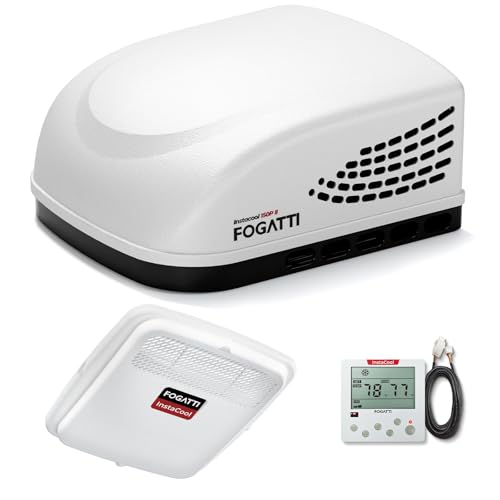
Dual Compressors And Eco Refrigerant: Features dual high-efficiency compressors with R32 refrigerant, supporting fast, consistent cooling across larger interiors.
Heat Strip Inclusion: Includes a 1500W electric heat strip for quick cabin heating and dehumidification, which can be an effective supplement to heat pump systems in colder conditions.
Durability: HIPS shell construction enhances resistance to UV and impact, suitable for exposed rooftop installations.
Use Case Considerations: Suited to RV owners who want a robust cooling system with a supplemental electric heat strip for rapid warmth and moisture control during chilly mornings or damp nights.
Buying Guide: How To Choose An RV Air Conditioner With Heater
The right RV HVAC choice depends on vehicle size, power availability, climate, and travel style. Use the sections below to compare technical factors and real-world trade-offs.
Tips for Getting the Best HVAC Prices
- Prioritize Quality Over Cost
The most critical factor in any HVAC project is the quality of the installation. Don’t compromise on contractor expertise just to save money. - Check for Rebates
Always research current rebates and incentives — they can significantly reduce your overall cost. - Compare Multiple Quotes
Request at least three estimates before making your choice. You can click here to get three free quotes from local professionals. These quotes include available rebates and tax credits and automatically exclude unqualified contractors. - Negotiate Smartly
Once you've chosen a contractor, use the proven strategies from our guide — How Homeowners Can Negotiate with HVAC Dealers — to get the best possible final price.
Cooling And Heating Capacity
- BTU Rating: Match cooling BTU to RV volume and insulation. 13,000–15,000 BTU units suit medium to large RVs, while 10,000–12,000 BTU units fit smaller vans and campers.
- Heat Pump Vs. Heat Strip: Heat pumps are energy-efficient for mild to moderate cold but lose efficiency at low ambient temperatures. Electric heat strips provide immediate heat and dehumidification but draw significant power.
Power Source And Electrical Limits
- 12V DC Units: Run directly from battery systems and solar without an inverter. Ideal for off-grid use, but check battery capacity and alternator/solar charging to avoid depletion.
- 115/120V Rooftop Units: Require shore power, generator, or inverter; typically provide higher BTU output. Confirm RV breaker capacity and soft-start requirements for large compressors.
- Inverter Compressors: Reduce start-up amps and improve steady-state efficiency, beneficial when operating on limited power or generators.
Energy Consumption And Efficiency
- Amp Draw: Lower amp draw reduces the chance of tripping breakers and is advantageous for solar or generator operation. Check rated running and starting amps.
- Seasonal Use: For mixed-season travel choose units with both heat pump and electric heat options or pair with portable supplemental heating for extreme cold.
Noise And Comfort
- Decibel Ratings: Units in the 45–60 dB range reduce interior noise and improve sleep quality. Inverter and multi-speed fans are typically quieter.
- Air Distribution: Non-ducted rooftop units supply conditioned air directly into the cabin. Consider RV layout, ceiling vents, and fan placement for even temperature distribution.
Installation And Roof Considerations
- Low-Profile Design: Thinner units reduce aerodynamic drag and roof protrusion; check clearance for low garages or drive-through facilities.
- Standard Footprint: Most rooftop units fit standard 14″x14″ or 16″x14″ openings, but confirm fit and flashing compatibility. Professional installation often recommended for refrigeration and electrical work.
Durability And Weather Resistance
- Materials: UV-stable ABS, HIPS shells, and zinc-coated components resist UV degradation and road wear.
- Ingress Protection: Higher IP ratings (e.g., IPX6K) indicate better protection from heavy rain and power washing, useful for rugged or wet environments.
Control Features And Smart Integration
- Remote And WiFi Control: Remote control and app connectivity allow pre-conditioning before entry and remote monitoring—useful for winter warm-up or cooling arrival.
- Modes And Sensors: Look for programmable thermostats, timers, dehumidify/dry modes, and fan-only settings for flexibility.
Maintenance And Serviceability
- Filter Access: Easy-access filters simplify routine cleaning and improve efficiency.
- Service Parts: Select models with widely available replacement parts and clear service documentation for compressor/refrigerant work.
Comparison Perspectives
- Power-Limited Travel: Choose low amp draw or inverter compressors (RecPro, TURBRO) or 12V DC units if relying on batteries/solar (Udekoo).
- Cold-Weather Camping: Prefer units with heat pumps rated for lower ambient temps plus a heat strip for rapid heating and dehumidification (FOGATTI, TOSOT).
- Quiet, Comfortable Interiors: Look for low dB ratings and inverter technology to reduce noise and improve steady operation (RecPro, TURBRO).
- Smart Convenience: WiFi and app control enable on-the-go adjustments and monitoring (TOSOT, TURBRO).
Final Selection Checklist
- Measure interior volume and insulation to estimate required BTU.
- Verify power availability: shore, generator, inverter, battery bank, and soft-start needs.
- Decide between heat pump efficiency and electric heat strip rapid warmth depending on climate.
- Confirm roof opening, unit footprint, and clearance for installation.
- Compare noise, warranty, and availability of service parts.