
Suspended unit heaters deliver overhead warmth for large, open spaces like garages, warehouses, and workshops. Below is a concise comparison of top suspended and hanging unit heaters suited for commercial and residential utility spaces. Each entry links to the Amazon product page and highlights primary specs and features to help match the right heater to your application.
| Product | Type / Key Feature | Ideal Use |
|---|---|---|
| TPI Horizontal/Vertical Discharge Fan Forced Suspended Unit Heater | Electric, 5000W, Steel Housing | Small commercial/utility spaces requiring durable fan-forced heat |
| Mr. Heater Big Maxx MHU80NG Natural Gas Unit Heater | Natural Gas, 80,000 BTU, Venting Options | Large garages, workshops, small warehouses |
| Mr. Heater Big Maxx MHU50NG Natural Gas Unit Heater | Natural Gas, 50,000 BTU, Powered Exhaust | Medium garages and workshop spaces |
| ALECOIL 100,000 BTU Hydronic Hot Water Hanging Unit Heater | Hydronic Water-To-Air, Fan, Temp Control Switch | Buildings with hot-water boilers or outdoor wood furnaces |
| Dura Heat EWH5510 Electric Forced Air Heater | Electric Forced Air, 5,000W, Remote & Thermostat | Garages and workshops needing hard-wired electric heat |
Content Navigation
- TPI Horizontal/Vertical Discharge Fan Forced Suspended Unit Heater
- Mr. Heater Big Maxx MHU80NG Natural Gas Unit Heater
- Mr. Heater Big Maxx MHU50NG Natural Gas Unit Heater
- ALECOIL 100,000 BTU Hydronic Hot Water Hanging Unit Heater
- Dura Heat EWH5510 Electric Forced Air Garage Heater
- Buying Guide For Suspended Unit Heaters
- 1. Heat Source And Fuel Type
- 2. Output Capacity And Coverage
- 3. Mounting, Discharge Direction, And Airflow
- 4. Venting And Combustion Safety
- 5. Controls, Thermostat, And Automation
- 6. Noise, Fan Type, And Air Movement
- 7. Durability, Materials, And Maintenance
- 8. Installation Requirements And Local Codes
- 9. Efficiency And Operating Cost Considerations
- 10. Safety Features
TPI Horizontal/Vertical Discharge Fan Forced Suspended Unit Heater

Type: Electric fan-forced suspended heater. Power: 5000W at 277V single-phase. The unit supports both horizontal and vertical discharge to suit mounting orientation and airflow needs.
This heater uses a steel housing constructed for durability in commercial and industrial settings. The fan-forced design offers rapid air movement and even heat distribution below the suspended unit. Installation requires appropriate electrical service and mounting hardware rated for suspended loads.
Choose this model when you need reliable electric heat with flexibility in discharge direction and a robust enclosure for harsher environments. Consider clearances, circuit capacity, and whether 277V single-phase is compatible with your facility electrical system before purchase.
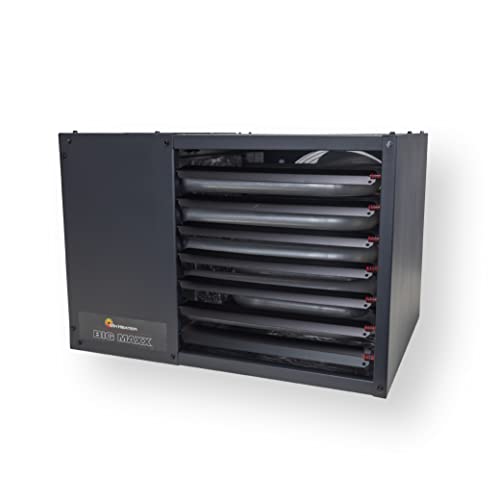
Mr. Heater Big Maxx MHU80NG Natural Gas Unit Heater
Call 888-896-7031 for Free Local HVAC Quotes – Compare and Save Today!
Type: Natural gas suspended unit heater. Output: 80,000 BTU, designed to cover up to sizable open areas such as large garages and small warehouses. Supports category 1 vertical or category 3 horizontal venting.
The unit ships with angle brackets and a liquid propane conversion kit (thermostat, hose & regulator not included). It features external access to thermostat and gas connections for servicing. Note the required minimum clearance from floor to base and the venting category when planning installation.
Select this heater for solutions that require high BTU output and the convenience of natural gas. Ensure proper venting and gas supply infrastructure, and adhere to local codes for gas-fired suspended heaters.
Mr. Heater Big Maxx MHU50NG Natural Gas Unit Heater
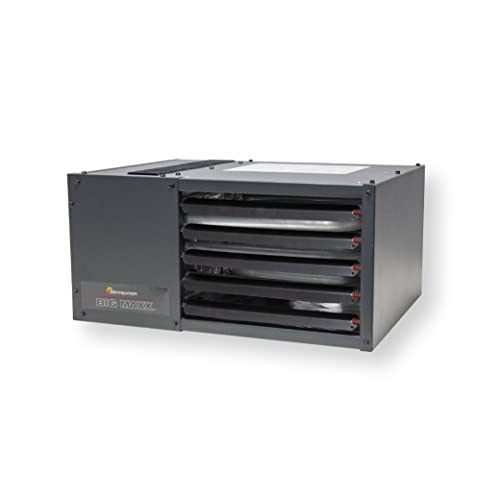
Type: Natural gas suspended unit heater. Output: 50,000 BTU, suitable for medium-sized garages and workshops up to the specified coverage area. Uses powered exhaust to enable vertical or horizontal venting options.
The design includes outside access to thermostat, A/C terminals, and gas connection to facilitate installation and service. Powered exhaust venting provides flexibility in installation locations and duct runs compared to natural draft units.
Call 888-896-7031 for Free Local HVAC Quotes – Compare and Save Today!
Pick this model when moderate BTU coverage and venting flexibility are priorities. Confirm gas type, venting plan, and electrical needs for the powered exhaust before installing.
ALECOIL 100,000 BTU Hydronic Hot Water Hanging Unit Heater
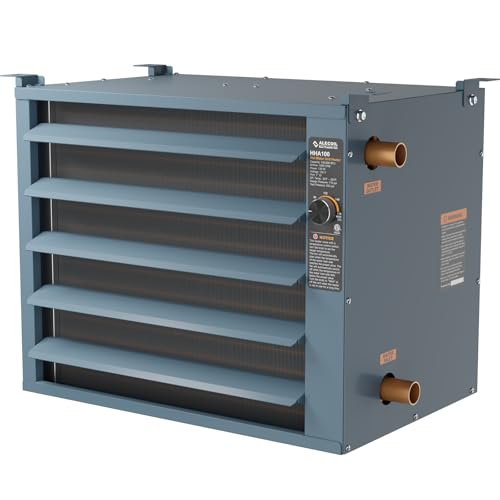
Type: Hydronic water-to-air suspended unit heater. Output: 100,000 BTU with temperature control switch to start/stop the fan based on inlet water temperature.
The unit connects to a building hot water source such as an outdoor wood boiler or hydronic system. It uses a centrifugal blower for quieter operation, higher static pressure, and reduced maintenance. Adjustable louvers direct airflow where needed.
This heater is intended for buildings with an existing hot-water heat loop. The built-in temperature control switch automates fan operation to improve energy efficiency. Evaluate hydronic piping, pump capacity, and heat-source compatibility during selection.
Dura Heat EWH5510 Electric Forced Air Garage Heater

Type: Hard-wired electric forced-air suspended heater. Power: 5,000W (17,060 BTU) on 240V / 30A. Includes remote control and adjustable digital thermostat with LED display.
The heater is designed for garage spaces up to the stated coverage and requires professional hard-wiring. The remote and thermostat enable convenient temperature control; the display can be set in a wide temperature range. A power indicator confirms correct installation and power status.
Choose this unit when electric hard-wired heat is preferred over gas or hydronic systems. Confirm electrical circuit capacity, breaker sizing, and professional installation requirements before purchase.
Buying Guide For Suspended Unit Heaters
Choosing the right suspended unit heater requires assessing the space, heat source availability, installation constraints, and safety considerations. Below are the key purchase factors and comparative perspectives to guide selection.
1. Heat Source And Fuel Type
- Electric: Clean installation with no venting. Requires adequate circuit capacity and professional hard-wiring for higher wattage units.
- Natural Gas / Propane: High BTU output for large spaces. Requires gas supply, proper venting, and adherence to local gas codes.
- Hydronic (Hot Water): Integrates with boiler or outdoor wood furnace systems. Efficient when hot-water infrastructure exists but requires piping and pump capacity.
2. Output Capacity And Coverage
- Match BTU or wattage to space volume, insulation level, and intended temperature rise. Larger open areas or high ceilings typically require higher BTU or multiple units.
- Consider occupancy and heat loss through doors and vents; workshops with frequent door openings need more robust output.
3. Mounting, Discharge Direction, And Airflow
- Horizontal vs Vertical Discharge: Choose units that allow required discharge orientation for your ceiling height and layout.
- Adjustable Louvers / Directional Flow: Useful for directing warm air to specific zones and improving comfort.
- Verify suspension points, hanger capacity, and structural supports in the ceiling or rafters.
4. Venting And Combustion Safety
- Gas-fired suspended heaters require proper venting category selection and clearances. Confirm minimum distances to combustibles and floor level where specified.
- Powered exhaust models provide greater installation flexibility but require electrical connections for the exhaust fan.
5. Controls, Thermostat, And Automation
- Onboard thermostats, remote controls, and digital displays simplify temperature management. Choose units with accessible controls for servicing.
- Integration with building control systems may be necessary for larger commercial installations.
6. Noise, Fan Type, And Air Movement
- Centrifugal blowers and well-designed fan units produce lower noise levels and better static pressure for ducted or targeted airflow.
- Fan-forced units heat faster than convective-only designs, but consider noise in occupied spaces.
7. Durability, Materials, And Maintenance
- Steel housings and industrial-grade components improve longevity in harsh environments.
- Easy access to electrical and gas connections reduces service downtime. Check availability of replacement parts and service manuals.
8. Installation Requirements And Local Codes
- Confirm electrical voltage, gas category, venting requirements, and building codes prior to purchase. Professional installation is recommended for gas and hard-wired electric models.
- Clearance requirements, combustion air needs, and seismic or structural considerations should be planned in advance.
9. Efficiency And Operating Cost Considerations
- Compare delivered heat per energy unit (BTU per therm or watt). Fuel availability and local energy rates significantly affect operating cost.
- Hydronic systems can be efficient when integrated with renewable or low-cost heat sources like outdoor wood boilers.
10. Safety Features
- Look for thermal safeguards, tip-over or overheat cutoffs (where applicable), and compliance with relevant safety standards.
- For gas heaters, verify shutdown features in the event of flame failure or pressure irregularities.
When comparing models, weigh installation complexity against long-term operating costs and required heat output. Choose a unit type that aligns with your facility’s utilities, venting options, and maintenance capacity to ensure safe and reliable suspended heating performance.
Tips for Getting the Best HVAC Prices
- Prioritize Quality Over Cost
The most critical factor in any HVAC project is the quality of the installation. Don’t compromise on contractor expertise just to save money. - Check for Rebates
Always research current rebates and incentives — they can significantly reduce your overall cost. - Compare Multiple Quotes
Request at least three estimates before making your choice. You can click here to get three free quotes from local professionals. These quotes include available rebates and tax credits and automatically exclude unqualified contractors. - Negotiate Smartly
Once you've chosen a contractor, use the proven strategies from our guide — How Homeowners Can Negotiate with HVAC Dealers — to get the best possible final price.