
Choosing the right thyristor heater controller (SCR/triac-based voltage regulator) matters for reliable temperature control, motor speed, and resistive heating applications. The table below summarizes five relevant Amazon products selected for heater-control use cases: high-power SCR modules, motor speed controllers adapted for heating elements, and a heavy-duty screw-type SCR for custom controllers.
| Product | Brand | Key Feature |
|---|---|---|
| AC 110V 230V 10000W Voltage Regulator | Dpofirs | Accurate regulation, RC absorption, upgraded fan |
| AC SCR Voltage Regulator Dimmer 10000W | LiebeWH | 75A copper binding posts, wide AC range, RC circuit |
| AC 110V 10000W SCR Electronic Voltage Regulator | Estink | Accurate control, RC absorption, intelligent fan |
| Electronic Voltage Regulator 10000W PWM Controller | Yosoo Health Gear | Aluminum shell, intelligent fan, unique circuit |
| KP 100A 1600V Screw Type Thyristor | Hyuduo | High voltage/welding-grade SCR for custom builds |
AC 110V 230V 10000W Voltage Regulator, Electronic Thyristor Voltage Regulator
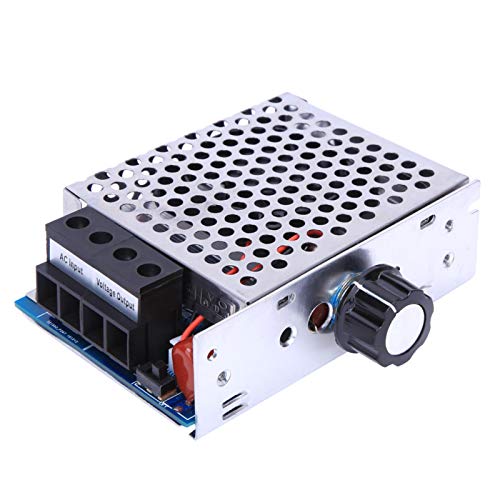
Designed For High-Power Resistive Loads: This unit advertises a unique control circuit that aims to regulate control voltage without hysteresis, allowing adjustments from 10V after startup up to near input voltage. The product includes an RC absorption circuit on the thyristor to mitigate transient spikes and reduce EMI risk. Heat management is addressed by an upgraded fan with switch-controlled operation, intended to improve dissipation and extend module life. Suitable use cases listed include electric furnaces, water heaters, and motor speed control where continuous phase angle control is required. Wiring and thermal mounting should follow manufacturer guidance for safe operation.
AC SCR Voltage Regulator Dimmer 10000W Super High Power

High-Current Terminals And Broad Compatibility: This SCR voltage dimmer features full copper 75A binding posts for robust connections and lists AC 110–230V operation. The listing repeats the non-hysteresis control claim and the RC absorption addition to the thyristor. Applications noted include electric furnaces, water heaters, lamps, and large motors. The presence of heavy-duty terminals suggests it’s intended for higher current installations, but proper heat sinking and enclosure ventilation remain essential for continuous heater loads.
AC 110V 10000W SCR Electronic Voltage Regulator
Call 888-896-7031 for Free Local HVAC Quotes – Compare and Save Today!
Integrated Thermal Management And Spike Protection: This module highlights a smart temperature management system with an upgraded fan that operates via a switch for better heat dissipation. Like the other regulators, it incorporates an RC absorption circuit on the thyristor to reduce electrical interference. The product emphasizes accurate phase-angle control from low-voltage startup points and is positioned for heavy loads where sustained thermal control is necessary. As with all SCR controllers, matching the load type (resistive vs inductive) to the regulator specifications is important to avoid misoperation.
Electronic Voltage Regulator, Super High Power PWM Controller 10000W

Enclosure And Cooling Emphasized: This controller includes a premium aluminum shell for mechanical protection and thermal conduction. It also features an upgraded fan with intelligent control and promotes a unique circuit without hysteresis for consistent control output. Use cases listed include motor speed and certain HVAC or hydroponics applications where variable power is required. The metal housing and fan imply attention to continuous-duty use, but installers should verify insulation, mounting, and airflow requirements for heater applications.
KP 100A 1600V Screw Type Thyristor SCR Silicon Controlled Rectifier

Discrete SCR For Custom Heater Controllers: This screw-type SCR is specified for high-voltage, heavy-duty applications with a 1600V reverse peak capability and low trigger current. The threaded mounting and form factor indicate it’s intended for bolted heat-sink installations in welding machines, chargers, and custom power control circuits. For users building a dedicated heater controller, this SCR can be integrated into a phase-control board, provided proper gate drive, snubber/RC network, and thermal design are applied. Attention to surge current ratings and safe isolation is required when using discrete thyristors.
Buying Guide: How To Choose A Thyristor Heater Controller
Selecting the right controller requires matching electrical, thermal, and operational parameters to your heating application. Below are the primary factors to assess.
Call 888-896-7031 for Free Local HVAC Quotes – Compare and Save Today!
Load Type And Power Rating
- Resistive vs Inductive: Heater elements are resistive; many SCR/triac regulators are optimized for resistive loads. For inductive loads (motors), ensure the controller supports inductive phase control.
- Continuous Current Rating: Match the controller’s continuous current and RMS ratings to the heater’s draw, and include margin for startup or transient conditions.
- Voltage Range: Confirm the controller supports your supply voltage (110V, 120V, 230V, etc.).
Thermal Management And Mounting
- Heat Sinking: Thyristors generate significant heat under continuous duty. Choose modules with adequate heat sinks or prepare to mount discrete SCRs to a rated heatsink.
- Active Cooling: Fan-cooled modules with thermostatic or switch control can prolong life, but ensure fan airflow is not obstructed in an enclosure.
- Enclosure And IP Rating: For dusty or humid environments, select enclosures or add protective housings; openings around fans can allow contaminants to reach electronics.
Protection Features
- RC Snubber/Absorption Circuits: Snubbers reduce voltage spikes and EMI from switching; they are especially important when switching inductive components or long cable runs.
- Overcurrent And Thermal Protection: Look for built-in fusing recommendations, thermal cutouts, or temperature sensors for automatic shutdown.
- EMI And Filtering: Phase-angle control produces harmonics; filters or line chokes may be required to comply with local electrical standards.
Control Precision And Operating Behavior
- Hysteresis And Start Behavior: Controllers that claim no hysteresis aim to provide smoother startup from low conduction angles, which matters for low-power modulation of heaters.
- Phase-Angle Versus Burst Firing: Phase-angle control offers fine modulation but generates more EMI; burst (zero-cross) control reduces EMI and is often preferred for larger heaters when only average power control is needed.
- Control Interface: Determine whether you need manual potentiometer control, remote voltage control, or integration with temperature controllers/SSR driver circuits.
Durability, Mounting, And Connection Quality
- Terminal Type: Heavy-duty copper binding posts or screw terminals provide reliable connections for high current; inspect torque ratings and cable lug compatibility.
- Mechanical Strength: Aluminum shells and sturdy chassis help when mounting in equipment racks or industrial cabinets.
- Component Quality: For custom builds, choose SCRs with known surge ratings and documented IGT/ITSM specs for reliable gate drive design.
Compatibility With Temperature Control Systems
- Integration With Thermostats/Controllers: If you require closed-loop temperature control, confirm the thyristor module can accept a control signal from a PID controller or thermostat (often via a driver circuit or direct manual control).
- Safety Interlocks: Use overtemp sensors, fuses, and emergency stop circuitry to prevent runaway heating.
Installation And Compliance
- Wiring Practices: Use appropriately sized conductors, proper strain relief, and secure grounding to meet electrical codes.
- Certifications: Check UL/CE listings or manufacturer documentation if compliance with local standards is required for your installation.
- Professional Installation: For high-power or permanent installations, consider licensed electricians or qualified technicians to verify safe wiring and compliance.
Comparison Perspectives
- Prebuilt Modules Versus Discrete SCRs: Prebuilt regulators simplify installation and include cooling and terminals, but may offer less customization. Discrete SCRs let you build optimized controllers with specific snubbers, gate drivers, and heatsinks for specialized needs.
- Phase-Angle Precision Versus EMI Considerations: If electromagnetic interference is a concern (sensitive electronics nearby), opt for burst-firing strategies or controllers that incorporate EMI mitigation.
- Short-Term Load Pulsing Versus Continuous Duty: Some modules handle short bursts better than continuous full-load operation; ensure thermal ratings match your duty cycle.
Final Selection Tips: Prioritize continuous current rating, thermal management, and protection features for heater control. If building a custom controller, choose SCR devices with documented surge and gate specs and design a robust snubber and heatsink system. For plug-and-play use, prefer preassembled regulators with proper terminals, shrouded enclosures, and active cooling matched to expected load and ambient conditions.
Tips for Getting the Best HVAC Prices
- Prioritize Quality Over Cost
The most critical factor in any HVAC project is the quality of the installation. Don’t compromise on contractor expertise just to save money. - Check for Rebates
Always research current rebates and incentives — they can significantly reduce your overall cost. - Compare Multiple Quotes
Request at least three estimates before making your choice. You can click here to get three free quotes from local professionals. These quotes include available rebates and tax credits and automatically exclude unqualified contractors. - Negotiate Smartly
Once you've chosen a contractor, use the proven strategies from our guide — How Homeowners Can Negotiate with HVAC Dealers — to get the best possible final price.