
Choosing the right electric heating solution for a trailer or RV depends on space, power availability, and whether you need air heating or hot water on demand. Below is a quick comparison table of five products selected from Amazon that suit different trailer heating needs, followed by detailed product sections and a buying guide.
| Product | Type | Power/Capacity | Best For |
|---|---|---|---|
| Dreo Space Heater | Portable Electric Space Heater (PTC) | 1500W | Small cabins, trailers, RV interior heat |
| Comfort Zone Ceiling Heater | Hard-Wired Ceiling-Mount Electric Heater | 5000W, 240V | Large trailers, workshops, garages |
| ECOTINYMACH Tankless | Compact Tankless Electric Water Heater | 3000W | Point-of-use hot water for sink/shower |
| BISELONG 2.5 Gal Tank | Under-Sink Storage Tank Water Heater | 1440–1500W, 2.5 gal | Small sinks, RV galley hot water |
| FIPEUN Compact Tank | Small Compact Electric Storage Tank | 110/120V, 2.5–3.0 gal | Point-of-use trailer installations |
Content Navigation
- Dreo Portable 1500W Space Heater
- Comfort Zone Ceiling-Mount Heater 5000W
- ECOTINYMACH 3000W Tankless Water Heater
- BISELONG 2.5 Gallon Under-Sink Tank
- FIPEUN Compact 2.5–3.0 Gallon Tank
- Buying Guide For Electric Trailer Heaters
- 1. Power Availability And Electrical Capacity
- 2. Type Of Heating Needed
- 3. Size And Space Constraints
- 4. Safety Features
- 5. Installation Requirements
- 6. Heating Performance And Recovery
- 7. Energy Efficiency And Operating Cost
- 8. Durability And Materials
- 9. Noise And Airflow
- 10. Regulatory And Safety Compliance
- Comparison Perspectives
Dreo Portable 1500W Space Heater

Type: Portable PTC Ceramic Space Heater. Power: 1500W. Design focuses on fast warm-up and controlled temperature settings.
Features listed include an advanced PTC heating element with a heat funnel design to increase warm air reach and circulation. The unit offers multiple heat modes, a digital display, a 12-hour timer, remote control, and a thermostat with 1°F increments from 41–95°F. Safety features include tilt detection, overheat protection, V0 flame retardant materials, and an ETL-certified safety plug.
For trailer use, the heater provides instant, localized heat and is sized for compact interiors. It requires a compatible 120V circuit and is portable for repositioning. The thermostat and timer support energy-conscious operation, while the compact footprint helps when floor or countertop space is limited.
Comfort Zone Ceiling-Mount Heater 5000W

Call 888-896-7031 for Free Local HVAC Quotes – Compare and Save Today!
Type: Hard-wired, fan-forced ceiling heater. Power: 5000W at 240V. Targeted for larger enclosed areas and overhead installation.
Key features include a ceiling-mount design that preserves floor space, heavy-gauge steel construction for durability, louvers and an adjustable mounting angle for directed airflow, and an overheat thermal cut-out switch. The unit is ETL compliant and built for workshops, garages, or large trailer bays that can support 240V wiring and hard-wired installation.
In a trailer or large tow vehicle, this heater is appropriate where permanent installation and higher wattage are available. The fan-forced design distributes heat more evenly than radiant models. Installation requires qualified electrical work and appropriate circuit capacity to handle the 5,000W load safely.
ECOTINYMACH 3000W Tankless Water Heater

Type: Compact tankless point-of-use water heater. Power: 3000W. Designed for quick hot water without a storage tank.
Features emphasize a compact footprint for tight spaces and easy installation. The unit supports switching between Fahrenheit and Celsius readouts. Tankless designs provide hot water on demand and avoid standby heat losses associated with storage tanks.
Call 888-896-7031 for Free Local HVAC Quotes – Compare and Save Today!
For trailer applications, the ECOTINYMACH is useful where continuous hot water delivery at a sink or shower is needed and where electrical supply can support a 3000W draw. Installation should match the unit’s electrical and flow requirements. The compact size helps under-sink mounting or closet placement in small RVs and trailers.
BISELONG 2.5 Gallon Under-Sink Tank
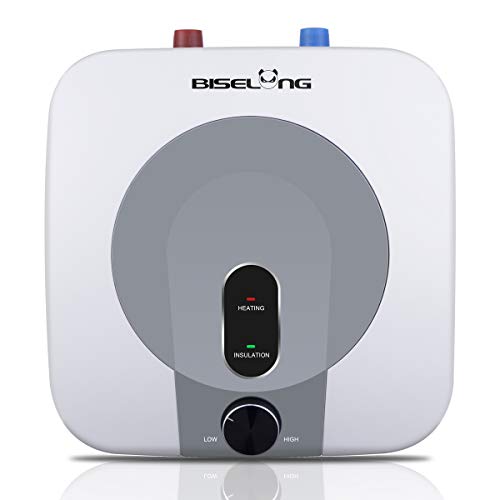
Type: Compact under-sink storage water heater. Power: 1440–1500W, 2.5 gallon. Built for quick recovery and small point-of-use hot water needs.
Listed features include a 304 stainless steel tank, an L-shaped 1500W heating element that increases heat exchange area for faster recovery, a smart inverter to maintain temperature and reduce scale buildup, and thermal efficiency claimed at 99%. The unit can heat to desired temperatures in roughly 8–15 minutes for servicing two sinks simultaneously.
BISELONG’s compact square design is intended for cabinets and under-sink mounting in trailers or RVs where space is limited. It offers storage-based instant availability of a small volume of hot water and lower instantaneous electrical draw than some larger tankless units. Ensure correct circuit capacity and follow the fill-before-power safety guidance common to small tank heaters.
FIPEUN Compact 2.5–3.0 Gallon Tank

Type: Small under-sink/point-of-use storage heater. Power: 110/120V, 2.5–3.0 gallon. Designed for trailer galley or bar sink installations.
Product features highlight a stainless-steel inner tank to resist rust, CFC-free foam insulation to maintain temperature for up to 10 hours, built-in leakage protection and anti-scald settings, and recommendations to fill the tank before powering to avoid damage. It is positioned for locations far from main hot water sources.
FIPEUN units are suitable for trailers where small, reliable hot water supplies are needed without the complexity of high-wattage tankless systems. They operate on standard 120V circuits and provide localized hot water with moderate recovery times. Observe installation instructions to protect the element and ensure safe operation.
Buying Guide For Electric Trailer Heaters
Choosing the right electric heater or water heater for a trailer or RV requires comparing power, installation, space, and safety. Below are the key factors to evaluate before purchase.
1. Power Availability And Electrical Capacity
Check the trailer’s electrical system. Portable space heaters commonly require 120V and up to 1500W. Tankless water heaters and high-output ceiling heaters may require 240V or 3000W+. Confirm available circuits, breaker capacity, and whether shore power or onboard inverter can supply continuous loads.
2. Type Of Heating Needed
- Air heating — Portable PTC ceramic heaters or ceiling-mounted fan-forced units heat cabin air. Choose portable models for flexibility, ceiling units for permanent higher-output needs.
- Water heating — Point-of-use tankless units offer on-demand hot water but may require higher wattage. Small storage tanks (2.5–3.0 gal) provide immediate hot water for sinks with lower peak power.
3. Size And Space Constraints
Measure mounting locations and clearances. Under-sink tanks and compact tankless units are designed for tight spaces. Ceiling-mounted heaters require overhead clearance and proper structural mounting. Portables should fit where they won’t obstruct walking paths or airflow.
4. Safety Features
Look for overheat protection, tip-over switches, thermal cutouts, and ETL or UL/ETL compliance. Water heaters should include leak protection, anti-scald controls, and clear installation/fill-before-power instructions. Hard-wired installations should be completed by licensed electricians to maintain safe circuits and grounding.
5. Installation Requirements
Decide between do-it-yourself friendly units and those needing professional installation. Ceiling and hard-wired heaters, plus high-wattage tankless water heaters, often require qualified electricians. Follow manufacturer guidance for venting, clearances, and electrical sizing.
6. Heating Performance And Recovery
For water heaters, compare tank capacity and recovery time or tankless flow rate. For air heaters, compare wattage, distribution method (radiant vs. fan-forced), and thermostat control precision. Portable PTC units heat quickly but are better for spot heating, while ceiling units offer broader distribution.
7. Energy Efficiency And Operating Cost
Higher wattage delivers more heat but increases power consumption. Tankless water heaters avoid standby losses but draw more power when flowing. Small storage tanks have lower peak draw but require maintaining stored heat. Use thermostats and timers to limit runtime and reduce energy use.
8. Durability And Materials
For water heaters, prioritize stainless steel tanks and corrosion-resistant elements. For air heaters, look for durable housings and flame-retardant materials if the unit will be used in mobile environments. Check for warranties and replacement parts availability.
9. Noise And Airflow
Fan-forced heaters and pumps on some water systems may produce noise. Consider noise-sensitive environments like sleeping areas. PTC ceramic heaters often run quietly compared with fans, but airflow distribution differs.
10. Regulatory And Safety Compliance
Verify certifications such as ETL, CE, or RoHS when relevant. Ensure installed heaters comply with local codes and trailer manufacturer recommendations for fixed installations.
Comparison Perspectives
When comparing options, think in three perspectives:
- Electrical Infrastructure Perspective — If you have only 120V shore power or limited inverter capacity, prefer 1500W portables and small 120V storage tanks.
- Usage Perspective — For short trips and occasional use, portable heaters and small tanks are convenient. For full-time living or larger trailers, hard-wired ceiling heaters and tankless water heaters offer sustained performance.
- Installation Perspective — Choose plug-and-play portable units for temporary setups. Select hard-wired or permanently mounted solutions when you want integrated systems and are prepared for professional installation.
Use this guide to match trailer layout, electrical capacity, and hot water needs to the heater type that best fits your operation and safety requirements.
Tips for Getting the Best HVAC Prices
- Prioritize Quality Over Cost
The most critical factor in any HVAC project is the quality of the installation. Don’t compromise on contractor expertise just to save money. - Check for Rebates
Always research current rebates and incentives — they can significantly reduce your overall cost. - Compare Multiple Quotes
Request at least three estimates before making your choice. You can click here to get three free quotes from local professionals. These quotes include available rebates and tax credits and automatically exclude unqualified contractors. - Negotiate Smartly
Once you've chosen a contractor, use the proven strategies from our guide — How Homeowners Can Negotiate with HVAC Dealers — to get the best possible final price.