
Choosing a vented garage heater means prioritizing safety, combustion venting, and efficient heating for workshops, detached garages, and large spaces. Below is a quick comparison of five vented units and a vent kit to help you match capacity, fuel type, and venting style to your space.
| Product | Brand | BTU / Type |
|---|---|---|
| Modine Direct Vent Garage Heater Hot Dawg HD45AS01-21 | Modine | 45,000 BTU • LP • Direct Vented |
| Direct Vent Garage Heater Hot Dawg (60K) | Modine | 60,000 BTU • LP • Direct Vented |
| Mr. Heater Big Maxx MHU80NG | Mr. Heater | 80,000 BTU • Natural Gas • Unit / Vented |
| Modine Hot Dawg HD – 30,000 BTU – Unit Heater – NG | Modine | 30,000 BTU • Natural Gas • Power Vented |
| DuraVent Vent Unit Heater Kit – 4in. Horizontal | DuraVent | 4″ Horizontal Vent Kit • Accessory |
Content Navigation
- Modine Direct Vent Garage Heater Hot Dawg HD45AS01-21
- Direct Vent Garage Heater Hot Dawg 60K
- Mr. Heater Big Maxx MHU80NG Natural Gas Unit Heater
- Modine Hot Dawg 30,000 BTU Unit Heater NG
- DuraVent Vent Unit Heater Kit – 4in. Horizontal
- Buying Guide: How To Choose The Right Vented Garage Heater
- Heat Output And Coverage
- Fuel Type: Natural Gas Vs Propane
- Venting Methods
- Installation And Clearance Requirements
- Venting Accessories And Compatibility
- Energy Efficiency And Heat Distribution
- Controls And Thermostats
- Safety Features
- Vent Routing And Local Codes
- Maintenance And Serviceability
- Comparison Perspectives
Modine Direct Vent Garage Heater Hot Dawg HD45AS01-21

The Modine Hot Dawg HD45AS01-21 is a direct vent LP gas heater rated at 45,000 BTU. Direct venting routes combustion products outside, reducing indoor contaminants and improving safety in enclosed or semi-enclosed garages.
Features listed: MODINE HOT DAWG 45K BTU LP GAS. The design emphasizes a compact cabinet and a focused heat output suitable for medium to large garages or workshops.
Installation considerations: direct vent units require a sealed combustion intake and a clear vent path. Confirm clearances and fuel connections and verify local codes for LP installation. This unit is aimed at users prioritizing combustion venting and consistent warm-up times for a 1–2 car space.
Direct Vent Garage Heater Hot Dawg 60K

Call 888-896-7031 for Free Local HVAC Quotes – Compare and Save Today!
This Modine Hot Dawg variant delivers 60,000 BTU using LP gas and employs a direct vent arrangement. Higher BTU output suits larger garages, multi-bay workshops, or partially insulated spaces requiring greater heat load.
Features listed: Direct Vent Garage Heater, MODINE HOT DAWG 60K BTU LP GAS. The increased output offers faster recovery and higher ambient temperature rise compared to lower-BTU models.
Practical notes: Higher BTU units often require larger vent paths and more careful siting to avoid hot spots or inadequate distribution. Consider ducting or a ceiling-mounted placement to spread heat evenly. Always follow manufacturer venting and clearance specifications to maintain safe combustion exhaust.
Mr. Heater Big Maxx MHU80NG Natural Gas Unit Heater
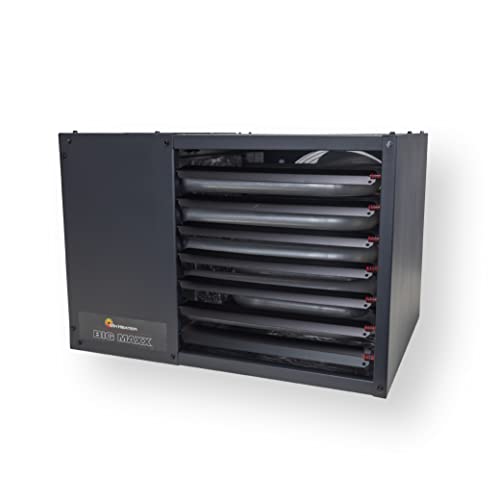
The Mr. Heater Big Maxx MHU80NG is an 80,000 BTU natural gas unit heater designed for large garages and commercial-style spaces. It supports category 1 vertical and category 3 horizontal venting options.
Features listed: Includes heater, two angle brackets and LP conversion kit (thermostat, hose & regulator not included). Heater size is noted and performance covers up to 2,000 sq. ft. with a 120 V power requirement. Minimum 8 ft. clearance from floor to base required.
Call 888-896-7031 for Free Local HVAC Quotes – Compare and Save Today!
Venting flexibility: This model supports both vertical and horizontal vent configurations, which can simplify installation in varied building layouts. Check gas line capacity, electrical connection, and required clearances for safe operation. Suitable for users needing a robust vented solution for large spaces.
Modine Hot Dawg 30,000 BTU Unit Heater NG

This Modine Hot Dawg is a 30,000 BTU natural gas powered, power vented unit with an aluminized steel heat exchanger and an 80% AFUE rating. It’s targeted at smaller garages and single-car spaces.
Features listed: Power Vented and designed for a 1–1.5 car garage. The unit requires a power vent adapter and can be paired with appropriate venting components. Vented designs remove combustion gases and improve indoor air quality over vent-free options.
Application: Best for smaller, insulated garages where a compact unit and power-assisted venting provide controlled exhaust routing. Verify the availability of a 120 V supply and planned vent route for the power fan assembly.
DuraVent Vent Unit Heater Kit – 4in. Horizontal

The DuraVent kit is a 4-inch horizontal venting accessory designed for compatibility with various heater models. It provides a sealed channel for exhaust gases and helps complete the installation of vented heaters.
Features listed: 4in. horizontal design. Compatible with specific item numbers and intended as a component to meet venting requirements when the heater’s venting is not included or needs extension.
Installation role: Vent kits like this one ensure safe routing of combustion gases and can be critical to meeting local mechanical and building codes. Confirm compatibility with your selected heater model and plan for proper slope, support, and termination clearances.
Buying Guide: How To Choose The Right Vented Garage Heater
Choosing a vented garage heater requires assessing space size, fuel supply, venting type, and installation constraints. Below are key considerations to compare units effectively.
Heat Output And Coverage
Match the heater’s BTU rating to the garage volume, insulation level, and temperature goals. Higher BTU ratings heat faster and can maintain higher ambient temps in large or poorly insulated spaces. Use conservative estimates for poorly insulated garages.
Fuel Type: Natural Gas Vs Propane
Natural Gas offers convenience for connected properties with existing lines. Propane (LP) is common for detached garages or where NG is unavailable. Confirm fuel line sizing and local code requirements for either fuel.
Venting Methods
Vented systems fall into categories: direct vent (sealed combustion and exhaust), power vented (mechanical exhaust fan), and category 1/3 venting (natural or special horizontal/vertical configurations). Direct vent and power vented designs remove combustion byproducts outdoors and are preferred for enclosed garages.
Installation And Clearance Requirements
Every vented heater requires minimum clearances to combustibles and sufficient space for vent runs. Check the manual for mounting height, clearance to floor/ceiling, and required vent termination distances from windows or air intakes.
Venting Accessories And Compatibility
Vent kits, elbows, and termination caps must be compatible with the heater’s exhaust diameter. A 4-inch kit may suit smaller models, while high-BTU units often require larger or specialized vent components. Confirm compatibility before purchase.
Energy Efficiency And Heat Distribution
Consider AFUE ratings and whether the heater uses forced convection, blowers, or radiant panels. Radiant heat warms objects and people directly, while forced air circulates warmed air. Choose based on typical activity in the garage and desired comfort style.
Controls And Thermostats
Thermostatic control improves fuel economy and comfort. Some units include built-in thermostats; others require an external wall thermostat. Programmable or remote thermostats add convenience and help stabilize temperatures.
Safety Features
Look for sealed combustion, oxygen depletion sensors (where applicable), flame sensors, and automatic shutoffs. Vented units inherently reduce indoor combustion byproducts, improving safety compared with vent-free options.
Vent Routing And Local Codes
Plan vent runs to minimize bends and maximize upward slope when required. Local building codes may dictate venting type, termination location, and permitted fuels. Permits and professional installation are often required for gas venting systems.
Maintenance And Serviceability
Vented heaters require periodic inspection of vent piping, burners, and ignition components. Choose models with accessible panels and documented service parts. Routine maintenance extends service life and maintains safe operation.
Comparison Perspectives
- Space Size: Small single-car garages often pair well with 30K–45K BTU power-vent units; larger or multi-car spaces may require 60K–80K BTU units.
- Venting Complexity: Direct vent units require sealed intake/exhaust routing but provide better indoor air quality. Power vented units add a venting fan and allow more flexible routing at the cost of electrical requirement.
- Fuel Availability: If natural gas is available, NG models reduce cylinder management. LP units provide flexibility for detached buildings.
- Installation Skill Level: Complex vent installations and gas hookups typically require licensed HVAC or plumbing professionals to ensure compliance and safety.
Use the combination of BTU capacity, venting style, and accessory compatibility to select a vented garage heater that aligns with your garage size, fuel access, and installation constraints. For any vented gas heater purchase and installation, reference local codes and manufacturer installation guides.
Tips for Getting the Best HVAC Prices
- Prioritize Quality Over Cost
The most critical factor in any HVAC project is the quality of the installation. Don’t compromise on contractor expertise just to save money. - Check for Rebates
Always research current rebates and incentives — they can significantly reduce your overall cost. - Compare Multiple Quotes
Request at least three estimates before making your choice. You can click here to get three free quotes from local professionals. These quotes include available rebates and tax credits and automatically exclude unqualified contractors. - Negotiate Smartly
Once you've chosen a contractor, use the proven strategies from our guide — How Homeowners Can Negotiate with HVAC Dealers — to get the best possible final price.