
Quick Overview: This guide compares five popular ventless wall-mount gas heaters that work with natural gas and are designed for supplemental or primary heating in rooms, sunrooms, and small living areas. Below is a summary table of the selected models to help you scan features quickly.
| Model | Type | BTU | Coverage | Controls |
|---|---|---|---|---|
| ProCom MN100TBA-B | Blue Flame (Ventless) | 10,000 | Up To 500 Sq. Ft. | Thermostat |
| ProCom MN300TPA-B | Infrared (Ventless) | 30,000 | Up To 1,400 Sq. Ft. | Thermostat |
| Mr. Heater MHVFBF30NGT | Blue Flame (Vent Free) | 30,000 | Up To 1,000 Sq. Ft. | Thermostat |
| ProCom MN300HBA-B | Blue Flame (Ventless) | 30,000 | Up To 1,400 Sq. Ft. | Manual 3-Stage |
| Bluegrass Living B20TNIR-BB | Infrared (Ventless) | 20,000 | Up To 950 Sq. Ft. | Thermostat + Blower |
Content Navigation
- ProCom MN100TBA-B 10,000 BTU
- ProCom MN300TPA-B 30,000 BTU
- Mr. Heater MHVFBF30NGT 30,000 BTU
- ProCom MN300HBA-B 30,000 BTU Manual
- Bluegrass Living B20TNIR-BB 20,000 BTU
- Buying Guide: How To Choose A Ventless Wall-Mount Gas Heater
- Heating Capacity And Room Size
- Radiant Infrared Versus Blue Flame Convection
- Controls And Operation
- Safety Features
- Installation And Fuel Requirements
- Air Quality And Ventless Considerations
- Efficiency And Operating Cost Perspectives
- Noise And Comfort Features
- Durability And Maintenance
- Comparison Summary For Common Use Cases
ProCom MN100TBA-B 10,000 BTU

This ventless blue flame mini heater produces up to 10,000 BTU using natural gas and is rated to heat spaces up to 500 sq. ft. The unit includes a wall mount kit and base feet for floor placement, making it flexible for different room setups.
Key listed features include: thermostat control with High/Medium/Low settings for temperature regulation, a slim modern profile for discrete wall mounting, and compatibility for residential rooms such as offices and bedrooms. The compact design follows common ventless safety and installation patterns for indoor natural gas appliances.
ProCom MN300TPA-B 30,000 BTU

The ProCom MN300TPA-B is an infrared ventless heater offering up to 30,000 BTU, specified to heat areas up to 1,400 sq. ft. It is intended for larger rooms where radiant infrared heat is preferred to warm objects and occupants directly.
Call 888-896-7031 for Free Local HVAC Quotes – Compare and Save Today!
Listed features note a three-stage thermostat control (High/Medium/Low), a slim profile for wall mounting or floor use with included base feet, and design points focused on dependable heat output for home and office settings. Infrared operation can provide a different comfort profile compared to convection blue flame models.
Mr. Heater MHVFBF30NGT 30,000 BTU
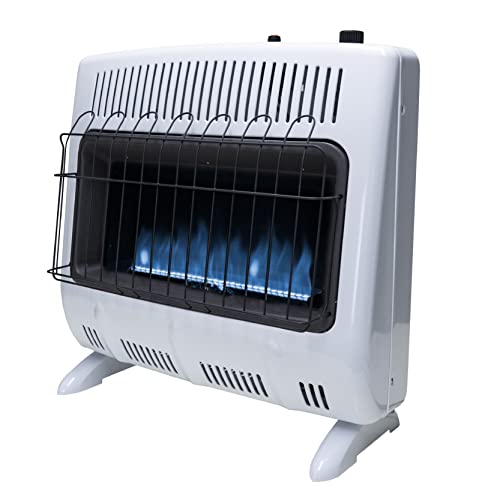
Mr. Heater’s MHVFBF30NGT delivers up to 30,000 BTU as a vent-free blue flame unit intended for spaces up to 1,000 sq. ft. The unit emphasizes efficient convection heating using a blue flame burner.
Features listed include a precise thermostat for temperature control, a reliable electric ignition powered by an included battery, and stated fuel efficiency with specific consumption metrics. The design is suited for converting colder rooms or additions into comfortable spaces while relying on convection heat distribution.
ProCom MN300HBA-B 30,000 BTU Manual

The ProCom MN300HBA-B is a ventless blue flame heater rated at 30,000 BTU, specified to heat up to 1,400 sq. ft. This model operates without electricity and uses a push-button piezo ignition.
Call 888-896-7031 for Free Local HVAC Quotes – Compare and Save Today!
Listed specifications emphasize manual control with three heat settings (Low/Medium/High), oxygen depletion sensor (ODS) automatic shut-off for safety, and natural gas-only operation. The manual nature and lack of electrical requirements can be important in off-grid or power-outage scenarios.
Bluegrass Living B20TNIR-BB 20,000 BTU

The Bluegrass Living B20TNIR-BB is a ventless infrared20,000 BTU and rated to heat up to 950 sq. ft. It includes wall-mount hardware, base feet, and a blower to assist heat distribution.
Features listed include Low/Med/High thermostat control, slim styling for wall placement, and a blower accessory to boost circulation. The infrared element focuses on radiant heating that warms objects and people directly rather than relying solely on room air circulation.
Buying Guide: How To Choose A Ventless Wall-Mount Gas Heater
Choosing the right ventless wall-mount gas heater involves evaluating room size, heating method, safety features, installation constraints, and operational needs. Below are specific considerations and comparison perspectives to guide a balanced selection.
Heating Capacity And Room Size
Match the heater’s BTU rating to your room size. Smaller models (10,000 BTU) suit rooms up to about 500 sq. ft., midrange units (20,000 BTU) cover roughly 700–950 sq. ft., and 30,000 BTU models are intended for larger spaces up to 1,400 sq. ft. Consider ceiling height and insulation quality as they affect effective coverage.
Radiant Infrared Versus Blue Flame Convection
- Infrared (Radiant): Warms objects and people directly. Good for drafty areas or rooms where instant localized warmth is desired.
- Blue Flame (Convection): Heats the air and provides steady, evenly distributed room warmth. Often efficient for whole-room comfort.
Controls And Operation
Thermostat-controlled units provide automatic temperature regulation and can maintain consistent comfort. Manual multi-stage units allow simple low/med/high settings and may operate without electricity. Choose based on preference for automation versus simplicity and power independence.
Safety Features
- Oxygen Depletion Sensor (ODS): Shuts off gas if oxygen levels fall—standard on modern ventless units.
- Tip-over/overheat protection (if applicable): Important if unit is used on a floor stand.
- Ensure local codes permit ventless appliances and confirm proper clearances and installation requirements.
Installation And Fuel Requirements
Wall mounting requires proper vent-free clearances, a secure gas supply connection, and sometimes professional installation. Confirm whether the model requires natural gas only or allows conversion. Units that do not require electricity (piezo ignition) are advantageous in power outages.
Air Quality And Ventless Considerations
Ventless heaters exhaust combustion products into the living space. Ensure adequate ventilation and monitor for moisture buildup or odors. In tightly sealed homes, consider supplemental ventilation or choose alternative heating strategies per local building codes.
Efficiency And Operating Cost Perspectives
Efficiency comparisons: blue flame convection and infrared units each claim efficient fuel use, but operational cost depends on local natural gas rates, duty cycle, and thermostat use. Models with thermostats may reduce runtime and fuel consumption compared to manual always-on settings.
Noise And Comfort Features
Infrared units with blowers produce additional airflow noise but can improve heat distribution. Consider whether a silent radiant panel (no blower) or a blower-equipped unit better fits your tolerance for background noise versus faster room warming.
Durability And Maintenance
- Regular inspection of burners and pilot/ignition components is recommended.
- Follow manufacturer maintenance guidance for cleaning and seasonal checks.
- Check for replacement parts and local service availability for long-term reliability.
Comparison Summary For Common Use Cases
- Small Bedrooms/Offices: Lower BTU blue flame units (e.g., 10,000 BTU) give balanced warmth with thermostat control.
- Large Open Areas/Additions: 30,000 BTU models, either infrared or blue flame, provide higher capacity—choose infrared for direct radiant comfort or blue flame for steady convection.
- Power-Outage or Off-Grid: Manual ignition, non-electric units with piezo ignitors are useful where electricity is unavailable.
- Moisture-Prone Rooms: Consider ventilation needs; ventless units add combustion moisture to indoor air and may require dehumidification strategies.
Use these criteria to weigh the trade-offs between immediate radiant warmth, whole-room convection, installation complexity, and long-term operating considerations when selecting a ventless wall-mount gas heater.
Tips for Getting the Best HVAC Prices
- Prioritize Quality Over Cost
The most critical factor in any HVAC project is the quality of the installation. Don’t compromise on contractor expertise just to save money. - Check for Rebates
Always research current rebates and incentives — they can significantly reduce your overall cost. - Compare Multiple Quotes
Request at least three estimates before making your choice. You can click here to get three free quotes from local professionals. These quotes include available rebates and tax credits and automatically exclude unqualified contractors. - Negotiate Smartly
Once you've chosen a contractor, use the proven strategies from our guide — How Homeowners Can Negotiate with HVAC Dealers — to get the best possible final price.