
Choosing a wall-mounted gas heater with a built-in thermostat helps maintain consistent comfort while improving fuel efficiency. The table below summarizes five popular vent-free and vented wall gas heaters that include thermostat control, various BTU ranges, and mounting options. Use the quick comparison to narrow choices before reading detailed product sections.
| Model | Type | BTU Range | Coverage | Thermostat |
|---|---|---|---|---|
| ProCom MN100TBA-B | Ventless Blue Flame | 10,000 | Up To 500 Sq. Ft. | On-Unit Thermostat (High/Med/Low) |
| ProCom MN300TPA-B | Ventless Infrared | 30,000 | Up To 1,400 Sq. Ft. | On-Unit Thermostat (High/Med/Low) |
| Mr. Heater MHVFBF30NGT | Ventless Blue Flame | 30,000 | Up To 1,000 Sq. Ft. | Built-In Thermostat |
| Bluegrass Living B20TNIR-BB | Ventless Infrared | 20,000 | Up To 950 Sq. Ft. | Low/Med/High Thermostat |
| Dyna-Glo Signature 20,000 | Ventless Blue Flame (LP) | 16,000–20,000 | Up To 700 Sq. Ft. | Thermostatic Control |
Content Navigation
- ProCom MN100TBA-B Ventless Natural Gas Blue Flame Space Heater With Thermostat
- ProCom MN300TPA-B Ventless Natural Gas Infrared Space Heater With Thermostat
- Mr. Heater MHVFBF30NGT 30,000 BTU Vent Free Blue Flame Natural Gas Heater
- Bluegrass Living B20TNIR-BB Ventless Natural Gas Infrared Space Heater With Thermostat
- Dyna-Glo Signature Series 20,000 BTU Liquid Propane Blue Flame Thermostatic Vent Free Wall Heater
- Buying Guide: How To Choose A Gas Wall Heater With Thermostat
ProCom MN100TBA-B Ventless Natural Gas Blue Flame Space Heater With Thermostat

This compact ventless blue flame wall heater produces up to 10,000 BTU and is rated to heat areas up to 500 sq. ft. The unit offers an on-unit thermostat with High/Medium/Low settings, allowing basic temperature control without additional wiring or external thermostats.
Features include a slim profile for wall mounting or floor placement with included base feet. The heater is described as suitable for residential spaces such as bedrooms, office areas, or living rooms. Built-in thermostat control is designed to modulate output among the three available levels to maintain a consistent ambient temperature.
Consider installation clearances, local vent-free heater regulations, and room size when evaluating suitability. The ventless design delivers convective heat via the blue flame burner and requires adequate ventilation per local codes.
ProCom MN300TPA-B Ventless Natural Gas Infrared Space Heater With Thermostat

Call 888-896-7031 for Free Local HVAC Quotes – Compare and Save Today!
The ProCom MN300TPA-B is an infrared ventless wall heater offering up to 30,000 BTU and rated for spaces up to 1,400 sq. ft. It includes an on-unit thermostat with High/Medium/Low control and is intended for larger residential or light-commercial rooms.
Infrared technology focuses heat on objects and people rather than only warming air, which can offer perceived comfort at lower air temperatures. The unit includes wall mounting hardware and base feet for flexible placement. It is marketed as a compact unit with a slim, modern profile.
Verify fuel type compatibility and local codes for ventless infrared heaters. For large open areas consider distribution and placement to ensure even radiant coverage and thermostat response.
Mr. Heater MHVFBF30NGT 30,000 BTU Vent Free Blue Flame Natural Gas Heater
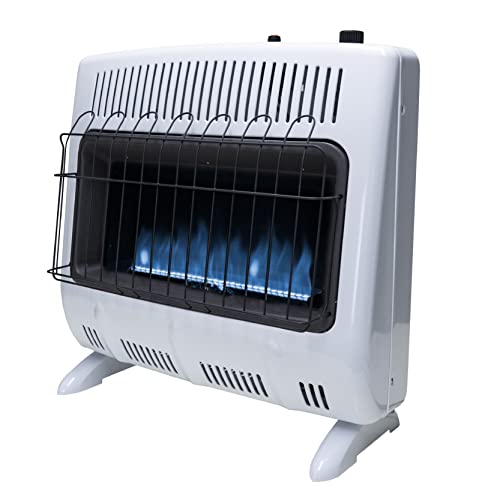
The Mr. Heater MHVFBF30NGT delivers up to 30,000 BTU via a vent-free blue flame burner and is sized for areas up to 1,000 sq. ft. It includes a built-in thermostat for direct temperature control and a battery-powered ignition to simplify startup.
The product highlights include precise thermostat control, fuel-efficient blue flame convection heating, and suitability for rooms, sunrooms, or additions. The unit is designed to provide steady convective warmth with even heat distribution.
Call 888-896-7031 for Free Local HVAC Quotes – Compare and Save Today!
Performance notes: blue flame ventless heaters warm air directly—this is different from infrared radiant units—so thermostat placement and room airflow will affect cycling and comfort. Check altitude ratings and follow manufacturer installation instructions for safe operation.
Bluegrass Living B20TNIR-BB Ventless Natural Gas Infrared Space Heater With Thermostat

The Bluegrass Living B20TNIR-BB is a 20,000 BTU ventless infrared heater rated for up to 950 sq. ft. It includes Low/Med/High thermostat control, wall-mount hardware, base feet, and a blower for enhanced heat circulation.
Infrared operation heats objects and people first, which can create comfortable conditions without raising overall air temperature excessively. The blower helps distribute warmed air for more even coverage when needed. The unit’s low-profile design aims to fit residential interiors.
When sizing an infrared unit, consider direct line-of-sight areas and potential cold spots. Thermostat control here provides stepped output levels; for precise temperature regulation, verify how the onboard thermostat responds in your specific layout.
Dyna-Glo Signature Series 20,000 BTU Liquid Propane Blue Flame Thermostatic Vent Free Wall Heater

This Dyna-Glo Signature Series model is a ventless blue flame heater designed for liquid propane with adjustable output between 16,000–20,000 BTU. The unit specifies a thermostatic control for maintaining setpoint temperatures in spaces up to 700 sq. ft.
Blue flame vent-free technology provides convective heat similar to central systems. The thermostatic capability helps regulate run cycles to avoid excessive fuel use while maintaining comfort. The model is targeted at smaller to mid-size rooms requiring a wall-mounted heating solution.
Fuel-specific note: this model is LP-ready and the manufacturer states fuel conversion is not permitted; confirm fuel type at installation. Also follow vent-free safety and ventilation guidance for indoor use of propane appliances.
Buying Guide: How To Choose A Gas Wall Heater With Thermostat
Selecting the right gas wall heater with a thermostat involves evaluating several technical and practical factors. Below are the key considerations to compare models objectively.
Tips for Getting the Best HVAC Prices
- Prioritize Quality Over Cost
The most critical factor in any HVAC project is the quality of the installation. Don’t compromise on contractor expertise just to save money. - Check for Rebates
Always research current rebates and incentives — they can significantly reduce your overall cost. - Compare Multiple Quotes
Request at least three estimates before making your choice. You can click here to get three free quotes from local professionals. These quotes include available rebates and tax credits and automatically exclude unqualified contractors. - Negotiate Smartly
Once you've chosen a contractor, use the proven strategies from our guide — How Homeowners Can Negotiate with HVAC Dealers — to get the best possible final price.
Heat Output And Room Size
- BTU Rating: Match BTU capacity to the room’s square footage and insulation level. Higher BTU models suit larger or less insulated spaces.
- Coverage Estimates: Manufacturer coverage numbers are approximate; account for ceiling height, windows, and open floor plans when estimating needs.
Heat Delivery Type
- Blue Flame (Convection): Warms air, creating uniform room temperature. Thermostats control air temperature effectively but may cycle differently than radiant units.
- Infrared (Radiant): Warms objects and occupants directly; feels warm quickly at lower air temps. Thermostat response depends on sensor placement relative to radiant field.
Thermostat Functionality
- On-Unit Thermostats: Provide convenient control without external wiring. Stepped (Low/Med/High) settings are common for simpler units.
- Precise Thermostats: Digital or continuous thermostats offer finer temperature control and may reduce fuel consumption by avoiding large temperature swings.
- Placement: Thermostat accuracy depends on location; avoid placing the sensing element near drafts, direct sunlight, or heat sources.
Fuel Type And Installation
- Natural Gas vs. Propane: Confirm fuel availability. Some models are LP-only or NG-only and do not allow conversion.
- Ventless vs. Vented: Ventless units deliver higher efficiency but require adherence to local building codes and adequate indoor ventilation. Direct-vent or sealed combustion units provide safer combustion isolation.
- Professional Installation: Many local codes require certified installers for gas appliances. Installation affects performance, safety, and compliance.
Safety And Regulations
- Oxygen Depletion Safety (ODS): Vent-free appliances commonly include ODS pilots to shut off fuel if oxygen levels drop. Verify included safety features.
- Local Codes: Some jurisdictions restrict ventless gas heaters. Confirm code compliance before purchasing.
- Clearances And Combustibles: Follow manufacturer-specified clearances from walls, furniture, and curtains.
Operational Considerations
- Thermostat Cycling: Frequent on/off cycles can occur if a thermostat is placed in an area with poor circulation. Use blower-assist models or relocate thermostat if needed.
- Blower/Distribution: Models with built-in blowers distribute heat more evenly; consider if you need faster warm-up or better circulation.
- Maintenance: Inspect burners, pilot assemblies, and filters per manufacturer guidelines to ensure efficient, safe operation over time.
Comparison Perspectives
- Efficiency vs. Comfort: Ventless blue flame units are efficient for heating air, while infrared units can feel warmer at lower thermostat setpoints due to radiant heat.
- Room Type: For open living spaces and additions, higher BTU infrared or 30,000 BTU convection units can perform better. For bedrooms or smaller rooms, 10,000–20,000 BTU thermostatic models often suffice.
- Fuel Logistics: If propane is the only option, choose LP-dedicated models and verify they are certified for indoor ventless use.
Practical Checklist Before Purchase
- Measure room square footage and ceiling height.
- Confirm fuel availability and whether unit is NG or LP compatible.
- Check local codes for ventless heater allowances.
- Decide between convection (blue flame) and radiant (infrared) based on comfort preference.
- Verify thermostat type and placement options meet your control needs.
- Plan for professional installation and post-installation maintenance access.