
Wall heaters provide targeted warmth without taking up floor space. Below is a quick comparison of top wall-mounted heaters selected for reliability, smart features, silent operation, and easy installation. Use this summary to narrow choices, then read individual reviews for product details and features.
| Product | Type | Smart Features | Noise / Design |
|---|---|---|---|
| Heat Storm HS-1500-PHX-WIFI | Infrared Wi‑Fi Wall | Wi‑Fi, App Control, Remote | Wall‑mounted, space‑saving |
| Dreo Smart Wall Heater WH719S | PTC Ceramic Oscillating | App, Alexa/Google, Remote, Timer | 120° vertical oscillation, fan |
| Dreo IP24 Wall Heater | PTC Ceramic, IP24 | App, Voice, Remote, ECO mode | 30° oscillation, low noise |
| ENVI Plug-In Electric Panel | Convection Panel, Fan-less | No app; plug-in design | Silent, low surface temp |
| Cadet Energy Plus CEC163TW | Electric Wall Unit w/Digital Thermostat | Onboard digital control | Fan spreads warmth, retrofit fit |
Content Navigation
- Heat Storm HS-1500-PHX-WIFI Infrared Heater
- Dreo Smart Wall Heater WH719S
- Dreo IP24 Electric PTC Wall Heater
- ENVI Plug-In Electric Panel Wall Heaters
- Cadet Energy Plus Wall Heater CEC163TW
- Buying Guide: How To Choose A Wall Heater
- 1. Heating Technology
- 2. Installation And Electrical Requirements
- 3. Controls And Smart Features
- 4. Safety And Compliance
- 5. Noise And Comfort
- 6. Energy Efficiency And Modes
- 7. Placement And Air Distribution
- 8. Maintenance And Indoor Air Quality
- 9. Comparison Perspectives
- 10. Practical Checklist Before Buying
Heat Storm HS-1500-PHX-WIFI Infrared Heater

Type: Wall-mounted infrared panel. Power: 1500W model suitable for many rooms. The unit is sold as a wall-mounted heater only, not including additional mounting accessories beyond standard kit.
Key listed features include Wi‑Fi enabled control from your phone, a touchscreen with a digital thermostat, and a remote control. The unit also includes a tip-over safety shutoff. The slim, space‑saving design is intended for bedrooms, kitchens, and offices where floor space is limited.
The infrared heating method warms objects and people directly rather than relying exclusively on forced air. This can produce a different feel of warmth compared with fan‑based units. The integrated thermostat and remote allow temperature adjustments without direct access to the unit.
Dreo Smart Wall Heater WH719S

Call 888-896-7031 for Free Local HVAC Quotes – Compare and Save Today!
Type: Electric PTC ceramic wall heater with oscillation. Heating Coverage: Designed to distribute warm air vertically across the room through 120° oscillation.
Features from the listing emphasize widespread warmth via 120° vertical oscillation for faster and more even heat distribution. The heater supports smart control through the Dreo app and voice assistants like Alexa and Google Home. It includes a remote and a 24‑hour timer for scheduling.
The PTC ceramic element offers fast, steady heat with temperature control in a 41°F–95°F range and 1°F accuracy. Oscillation helps move warmed air to different heights for more consistent comfort compared with fixed-direction units.
Dreo IP24 Electric PTC Wall Heater

Type: IP24‑rated PTC wall heater with manual oscillation. Design: Low noise, calibrated temperature control, and ECO mode for energy efficiency.
The product highlights include a powerful PTC heating system, quiet operation (listed low dB), and 30° manual oscillation for focused directional heat. Smart control options include the Dreo app, a remote, and voice commands via Alexa. The listing also notes a temperature calibration function for improved accuracy.
Call 888-896-7031 for Free Local HVAC Quotes – Compare and Save Today!
The IP24 rating indicates limited splash resistance, useful for bathrooms or humid areas if the installation follows local electrical and safety codes. ECO mode is intended to maintain set comfort levels while reducing energy draw.
ENVI Plug-In Electric Panel Wall Heaters
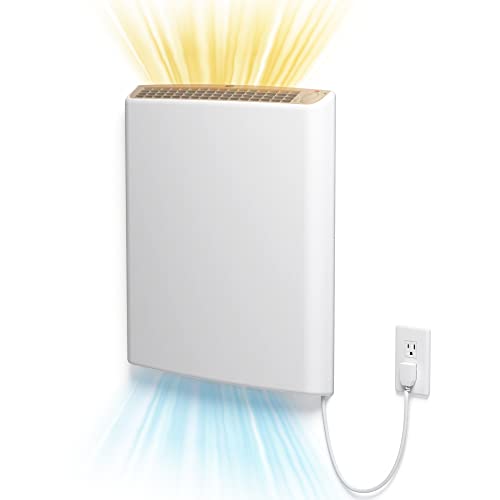
Type: Plug-in convection panel heater with fan‑less design. Operation: Continuous low‑wattage heating intended for targeted comfort and quiet operation.
Listed features emphasize energy efficiency and a patented fan‑less “Stack Convection” design producing silent warmth. The heater runs at a cool surface temperature (around 90°F listed) and includes a wall‑sense safety sensor that cuts power if removed from the wall.
The ENVI panel is marketed for continuous 24/7 use, allergy‑friendly operation by avoiding blowing dust, and suitability for bedrooms or rooms where low noise is essential. The plug‑in installation aims to simplify setup compared with hardwired units, though placement and electrical ratings should be checked before purchase.
Cadet Energy Plus Wall Heater CEC163TW

Type: Electric wall heater with an onboard digital thermostat. Compatibility: Designed to retrofit many Cadet Com‑Pak installations without additional wall modification.
The listing highlights a simple onboard digital thermostat with push‑button controls and a large display. Safety features include a thermal safeguard that turns off the heater if operating temperatures exceed normal levels. The product notes retrofitting ease by using the same wall can as many Com‑Pak series units.
Cadet units are traditional fan/wraparound heating element designs intended for reliable, long‑term wall heating. The digital thermostat provides straightforward temperature setting without complex programming.
Buying Guide: How To Choose A Wall Heater
This guide covers the main factors to weigh when selecting a wall heater: heat type, installation, controls, safety, noise, energy use, and placement. Evaluate products across these perspectives to match the heater to your room and priorities.
Tips for Getting the Best HVAC Prices
- Prioritize Quality Over Cost
The most critical factor in any HVAC project is the quality of the installation. Don’t compromise on contractor expertise just to save money. - Check for Rebates
Always research current rebates and incentives — they can significantly reduce your overall cost. - Compare Multiple Quotes
Request at least three estimates before making your choice. You can click here to get three free quotes from local professionals. These quotes include available rebates and tax credits and automatically exclude unqualified contractors. - Negotiate Smartly
Once you've chosen a contractor, use the proven strategies from our guide — How Homeowners Can Negotiate with HVAC Dealers — to get the best possible final price.
1. Heating Technology
- Infrared / Radiant: Heats people and objects directly; can feel warmer quickly in a localized area. Good for spot heating and rooms where quiet, draft‑free warmth is preferred.
- PTC Ceramic / Convection: Uses a ceramic element and fan or convection design to warm air. Oscillating or directional fans improve distribution for larger areas.
- Panel / Convection Fan‑less: Silent and steady, best for constant background heat. May take longer to change room temperature but often uses lower continuous watts.
2. Installation And Electrical Requirements
- Hardwired Units: Often require professional installation and specific circuit capacity (e.g., 120V or 240V models). Choose hardwired units for permanent installations and larger loads.
- Plug‑In Panels: Simpler to install and move. Verify outlet amps and allow for safe clearance. Plug‑ins suit renters or supplemental heating needs.
- Retrofit Compatibility: If replacing an existing wall heater, check whether the new unit fits the existing wall can to avoid patchwork and extra installation cost.
3. Controls And Smart Features
- Onboard Thermostat: Provides local temperature control and simple operation.
- Remote / Timers: Useful for scheduling, preheating, and adjusting settings without accessing the unit.
- Wi‑Fi / App / Voice: Offers remote management and integration with smart home systems. Consider security, network reliability, and whether you need voice control.
4. Safety And Compliance
- Overheat Protection: Automatic shutdown when temperatures exceed safe limits is essential.
- Tip‑Over / Wall‑Sense: Tip‑over protections apply mostly to portable units; wall‑mounted models may include removal sensors for plug‑in panels.
- IP Ratings: For bathrooms or semi‑exposed areas, an IP rating (e.g., IP24) indicates water resistance. Follow local electrical and building codes for wet locations.
5. Noise And Comfort
- Fan Noise: Fan‑assisted heaters and oscillators move air more quickly but can generate audible noise. Check listed dB figures if quiet operation is a priority.
- Fan‑less Panels: Provide silent warmth but may take longer to raise room temperature.
6. Energy Efficiency And Modes
- ECO / Thermostat Control: Units with ECO modes or accurate thermostats can reduce energy use by maintaining setpoints instead of running at full power continuously.
- Wattage And Coverage: Match wattage to room size. Higher wattage heats faster; lower wattage supports continuous, energy‑conservative operation. Consider insulation and ceiling height when estimating coverage.
7. Placement And Air Distribution
- Vertical Oscillation: Useful for multi‑level coverage in tall rooms or when you want heat delivered across a vertical span.
- Directional Vents: Allow you to aim warm air toward occupied zones. For even distribution, oscillating or fan‑assisted models typically perform better than fixed panels.
8. Maintenance And Indoor Air Quality
- Filter / Dust: Fan‑based heaters can circulate dust. If allergies are a concern, consider fan‑less or easily cleanable grills and filters.
- Durability: Look for units with reputable safety certifications and thermal safeguards to ensure long life and dependable operation.
9. Comparison Perspectives
- Smart vs. Simple: Smart heaters (Wi‑Fi, app, voice) add convenience and scheduling but require network access and ongoing support. Simple digital thermostats offer reliable control without connectivity concerns.
- Silent Comfort vs. Rapid Heat: Choose fan‑less panels for silent, steady warmth; choose PTC ceramic or fan‑assisted units for faster room warm‑up and better distribution.
- Plug‑In Flexibility vs. Hardwired Permanence: Plug‑in panels fit renters or temporary needs. Hardwired units are better for permanent installations and higher power requirements.
10. Practical Checklist Before Buying
- Measure room size and ceiling height to estimate required wattage.
- Confirm electrical circuit capacity and outlet type for the chosen unit.
- Decide on smart features vs. local control based on your preferences.
- Check safety features and IP ratings if installing in bathrooms or humid spaces.
- Review noise specifications if heater will be used in bedrooms or quiet spaces.