
Wall mount gas heaters offer efficient, space-saving warmth for rooms, garages, and additions. This guide compares five popular wall-mounted gas heaters, summarizing their core specs to help you match capacity, fuel type, and safety features to your space.
| Model | BTU | Fuel Type | Coverage | Key Feature |
|---|---|---|---|---|
| ProCom MN100TBA-B | 10,000 BTU | Natural Gas (Ventless) | Up To 500 Sq. Ft. | Blue Flame, Thermostat |
| Mr. Heater MHVFBF30NGT | 30,000 BTU | Natural Gas (Ventless) | Up To 1,000 Sq. Ft. | High Output, Precise Thermostat |
| ProCom MN300TPA-B | 30,000 BTU | Natural Gas (Ventless, Infrared) | Up To 1,400 Sq. Ft. | Infrared Heat, Thermostat |
| Dyna-Glo 30,000 BTU | 24,000–30,000 BTU | Liquid Propane (Ventless) | Up To 1,000 Sq. Ft. | Blue Flame, LP Ready |
| Comfort Glow 25,000 BTU | 25,000 BTU | Natural Gas (Direct Vent) | Up To 825 Sq. Ft. | Sealed Burn System, Safety Pilot |
Content Navigation
ProCom 10,000 BTU Wall Heater

The ProCom MN100TBA-B is a ventless blue flame natural gas heater designed for small rooms and offices. It produces up to 10,000 BTU, with coverage rated around 500 sq. ft.
Key features listed include a thermostat with High/Medium/Low settings for temperature control, a slim modern profile for wall mounting, and included wall mount hardware plus base feet for floor placement. The design emphasizes compactness and installation flexibility.
As a ventless unit it vents combustion products into the room, which affects placement considerations and room ventilation requirements. The unit’s control options and included mounting accessories target residential and office use where small, focused heat is needed.
Mr. Heater 30,000 BTU Wall Unit
Call 888-896-7031 for Free Local HVAC Quotes – Compare and Save Today!
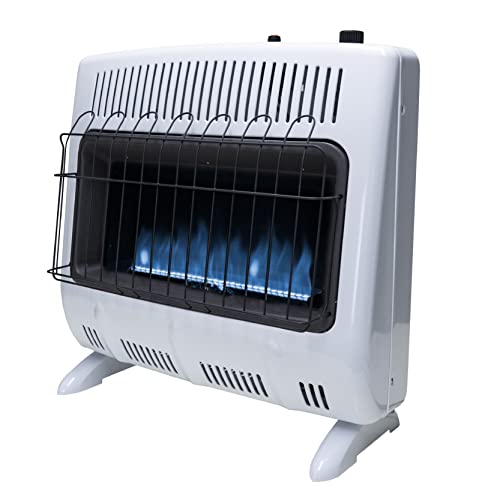
The Mr. Heater MHVFBF30NGT provides up to 30,000 BTU using natural gas and is rated to heat spaces up to 1,000 sq. ft. It uses a blue flame vent-free design for convection heating.
Manufacturer features include a precise thermostat for accurate temperature control, electric ignition powered by a free battery, and operation effective at altitudes up to 4,500 feet. The model emphasizes fuel efficiency and even convection heat distribution via a blue flame burner.
This wall-mounted option suits larger rooms and additions where fixed, high-output heat is needed. As a ventless appliance, installation and local code compliance should be verified before use in living spaces.
ProCom 30,000 BTU Infrared Wall Heater

The ProCom MN300TPA-B is a ventless infrared natural gas heater rated at 30,000 BTU with coverage up to 1,400 sq. ft. It combines infrared radiant heating with a thermostat for control.
Features referenced by the manufacturer include High/Medium/Low thermostat control, a slim modern profile for wall mounting or optional base feet, and a focus on delivering infrared heat which warms objects and people directly rather than relying solely on air convection.
Call 888-896-7031 for Free Local HVAC Quotes – Compare and Save Today!
Infrared technology can offer targeted warmth and may be perceived as faster heating for occupants. As with other ventless units, verify ventilation and local requirements prior to installation in enclosed living spaces.
Dyna-Glo 30,000 BTU LP Wall Heater

The Dyna-Glo model is a vent-free blue flame wall heater24,000–30,000 BTU output and coverage up to 1,000 sq. ft.
Manufacturer features include blue flame convection heating to warm room air like central systems and a wall-mount design intended for areas where LP is the fuel of choice. The listing notes the unit is LP ready and that fuel conversion is not permitted.
This heater is positioned for spaces supplied with LP, such as outbuildings or homes without natural gas. Vent-free operation emphasizes installation convenience but requires attention to room ventilation and safety protocols.
Comfort Glow 25,000 BTU Direct Vent Heater

The Comfort Glow 25,000 BTU model is a direct vent natural gas wall heater with a sealed burn system, designed to heat spaces up to 825 sq. ft.
Listed safety features include a sealed combustion chamber, matchless piezo ignition, and a pilot with built-in pressure regulator that stops gas flow if the pilot is extinguished. The direct vent design exhausts combustion products outdoors, separating combustion air from indoor air.
Direct vent units are preferred where indoor air quality is a primary concern or where venting to outside is practical. The sealed system reduces impact on indoor oxygen levels compared to ventless units.
Buying Guide: How To Choose A Wall Mount Gas Heater
Selecting a wall mount gas heater requires matching heater type, fuel, capacity, and safety to your space and local codes. Below are key considerations to guide a purchase decision.
Fuel Type And Availability
- Natural Gas vs. Propane: Determine the available fuel at your property. Some models are LP-only while others require natural gas. Fuel conversion rules vary by model and local code.
- Supply Infrastructure: Verify supply pressure, piping compatibility, and whether a permit or licensed installer is required for connection.
Ventless (Vent-Free) Versus Direct Vent
- Ventless Units: Offer simpler installation and high efficiency because heat isn’t lost via a flue. Combustion products are released into the room, so room size, ventilation, and local restrictions matter.
- Direct Vent Units: Use sealed combustion and exhaust to the outdoors. They maintain indoor air quality better and are often required where ventless appliances are restricted.
Heat Output And Room Coverage
- BTU Rating: Match BTU output to room size. Small rooms may need 5,000–12,000 BTU; larger living rooms or additions may require 20,000–30,000 BTU or more.
- Heat Type: Blue flame units provide convection heat for air warming; infrared models heat objects and people directly. Consider occupant comfort and heating speed.
Controls And Features
- Thermostat Control: Integrated thermostats offer temperature regulation and energy savings compared to manual-only models.
- Ignition Type: Piezo or battery/electric ignition affect reliability and whether external power is needed.
- Mounting Options: Wall mount hardware and optional base feet increase installation flexibility.
Safety Features
- Oxygen Depletion Sensor (ODS): Common on ventless units to shut off gas if oxygen levels drop.
- Sealed Burn / Safety Pilot: Direct vent units often include sealed chambers and pressure-regulated pilots to minimize indoor contamination.
- Local Code Compliance: Always check local building codes and appliance listings; some jurisdictions restrict ventless heaters in bedrooms or tight homes.
Installation And Placement
- Clearances: Verify manufacturer-specified clearances to combustible materials and recommended mounting heights.
- Professional Installation: Gas connections and venting often require licensed technicians and permits to meet code.
- Altitude Considerations: Some units specify effective altitude ranges or adjustments for high elevations.
Operational Considerations
- Room Ventilation: Ventless models may increase indoor humidity and combustion byproducts; plan for ventilation or restricted use in small, airtight rooms.
- Efficiency Vs. Air Quality: Ventless heaters provide high efficiency but can impact indoor air; direct vent models trade a small efficiency loss for improved air separation.
- Maintenance: Regular inspection of burners, pilot assemblies, and vents (for direct vent) keeps performance and safety optimal.
Comparison Perspectives
- Small Rooms: Lower BTU ventless blue flame units with thermostats (e.g., 10,000 BTU) offer adequate warmth and compact footprints.
- Large Rooms/Additions: 25,000–30,000 BTU ventless or infrared models deliver higher output for heating larger volumes.
- Indoor Air Priority: Choose direct vent sealed combustion if minimizing indoor combustion products is a priority.
- Fuel Choice: If natural gas is unavailable, LP-rated wall heaters provide a viable alternative, but confirm non-convertibility and local rules.
When selecting, cross-check listed manufacturer features with local code requirements and building specifics. Installation by qualified personnel and adherence to clearance and ventilation instructions ensures safer, more reliable operation.
Tips for Getting the Best HVAC Prices
- Prioritize Quality Over Cost
The most critical factor in any HVAC project is the quality of the installation. Don’t compromise on contractor expertise just to save money. - Check for Rebates
Always research current rebates and incentives — they can significantly reduce your overall cost. - Compare Multiple Quotes
Request at least three estimates before making your choice. You can click here to get three free quotes from local professionals. These quotes include available rebates and tax credits and automatically exclude unqualified contractors. - Negotiate Smartly
Once you've chosen a contractor, use the proven strategies from our guide — How Homeowners Can Negotiate with HVAC Dealers — to get the best possible final price.