
Finding the right wall-mount gas heater requires matching heat output, venting type, safety features, and installation needs to your home. The table below summarizes the top wall-mount gas heater picks selected for performance and home use.
| Model | Type | BTU | Coverage | Venting |
|---|---|---|---|---|
| ProCom MN100TBA | Blue Flame | 10,000 | Up To 500 Sq. Ft. | Ventless |
| ProCom MN300TPA | Infrared | 30,000 | Up To 1,400 Sq. Ft. | Ventless |
| Comfort Glow 17,000 (Natural Gas) | Direct Vent | 17,000 | Up To 570 Sq. Ft. | Direct Vent |
| Mr. Heater MHVFBF30NGT | Blue Flame | 30,000 | Up To 1,000 Sq. Ft. | Ventless |
| Comfort Glow 25,000 (Natural Gas) | Direct Vent | 25,000 | Up To 825 Sq. Ft. | Direct Vent |
Content Navigation
ProCom MN100TBA Blue Flame Heater

This compact ventless blue flame heater produces up to 10,000 BTU using natural gas and is sized for rooms up to 500 sq. ft. It includes both wall-mount hardware and base feet for floor placement, offering installation flexibility. The built-in thermostat supports High/Medium/Low settings for basic temperature control. Its slim profile aims to blend into residential spaces such as bedrooms, living rooms, and offices.
Key technical points referenced from the listing: ventless operation, thermostat control, and included mounting options. Ventless models like this require awareness of indoor air quality considerations and local codes because they release combustion products into the room.
ProCom MN300TPA Infrared Heater

The MN300TPA is a higher-capacity infrared ventless heater with a maximum of 30,000 BTU, rated to heat areas up to 1,400 sq. ft. It features High/Medium/Low thermostat control and a slim, modern profile for wall mounting or floor use with included base feet. Infrared heating warms objects and people directly rather than relying solely on convection.
Call 888-896-7031 for Free Local HVAC Quotes – Compare and Save Today!
From the product features: this model emphasizes infrared heat delivery, larger coverage, and included mounting hardware. As a ventless unit, review ventilation and code compliance for your home before installation.
Comfort Glow 17,000 BTU Natural Gas

This direct vent natural gas wall heater provides 17,000 BTU and lists coverage up to 570 sq. ft. It uses a sealed burn system with matchless piezo ignition and a safety pilot featuring a built-in pressure regulator to stop gas flow if the pilot is extinguished. The design is intended for wall installation with a compact footprint.
Direct vent units exhaust combustion byproducts outdoors through a dedicated vent, improving indoor air quality compared to ventless alternatives. The listing highlights sealed combustion and multiple safety elements that are important for permanent installations.
Mr. Heater 30,000 BTU Blue Flame
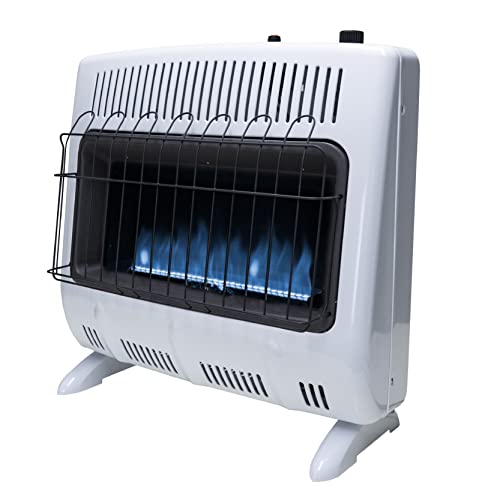
The Mr. Heater MHVFBF30NGT is a vent-free blue flame heater delivering up to 30,000 BTU, suitable for spaces up to 1,000 sq. ft. It includes a thermostat for precise temperature adjustment and an electric ignition powered by a battery (battery included). The blue flame design provides even convection heat while focusing on fuel efficiency.
Call 888-896-7031 for Free Local HVAC Quotes – Compare and Save Today!
Key features from the listing include thermostat control, compatibility with higher altitudes (up to 4,500 ft.), and a fuel-efficient burner. As with other ventless models, consider ventilation, oxygen depletion safety, and local regulations before choosing installation.
Comfort Glow 25,000 BTU Natural Gas

This direct vent natural gas heater offers 25,000 BTU and coverage up to 825 sq. ft. It features a sealed burn system with matchless piezo ignition and a safety pilot with a pressure regulator that stops gas flow if the pilot goes out. The larger footprint is intended for bigger rooms or open areas.
The product emphasizes sealed combustion, a higher BTU capacity for larger spaces, and wall-mount convenience. Direct venting removes combustion products outdoors, which is a strong consideration for indoor air quality and permanent home installations.
Buying Guide: How To Choose A Wall-Mount Gas Heater
Selecting a wall-mount gas heater depends on room size, venting type, safety features, installation limits, and efficiency goals. The sections below outline the primary considerations and comparison perspectives to guide a purchase.
Venting Type: Ventless vs Direct Vent
- Ventless (Vent-Free): Releases combustion byproducts into the room, often more efficient in heat delivery and easier/cheaper to install. Requires adherence to local codes and attention to indoor air quality, especially in airtight homes.
- Direct Vent (Sealed Combustion): Draws combustion air from outside and exhausts outdoors through a vent. Improves indoor air quality and is generally preferred where codes or ventilation concerns exist.
BTU Output And Room Size
- Estimate room heating load: smaller rooms (under 500 sq. ft.) can often be served by 10k–17k BTU heaters. Larger rooms or open layouts may need 25k–30k BTU units.
- Consider ceiling height, insulation, and climate. High ceilings or poor insulation increase required BTUs.
Safety Features
- Oxygen Depletion Sensor (ODS) or sealed combustion reduces risk of dangerous air conditions. Ventless units commonly include ODS.
- Safety pilot and pressure regulators stop gas flow if the pilot is extinguished.
- Look for ignition type (piezo, battery-powered electric) and whether manual or electronic controls are used.
Control Options And Usability
- Thermostat Control provides better temperature regulation and efficiency than fixed-output models.
- Multiple heat settings (High/Medium/Low) offer flexibility for comfort and fuel savings.
Installation And Location Considerations
- Check local building codes and fuel type availability (natural gas vs. propane) before purchase.
- Direct vent units require a vent chase or wall penetrations; plan for professional installation if needed.
- Wall clearance, mounting hardware, and whether the unit includes floor base feet affect placement options.
Indoor Air Quality And Ventilation
- Ventless units deliver higher room-side efficiency but can increase humidity and combustion byproducts. Consider supplemental ventilation or using them in well-ventilated areas.
- Direct vent models minimize indoor emissions and are preferable when indoor air quality is a priority.
Fuel Type And Availability
- Confirm natural gas or liquid propane supply at the installation location. Some models are dedicated to one fuel type.
- Consider fuel-efficiency ratings and consumption specifications if long-term operating cost is critical.
Maintenance And Durability
- Sealed combustion chambers and accessible pilot assemblies reduce routine maintenance needs.
- Check for replaceable parts, warranty, and recommended service intervals in the product documentation.
Comparison Perspectives
- Small Rooms/Bedrooms: Lower BTU ventless blue flame units with thermostat control (e.g., 10k–17k BTU) can provide targeted warmth with minimal footprint.
- Large Rooms/Open Areas: Higher BTU direct vent or ventless infrared/blue flame units (25k–30k BTU) offer broader coverage; direct vent helps with indoor air quality in greater square footage.
- Indoor Air Quality Priority: Direct vent sealed-combustion models minimize indoor combustion byproducts and are often preferred for occupied living spaces.
- Installation Flexibility: Ventless units are typically easier and less costly to install, while direct vent models require more planning and venting materials.
When narrowing choices, cross-check the heater’s BTU rating against the room’s heating load, confirm venting requirements and local code compliance, verify included safety features, and plan for installation access. For permanent living spaces where indoor air quality is a top concern, prioritize direct vent, sealed combustion models. For supplemental heating or rooms with existing ventilation practices, ventless blue flame or infrared options provide efficient heat with simpler installation options.
Tips for Getting the Best HVAC Prices
- Prioritize Quality Over Cost
The most critical factor in any HVAC project is the quality of the installation. Don’t compromise on contractor expertise just to save money. - Check for Rebates
Always research current rebates and incentives — they can significantly reduce your overall cost. - Compare Multiple Quotes
Request at least three estimates before making your choice. You can click here to get three free quotes from local professionals. These quotes include available rebates and tax credits and automatically exclude unqualified contractors. - Negotiate Smartly
Once you've chosen a contractor, use the proven strategies from our guide — How Homeowners Can Negotiate with HVAC Dealers — to get the best possible final price.