
Overview: Wall outlet heaters offer compact, energy-efficient warmth for bedrooms, offices, RVs, and bathrooms. The table below summarizes five plug‑in and wall‑mount options selected for performance, safety features, and low‑watt designs suitable for mild climates or targeted heating.
| Product | Type | Wattage / Range | Key Feature |
|---|---|---|---|
| Ontel Handy Heater Turbo | Plug-In Ceramic | 800 W | Programmable 12‑Hour Timer, Adjustable Thermostat |
| GiveBest Programmable Space Heater (450W) | Plug-In Ceramic | 450 W | Low Energy Consumption, 180° Rotatable Plug |
| Heat Storm HS-1500-PHX-WIFI | Wall-Mounted Infrared | Infrared Output (model specific) | Wi‑Fi Control, Wall Mount |
| ENVI Plug-In Electric Panel Heater | Panel Wall Heater (Fan‑less) | Low Wattage (24/7 safe operation) | Patented Quiet Fan‑Less Design, Safety Sensor |
| Brightown 800W Wall Outlet Space Heater | Plug-In Ceramic | 800 W | Remote, LED Display, ECO Mode |
Ontel Handy Heater Turbo Wall Outlet Small Space Heater

Type: Plug‑in ceramic space heater designed for small rooms and offices. Coverage: Advertised up to 250 sq ft.
Features: Adjustable thermostat (60–90°F), programmable 12‑hour timer, auto shut‑off, and ceramic technology claimed to retain moisture. The compact design mounts in a standard outlet to free floor space. Safety features include automatic shutoff.
Use Cases: Suitable for rooms where intermittent or localized heat is needed without occupying floor area. The programmable timer supports scheduled operation for short periods.
GiveBest Programmable Space Heater With LED Display 450W

Call 888-896-7031 for Free Local HVAC Quotes – Compare and Save Today!
Type: Low‑wattage plug‑in heater that emphasizes energy savings and circuit safety. Wattage: 450 W, designed to avoid overloading household circuits.
Features: LED temperature display, adjustable thermostat from 60–90°F, programmable functions, and a 180° rotatable plug for versatile outlet orientation. ETL listing indicates third‑party testing for safety standards.
Use Cases: Best for mild climates, small offices, bathrooms, or rooms where lower power draw and circuit compatibility are priorities. The rotatable plug aids installation in constrained spaces.
Heat Storm HS-1500-PHX-WIFI Infrared Wall Mounted Heater

Type: Wall‑mounted infrared heater designed to install on a wall bracket rather than using a standard outlet plug. Smart Control: Wi‑Fi enabled for mobile app control and remote use.
Features: Touchscreen with digital thermostat, included remote, tip‑over safety shutoff, and space‑saving wall design. Infrared heating warms objects and occupants directly rather than primarily heating air.
Call 888-896-7031 for Free Local HVAC Quotes – Compare and Save Today!
Use Cases: Suited to permanent wall installation in bedrooms, kitchens, or offices where app control and a mounted profile are desirable. Infrared style may provide quick perceived warmth in targeted areas.
ENVI Plug-In Electric Panel Wall Heater For Indoor Use
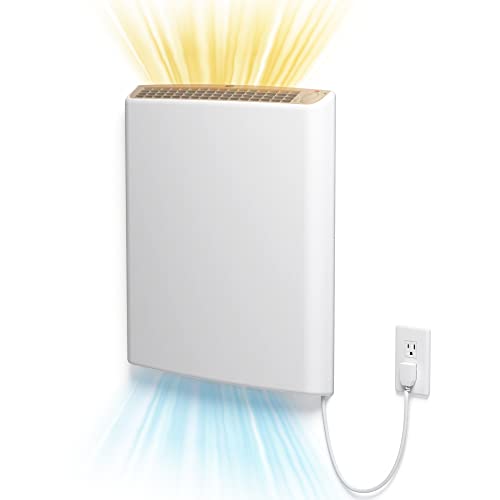
Type: Low‑wattage wall panel with fan‑less convection heating, designed for continuous 24/7 operation and quiet performance. Design: Patented “Stack Convection” for silent warmth.
Features: Wall‑sense safety sensor that cuts power if removed, runs at a cool surface temperature (~90°F), and fan‑less operation to reduce dust circulation. Marketed for continuous supplemental heating and improved humidity retention compared to forced‑air options.
Use Cases: Good for nurseries, bedrooms, or allergy‑sensitive environments where silent, dust‑free heating and continuous low‑wattage operation are priorities.
Brightown 800W Wall Outlet Space Heater With Remote

Type: Plug‑in ceramic heater aimed at small rooms and RVs with a focus on user convenience and safety. Wattage: 800 W with ECO mode to moderate energy use.
Features: Remote control, LED display showing temperature, adjustable thermostat, 180° rotatable plug, and overheat protection. ECO mode and low‑watt operation are highlighted for energy-conscious use.
Use Cases: Ideal for users who want remote operation and clearer readouts of room temperature for targeted, short‑term heating in small spaces.
Buying Guide: How To Choose The Right Wall Outlet Heater
Heating Needs And Room Size: Estimate the area to heat. Low‑watt plug‑in heaters (around 450–800 W) work well for small rooms, bathrooms, and offices. For open or larger rooms, consider multiple units or a hardwired wall mount with higher output.
Wattage And Circuit Load: Check existing circuits and avoid exceeding breaker capacities. Low‑watt models reduce the risk of overloading shared outlets. If you plan to use other high‑draw appliances on the same circuit, choose lower wattage or a dedicated circuit.
Installation Type: Plug‑in units offer portability and simple installation. Wall‑mounted infrared or panel heaters require mounting and sometimes hardwiring; they offer a more permanent solution and often better aesthetics.
Control Options And Programmability: Look for adjustable thermostats, timers, and remote control if you want scheduled or hands‑free operation. Wi‑Fi enabled units allow smartphone control and integration with smart home routines.
Heating Method: Ceramic heaters heat air via convection and are effective in small confined areas. Infrared heaters warm objects and people directly, often providing faster perceived warmth. Panel, fan‑less designs provide gentle, silent heat suitable for continuous use.
Safety Features: Prioritize models with overheat protection, tip‑over shutoff (for portable units), cool‑touch exteriors, and safety sensors that cut power if the unit is moved. ETL/UL listings indicate compliance with standard safety tests.
Noise And Air Quality: Fanless or panel heaters operate silently and reduce dust circulation, which can benefit allergy sufferers. Fan‑based units may produce noise and can circulate airborne particles.
Energy Efficiency And Cost: Wall outlet heaters are typically used for zone heating to reduce central heating runtime. Choose ECO modes, programmable timers, and accurate thermostats to minimize energy use. Lower wattage units use less power but may heat more slowly.
Plug Orientation And Fit: If space around the outlet is limited or outlets are upside down, a 180° rotatable plug simplifies installation. Verify the unit fits your outlet type and does not obstruct adjacent sockets you need to use.
Maintenance And Durability: Ceramic elements are generally low maintenance. Fan‑based systems may require occasional cleaning to prevent dust buildup. For wall‑mounted models, confirm mounting hardware and warranty details.
Comparison Perspectives: For portability and quick spot heating, plug‑in ceramic models (450–800 W) balance convenience and performance. For continuous low‑noise operation, panel fan‑less heaters offer silent, dust‑free warmth. For smart control and fast feel‑warmth, wall‑mounted infrared models provide direct radiant heating and app integration.
Final Considerations: Match the heater type to your room size, desired control level, and safety requirements. Verify product certifications and follow manufacturer instructions for placement, clearance, and electrical compatibility.
Tips for Getting the Best HVAC Prices
- Prioritize Quality Over Cost
The most critical factor in any HVAC project is the quality of the installation. Don’t compromise on contractor expertise just to save money. - Check for Rebates
Always research current rebates and incentives — they can significantly reduce your overall cost. - Compare Multiple Quotes
Request at least three estimates before making your choice. You can click here to get three free quotes from local professionals. These quotes include available rebates and tax credits and automatically exclude unqualified contractors. - Negotiate Smartly
Once you've chosen a contractor, use the proven strategies from our guide — How Homeowners Can Negotiate with HVAC Dealers — to get the best possible final price.