
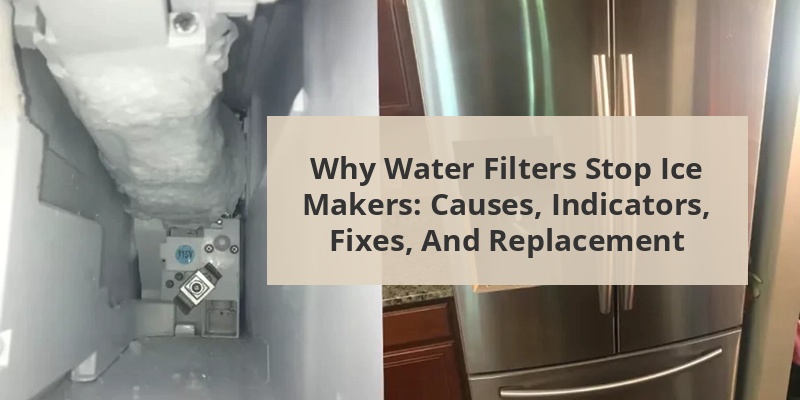
When your refrigerator’s ice maker suddenly stops working, the water filter might be the unexpected culprit. Many modern refrigerators integrate water filtration systems directly into the water supply line that feeds the ice maker. While these filters improve water quality and taste, they can sometimes interfere with ice production. Water filters can indeed cause ice makers to malfunction through various mechanisms including restricted water flow, improper installation, or compatibility issues. Understanding this connection can save you from unnecessary service calls and help you quickly restore your ice maker’s functionality.
In most refrigerator systems, the water filter sits directly in the path of water flowing to the ice maker. Water enters the refrigerator through the main supply line, passes through the filter, and then travels to both the water dispenser and ice maker. This integrated filtration system ensures all water used for consumption is properly filtered before freezing into ice cubes or dispensing for drinking.
The filter’s primary job is to remove contaminants like chlorine, lead, mercury, and sediment from your water. It typically consists of activated carbon and other filtering media contained within a cartridge that fits into a designated housing compartment in your refrigerator.
| Filter Location | Common Brands | Access Method |
|---|---|---|
| Upper right corner (interior) | Whirlpool, KitchenAid, Maytag | Push-button release |
| Base grille (exterior) | Kenmore, LG, some Whirlpool models | Quarter-turn access |
| Upper left corner (interior) | Samsung, GE | Twist-lock mechanism |
Content Navigation
Common Ways Water Filters Cause Ice Maker Problems
Clogged or Restricted Filters
The most frequent way a water filter affects ice production is when it becomes clogged with contaminants over time. As the filter media captures particles, the water flow gradually decreases. When water pressure drops below the minimum threshold needed for the ice maker (typically 20 psi), ice production slows or stops completely.
Older filters can become so saturated with contaminants that they severely restrict water flow. This restriction might be enough to allow some water through to the dispenser but insufficient for proper ice maker operation.
Improper Installation
Installation errors can immediately cause ice maker problems. An improperly seated filter can create water leaks or air gaps in the system, reducing water pressure to the ice maker. Common installation mistakes include:
Call 888-896-7031 for Free Local HVAC Quotes – Compare and Save Today!
- Failing to remove the protective cap on a new filter
- Not rotating the filter completely into the locked position
- Cross-threading the filter in its housing
- Damaging the O-rings that create water-tight seals
Incompatible Filter Replacements
Using an aftermarket or incompatible filter can cause numerous issues. While third-party filters may be less expensive, they might not meet the exact specifications required by your refrigerator model. Non-OEM filters might have different flow rates or pressure requirements that can negatively impact ice maker performance.
Air Locks in the System
After installing a new filter, air bubbles can become trapped in the water lines. These air locks prevent water from flowing efficiently to the ice maker. Many users mistakenly blame a new filter for being defective when the issue is simply trapped air that needs to be purged from the system.
Signs Your Water Filter is Affecting Your Ice Maker
Several indicators suggest your water filter might be causing ice maker problems:
- Hollow or smaller ice cubes – Indicates reduced water flow
- Significantly slower ice production – Filter may be restricting water supply
- Complete cessation of ice production – Severe water flow restriction
- Problems immediately following filter replacement – Suggests installation issues
- Water dispenser also affected – Confirms a system-wide water supply issue
In many cases, the water dispenser may still work when the ice maker doesn’t because dispensers can operate with lower water pressure than ice makers require. This differential functionality often leads users to overlook the filter as the source of ice maker problems.
Troubleshooting Water Filter and Ice Maker Issues
Bypass Test
The most effective way to determine if your water filter is causing ice maker problems is to perform a bypass test. Most refrigerators include a bypass plug that allows water to flow through the system without filtration. To conduct this test:
- Remove the water filter
- Insert the bypass plug (if your model has one)
- Monitor ice production for 24 hours
If ice production resumes with the bypass plug installed, your filter was definitely the culprit. If no bypass plug is available, you can temporarily reinstall the old filter to see if a new filter was improperly installed.
Call 888-896-7031 for Free Local HVAC Quotes – Compare and Save Today!
Resetting the System
After replacing a water filter, some refrigerator models require a system reset to resume normal operation. This might involve:
- Pressing and holding a specific button combination
- Resetting the “replace filter” indicator light
- Unplugging the refrigerator for 5 minutes to reset the control board
Check your refrigerator’s user manual for model-specific instructions on how to properly reset the system after a filter change.
Flushing the Water Line
Air bubbles trapped in the water line require flushing before normal operation can resume. Dispense at least 2-3 gallons of water through the water dispenser after installing a new filter. This purges air from the system and saturates the new filter media properly.
| Troubleshooting Step | Success Rate | Complexity |
|---|---|---|
| Bypass test | High (90%) | Easy |
| System reset | Medium (60%) | Medium |
| Water line flush | High (85%) | Easy |
| Filter replacement | High (80%) | Easy |
Preventative Maintenance Tips
To avoid water filter-related ice maker issues, follow these preventative measures:
- Replace filters according to manufacturer guidelines – typically every 6 months or 200-300 gallons
- Use only compatible filters recommended for your specific refrigerator model
- When installing a new filter, ensure it’s fully seated and locked in position
- Always flush the system after installing a new filter
- Consider water quality when determining replacement frequency – hard water may require more frequent changes
Maintaining a regular filter replacement schedule prevents the gradual decline in water flow that can go unnoticed until it completely stops your ice maker. Mark your calendar or set a reminder to ensure timely replacements.
When to Replace Your Water Filter
Know when it’s time to replace your refrigerator’s water filter by monitoring these indicators:
- Time-based replacement – Follow manufacturer’s recommended schedule
- Usage indicators – Some refrigerators have lights or digital displays
- Performance changes – Slow water flow, unusual taste, or odor
- Visible sediment – Particles in water or ice
The cost of replacement filters varies significantly between brands and models. OEM (Original Equipment Manufacturer) filters typically range from $30-$50, while aftermarket options might cost $15-$30. While aftermarket filters may save money, they could affect performance if not precisely matched to your refrigerator’s specifications.
Tips for Getting the Best HVAC Prices
- Prioritize Quality Over Cost
The most critical factor in any HVAC project is the quality of the installation. Don’t compromise on contractor expertise just to save money. - Check for Rebates
Always research current rebates and incentives — they can significantly reduce your overall cost. - Compare Multiple Quotes
Request at least three estimates before making your choice. You can click here to get three free quotes from local professionals. These quotes include available rebates and tax credits and automatically exclude unqualified contractors. - Negotiate Smartly
Once you've chosen a contractor, use the proven strategies from our guide — How Homeowners Can Negotiate with HVAC Dealers — to get the best possible final price.
| Brand | OEM Filter Cost | Recommended Replacement |
|---|---|---|
| Whirlpool/Maytag | $40-50 | Every 6 months |
| Samsung | $35-45 | Every 6 months |
| LG | $45-55 | Every 6 months |
| GE | $50-60 | Every 6 months |
| Frigidaire | $35-45 | Every 6 months |