
Portable wall heaters offer targeted warmth without the footprint of a freestanding unit. Below is a concise review of five portable wall or plug-in wall heaters ideal for offices, bedrooms, dorms, garages, and small living spaces. The table summarizes each model for quick comparison.
| Product | Brand | Key Feature |
|---|---|---|
| Wall Space Heater 450W Remote Portable Electric Heater | Brightown | Low-watt plug-in ceramic with precise thermostat and timer |
| Ontel Handy Heater Turbo Wall Outlet | Ontel | 800W wall outlet ceramic with 12-hour timer and adjustable thermostat |
| Dreo Smart Wall Heater WH719S | Dreo | 1500W wall-mounted PTC heater with 120° oscillation and smart control |
| Envi Plug-in Electric Panel Wall Heater | ENVI | Fan-less convection panel, low-watt continuous wall heat, made in USA |
| 450W Space Heater Remote Wall Outlet | Minetom | Compact 450W plug-in with rotating plug, LED display and thermostat |
Content Navigation
- Wall Space Heater 450W Remote Portable Electric Heater
- Ontel Handy Heater Turbo Wall Outlet Small Space Heater
- Dreo Smart Wall Heater, Electric Space Heater WH719S
- Envi Plug-in Electric Panel Wall Heaters For Indoor Use
- 450W Space Heater, Remote Wall Outlet Electric Space Heater
- Buying Guide: How To Choose The Right Portable Wall Heater
- Heating Output And Room Size
- Mounting And Placement
- Controls, Timers, And Smart Features
- Noise And Comfort
- Energy Efficiency And Operating Cost Perspectives
- Safety Features And Certifications
- Air Quality And Health Considerations
- Installation, Maintenance, And Lifespan
- Comparing Models By Use Case
- Final Selection Checklist
Wall Space Heater 450W Remote Portable Electric Heater

Brand: Brightown. This compact plug-in ceramic PTC heater is designed for targeted warmth in small rooms and offices. The unit claims a fast heating PTC ceramic plate that begins producing heat quickly. It offers a clear LED display and a programmable 1–12 hour timer for scheduled operation. The built-in precise thermostat supports adjustments in 1°F increments across a 60°F–90°F range, allowing tighter temperature maintenance than simple low/medium/high settings. Safety features include overheat protection and an ETL safety certification. Applications: dorm rooms, small offices, or supplemental heat near workspaces. Consider electrical load and intended run time when using low-watt models continuously.
Ontel Handy Heater Turbo Wall Outlet Small Space Heater

Brand: Ontel. The Ontel Handy Heater Turbo is a wall-outlet ceramic heater designed to heat small rooms up to the manufacturer’s suggested coverage. It offers an adjustable thermostat between 60°F and 90°F plus a programmable 12-hour timer. Rated at around 800 watts, it aims to balance output and outlet compatibility. The product description highlights ceramic technology that minimizes air dryness by preserving moisture compared with some other heating methods. Built-in safety features include auto shut-off. This model is a plug-in option for users who need more power than a 450W unit but still want a compact, outlet-mounted solution.
Dreo Smart Wall Heater, Electric Space Heater WH719S

Call 888-896-7031 for Free Local HVAC Quotes – Compare and Save Today!
Brand: Dreo. The WH719S is a higher-capacity wall-mounted PTC ceramic heater with 1500W output and 120° vertical oscillation for broad coverage. It integrates smart features: remote control, app connectivity, scheduling, and voice control compatibility with Alexa and Google Home. Temperature control is precise (range 41°F–95°F with 1°F increments) and includes ECO modes for energy-conscious operation. The unit is positioned for bedroom or living area installs where wall mounting can provide even distribution without occupying floor space. Considerations include electrical circuit capacity for 1500W devices and mounting location for optimal airflow and safe clearance.
Envi Plug-in Electric Panel Wall Heaters For Indoor Use
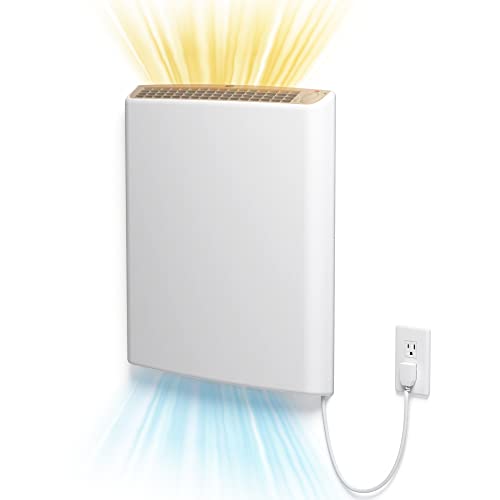
Brand: ENVI. This product uses a fan-less, convection panel design for quiet, continuous wall-mounted heating. It’s described as energy-efficient low-wattage targeted heating to supplement central systems or serve specific zones. The panel maintains a moderate surface temperature (around 90°F) and includes a wall-sense safety sensor that cuts power if removed. The design minimizes blown dust and allergens and supports near-continuous operation for areas where gentle, silent warmth is preferred (bedrooms, nurseries, offices). As a panel-style heater, it differs from fan-forced or PTC units by delivering convection heat with reduced noise and minimal air movement.
450W Space Heater, Remote Wall Outlet Electric Space Heater

Brand: Minetom. This compact 450W plug-in heater emphasizes circuit-friendly operation with a rotating 180° plug and low amperage. The unit includes an LED display, digital thermostat adjustable from 60°F to 90°F, and a 1–12 hour timer for scheduled on/off operation. The exterior is designed to stay cool while operating, and the lower wattage can make it a suitable choice for mild climates or rooms where continuous heavy heat is unnecessary. As with other low-watt models, it’s best used for supplemental localized warmth rather than primary heating for large rooms.
Buying Guide: How To Choose The Right Portable Wall Heater
Selecting a portable wall heater depends on room size, mounting preference, noise tolerance, safety needs, and energy considerations. Below are core factors to evaluate from multiple perspectives before purchase.
Call 888-896-7031 for Free Local HVAC Quotes – Compare and Save Today!
Tips for Getting the Best HVAC Prices
- Prioritize Quality Over Cost
The most critical factor in any HVAC project is the quality of the installation. Don’t compromise on contractor expertise just to save money. - Check for Rebates
Always research current rebates and incentives — they can significantly reduce your overall cost. - Compare Multiple Quotes
Request at least three estimates before making your choice. You can click here to get three free quotes from local professionals. These quotes include available rebates and tax credits and automatically exclude unqualified contractors. - Negotiate Smartly
Once you've chosen a contractor, use the proven strategies from our guide — How Homeowners Can Negotiate with HVAC Dealers — to get the best possible final price.
Heating Output And Room Size
- Wattage vs. Coverage: Higher wattage (e.g., 1500W) provides faster, broader warmth; lower-watt units (400–800W) suit small rooms or targeted zones. Estimate square footage and check manufacturer guidance for recommended room size.
- Heating Type: PTC ceramic and fan-forced models deliver faster warm air; panel (convection) units provide steady, quiet ambient heat. Match type to whether you want rapid heat-up or silent continuous comfort.
Mounting And Placement
- Plug-In vs. Hard-Mounted: Plug-in/outlet models are portable and easy to move but need an available outlet and may block it. Wall-mounted units require installation but free up floor space and often deliver more even room coverage.
- Clearance And Airflow: Ensure proper clearance per the manual, avoid blocking airflow with furniture, and position to distribute heat toward occupied areas.
Controls, Timers, And Smart Features
- Thermostat Precision: Digital thermostats with 1°F increments enable tighter temperature control and can improve comfort and efficiency.
- Timers & Scheduling: Timers allow automatic shutoff or delayed start—valuable for energy savings and safety.
- Smart Connectivity: App control and voice assistant integration add convenience for remote scheduling and monitoring, especially in mounted models.
Noise And Comfort
- Fan-Forced Units: Tend to be louder but heat quickly. Check dB ratings where available if noise is a concern for bedrooms or workspaces.
- Fan-Less Panels: Provide silent operation, beneficial for sleep environments, but may heat more slowly and less uniformly in larger rooms.
Energy Efficiency And Operating Cost Perspectives
- Wattage vs. Runtime: Energy use equals wattage multiplied by hours of operation. A lower-wattage heater may cost less per hour but may need longer runtime to maintain comfort, so compare expected usage patterns.
- ECO Modes & Thermostatic Control: Units with ECO or precise thermostat control can cycle efficiently to maintain set temperatures and reduce wasted energy.
- Supplement vs. Primary Heat: Use portable wall heaters for spot heating to reduce central thermostat settings and save energy, but avoid relying on small units for whole-home heating.
Safety Features And Certifications
- Overheat Protection: Important for any heater to reduce fire risk.
- Auto Shut-Off & Tip Sensors: Plug-in and freestanding units should include automatic shut-off if tipped or removed; wall-mounted panels may include wall-sense cutoffs.
- Certifications: Look for ETL, UL, or other recognized safety listings which indicate independent testing.
Air Quality And Health Considerations
- Dryness: Fan-forced heat can reduce ambient humidity; consider rooms where moisture preservation matters. Some ceramic models advertise reduced dryness.
- Allergens: Fan-less convection panels produce less air movement and may reduce redistributed dust and allergens compared with fan-based units.
Installation, Maintenance, And Lifespan
- Ease Of Installation: Plug-in models require minimal setup. Wall-mounted or hardwired units may need professional installation — factor labor costs and mounting options.
- Filter And Cleaning: Check whether the heater has accessible filters or requires dusting to maintain efficiency and reduce odors.
- Expected Use Cycle: For continuous 24/7 use, prefer models rated for long-term operation (panels and some low-watt models). For intermittent use, higher-power PTC units are suitable.
Comparing Models By Use Case
- Dorm Rooms & Small Offices: Compact plug-in units with digital thermostats and timers (450W–800W) offer convenience and outlet-mounted placement.
- Bedrooms & Nurseries: Quiet fan-less panels or low-noise PTC models with auto-dimming lights and safety sensors are optimal.
- Large Rooms & Rapid Heat: Higher-watt wall-mounted PTC heaters with wide oscillation and smart control give faster distribution but require adequate circuit capacity.
- Whole-Room Replacement vs. Supplement: For full-room heating consider 1500W wall-mounted options; for targeted, supplemental warmth use low-watt plug-in or panel units.
Final Selection Checklist
- Confirm electrical circuit capacity for the heater wattage.
- Decide between portability (plug-in) and permanence (wall-mounted).
- Prioritize safety certifications and auto-shutoff features.
- Match noise level and heating type to the intended room use.
- Verify control preferences: timer, thermostat precision, remote/app control.