
Finding an affordable infrared heater that reliably warms a room without high energy bills can be challenging. Below is a concise comparison of five practical, budget-minded infrared heaters selected for value, safety features, and performance for small to medium indoor spaces.
| Product | Type | Power Options | Notable Feature |
|---|---|---|---|
| BLACK+DECKER Infrared Radiant Quartz Tower Heater | Tower/Personal | 750W / 1500W | Dual Quartz Tubes + Adjustable Thermostat |
| Dr Infrared Heater Portable Space Heater | Portable Unit | 1500W | Dual Heating System (Quartz + PTC) |
| Comfort Zone Oscillating Flat Panel Heater | Flat Panel / Halogen Infrared | 800W | Oscillation For Wider Coverage |
| Könighaus Wall-Mounted Infrared Space Heater | Wall-Mounted Panel | 300W / 600W | Low-Profile, Energy-Efficient Options |
| LifeSmart Infrared Space Electric Heater | Portable Indoor Unit | 1500W | Six Quartz Elements + Eco Mode |
Content Navigation
- BLACK+DECKER Infrared Radiant Quartz Tower Heater
- Dr Infrared Heater Portable Space Heater
- Comfort Zone Oscillating Flat Panel Heater
- Könighaus Infrared Space Heater Wall-Mounted
- LifeSmart Infrared Space Electric Heater
- Buying Guide
- 1. Heater Type And Placement
- 2. Power, Coverage, And Efficiency
- 3. Heat Distribution
- 4. Controls, Timers, And Convenience
- 5. Safety Features
- 6. Noise And Maintenance
- 7. Installation And Space Requirements
- 8. Lifespan, Warranty, And Reliability
- 9. Safety And Room Suitability Checklist
- Side-By-Side Comparison Perspectives
BLACK+DECKER Infrared Radiant Quartz Tower Heater

The BLACK+DECKER tower model provides infrared radiant heat via dual quartz tubes combined with an integrated fan to improve heat dispersion. It offers two power settings — Low (750W) and High (1500W) — and a manual adjustable thermostat to regulate output.
Safety features include a cool-touch housing, power indicator light, overheat shutoff protection, and a tip-over auto shutoff. The compact tower design is suited to personal or small-room use where quick, directional warmth is needed. The control layout is manual, which can be simpler for users who prefer straightforward operation.
Dr Infrared Heater Portable Space Heater
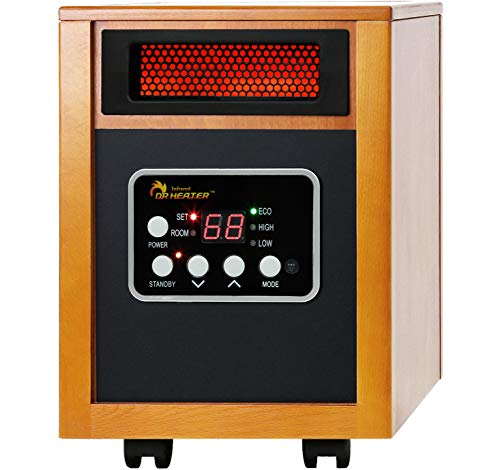
This Dr. Infrared model uses a dual heating system — infrared quartz tubes plus a PTC element — to deliver a higher effective heat output compared with single-element designs. It is designed to heat larger rooms and is rated around 5200 BTU equivalent.
Call 888-896-7031 for Free Local HVAC Quotes – Compare and Save Today!
Key convenience features include an IR remote control, a 12-hour automatic shutoff timer, and a high-pressure low-noise blower (approx. 39 dB). Safety measures listed are tip-over protection and overheat protection. The combination of heating elements aims to improve warm-up time and maintain stable temperatures in mid-sized rooms.
Comfort Zone Oscillating Flat Panel Heater

The Comfort Zone flat-panel unit delivers efficient radiant heat and is designed for small rooms, offices, and bedrooms. With an 800W rating and oscillation up to 70 degrees, it spreads warmth across a wider area than fixed-direction personal heaters.
The slimline design helps save floor space, and tilt adjustment lets users angle heat where needed. Built-in overheat sensor and tip-over switch are listed safety features. This model suits users focused on direct radiant warmth for localized comfort in compact spaces.
Könighaus Infrared Space Heater Wall-Mounted

The Könighaus panel targets low-energy continuous heating with compact, wall-mounted convenience. Models are available in 300W and 600W variants suitable for small to moderate-sized rooms (manufacturer heating surface guidance included).
Call 888-896-7031 for Free Local HVAC Quotes – Compare and Save Today!
Highlights include a maintenance-free design, powder-coated aluminum frame for a discreet look, and a 5-year manufacturer warranty. These panels are intended for users who prefer a fixed installation with quiet, continuous radiant warmth and minimal upkeep.
LifeSmart Infrared Space Electric Heater

The LifeSmart unit uses six quartz heating elements and offers 1500W power with multiple modes including an eco-friendly setting for energy-conscious use. It features a digital display, remote control, and a 12-hour timer for customizable schedules.
Safety is emphasized with a fireproof cabinet, child lock, and automatic shutoff for tip-over and overheating. The multiple heating elements and selectable modes make it versatile for larger rooms where stronger output and programmable control are desirable.
Buying Guide
Selecting the best cheap infrared heater requires weighing heating needs, energy use, installation preferences, and safety. Below are key considerations and comparison perspectives to help choose the most appropriate model for your space.
1. Heater Type And Placement
- Portable Tower Or Panel: Tower heaters (like the BLACK+DECKER) are easy to move and good for focused, directional heat. Portable units with multiple elements deliver stronger output for larger rooms.
- Wall-Mounted Panels: Offer discreet, continuous warmth and free up floor space. They are ideal for long-term, low-maintenance heating in small to medium rooms.
- Flat Panel / Oscillating: Best when you want to distribute heat across a wider area without a bulky floor footprint.
2. Power, Coverage, And Efficiency
- Wattage: Higher wattage (1200–1500W) generally heats larger spaces faster. Lower wattage panels (300–600W) are more energy-efficient for smaller rooms or supplemental heat.
- Infrared Technology: Quartz tubes and PTC elements vary in how they deliver heat. Quartz tubes provide quick radiant warmth; PTC elements stabilize temperature and are often more efficient at maintaining steady heat.
- Energy Modes: Look for eco or low-power settings to reduce running costs during extended use.
3. Heat Distribution
- Integrated Fan / Oscillation: Models with fans or oscillation spread heat faster across a room, useful for larger or open areas.
- Fixed Direction: Suitable for personal heating or when you want concentrated warmth in one spot.
4. Controls, Timers, And Convenience
- Manual vs. Digital Controls: Manual knobs are simple and reliable. Digital displays and remotes add convenience for scheduling and precise temperature control.
- Timers And Modes: A timer or programmable modes improve energy savings by limiting run time and enabling automatic shutoff.
5. Safety Features
- Tip-Over Protection: Prevents operation if the unit falls, important for homes with pets or children.
- Overheat Shutoff: Automatically cuts power if internal temperatures exceed safe thresholds.
- Cool-Touch Housing & Child Lock: Reduce burn risk and accidental changes to settings.
6. Noise And Maintenance
- Noise Levels: Fan-equipped models produce sound; check listed dB ratings if quiet operation is a priority.
- Maintenance: Infrared panels and sealed quartz units are typically low-maintenance. Ensure dust and clear airflow paths for fan models.
7. Installation And Space Requirements
- Floor Space: Consider slimline or wall-mounted options when floor space is limited.
- Mounting Needs: Wall-mounted panels may require hardware and placement planning; portable units need only a flat surface and outlet.
8. Lifespan, Warranty, And Reliability
- Warranty: Longer warranties (e.g., 5 years) can indicate manufacturer confidence and reduce long-term risk.
- Build Quality: Powder-coated frames, fireproof cabinets, and quality heating elements typically last longer and perform consistently.
9. Safety And Room Suitability Checklist
- Is the unit rated for the size of the room? Match wattage to square footage.
- Does it have tip-over and overheat protection if used in high-traffic areas?
- Are fan noise and heat distribution appropriate for the intended room (bedroom vs. living room)?
- Is the control interface usable for the user (remote, child lock, digital display)?
Side-By-Side Comparison Perspectives
- Best For Personal Use: Compact tower units with adjustable thermostat and tip-over protection provide quick, focused warmth.
- Best For Larger Rooms: Multi-element portable units or units with fans/boosted BTU equivalents increase effective coverage.
- Best For Low Energy / Continuous Use: Low-wattage wall panels offer background warmth with reduced running costs.
- Best For Quiet Spaces: Passive panels or non-fan quartz units have minimal noise; fan-equipped models should be assessed for dB levels.
Use this guide to align an infrared heater’s characteristics with your space, safety needs, and energy goals. Checking manufacturer specifications for coverage, listed safety features, and warranty coverage helps ensure the selected model meets expectations for performance and long-term reliability.
Tips for Getting the Best HVAC Prices
- Prioritize Quality Over Cost
The most critical factor in any HVAC project is the quality of the installation. Don’t compromise on contractor expertise just to save money. - Check for Rebates
Always research current rebates and incentives — they can significantly reduce your overall cost. - Compare Multiple Quotes
Request at least three estimates before making your choice. You can click here to get three free quotes from local professionals. These quotes include available rebates and tax credits and automatically exclude unqualified contractors. - Negotiate Smartly
Once you've chosen a contractor, use the proven strategies from our guide — How Homeowners Can Negotiate with HVAC Dealers — to get the best possible final price.