
Choosing the right baseboard heater element affects room comfort, installation, and safety. Below is a concise comparison of five relevant products from the provided list to help identify elements, full-length units, and covers that match common installation needs.
| Product | Type | Key Feature |
|---|---|---|
| Cadet F Series 36″ (3F750W) | Electric Baseboard Heater | Multi-watt (750/563W), 240/208V |
| Cadet F Series 36″ (3F750-1W) | Electric Baseboard Heater | 120V, 750W; Requires thermostat |
| KING 4K1210BW 4′ / 1000W | Electric Baseboard Heater | Aluminum Ribbon Fin Element, safety cutout |
| Cadet F Series 96″ (8F2500W) | Electric Baseboard Heater | High output 2500/1875W, 240/208V |
| Baseboarders Basic Series 6 ft Cover | Hydronic Baseboard Cover | Galvanized steel, rust-protected; hydronic only |
Content Navigation
- Cadet F Series 36″ Electric Baseboard Heater (3F750W)
- Cadet F Series 36″ Electric Baseboard Heater (3F750-1W)
- KING 4K1210BW K Series Baseboard Heater, 4′ / 1000W / 120V
- Cadet F Series 96″ Electric Baseboard Heater (8F2500W)
- Baseboarders Basic Series 6 ft Galvanized Steel Baseboard Cover
- Buying Guide: Choosing The Right Baseboard Heater Element
Cadet F Series 36″ Electric Baseboard Heater (3F750W)
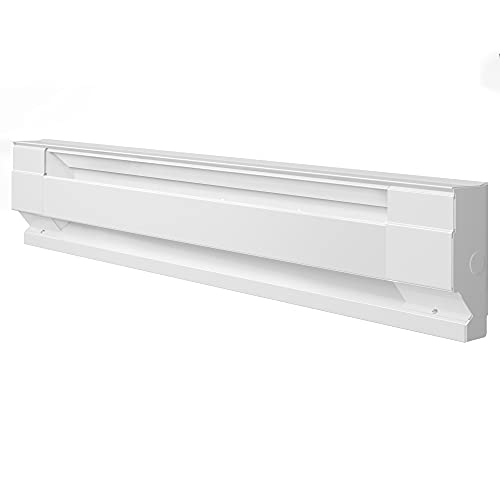
This Cadet F Series 36″ model is an electric baseboard heater element designed for 240/208V circuits with selectable outputs of 750 or 563 watts. It delivers convection heat intended to circulate warm air across the room via natural circulation.
Installation benefits include universal wiring and pre-punched knockouts, which facilitate either wall or floor mounting and straightforward electrical connections. The product listing emphasizes lasting warmth for small spaces and compatibility with standard baseboard mounting locations.
Technical considerations: ensure supply voltage matches the unit’s 240/208V rating and that circuit wiring can support the chosen wattage. This model is typically used where a mid-level heat output is sufficient and where a hard-wired solution is acceptable.
Cadet F Series 36″ Electric Baseboard Heater (3F750-1W)
Call 888-896-7031 for Free Local HVAC Quotes – Compare and Save Today!
This 36″ Cadet variant is rated for 120V at 750W and is intended to operate with a separate thermostat. The listing notes all-metal construction with powder coating, a 25-gauge body, and a 20-gauge junction box that includes grounding.
Use cases: the 120V model is suitable for rooms where 120V circuits are standard and where thermostat control is preferred. It requires proper thermostat selection and wiring; installers should confirm compatibility between the thermostat and heater wattage.
Safety and maintenance: the metal case and grounded junction box provide basic protection. Confirm local electrical codes for hard-wired baseboard installations and consult an electrician if unsure about thermostat wiring or circuit limitations.
KING 4K1210BW K Series Baseboard Heater, 4′ / 1000W / 120V

The KING 4K1210BW is a 4-foot electric baseboard heater rated for 1000W at 120V. Unlike plug-in units, it is designed to be hard-wired into the home electrical system. The listing highlights an aluminum ribbon fin element for heat transfer and a full-length safety cutout.
Performance profile: the aluminum ribbon fin element offers efficient heat conduction across the heater length, and the safety cutout adds thermal protection by interrupting power under over-temperature conditions. This model is often chosen where higher wattage on a 120V circuit is needed.
Call 888-896-7031 for Free Local HVAC Quotes – Compare and Save Today!
Installation considerations: hard-wiring requires matching circuit capacity and appropriate thermostat control where required. Check the manufacturer’s wiring instructions and local codes when integrating into existing home electrical systems.
Cadet F Series 96″ Electric Baseboard Heater (8F2500W)

The Cadet 96″ F Series is a long, high-output baseboard heater rated at 2500/1875 watts for 240/208V operation. It is targeted at medium to large rooms where a single long element can provide even heating coverage across a wall.
Key advantages listed include powerful output and universal wiring with pre-punched knockouts that can simplify mounting and connections. A high-temperature safety shutoff feature is included to reduce overheat risk.
Practical notes: long units like this reduce the need for multiple short heaters and can improve distribution along an exterior wall. Ensure the breaker and wiring scheme meet the ampacity requirements for the higher wattage, and verify mounting orientation per the product manual.
Baseboarders Basic Series 6 ft Galvanized Steel Baseboard Cover
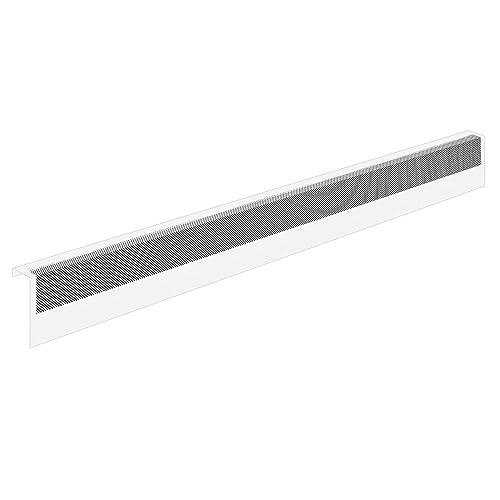
This product is a 6-foot galvanized steel baseboard cover intended for hydronic (water) systems only. The Basic Series cover provides a rust-resistant finish and a lifetime protection guarantee against rust under normal use.
Important compatibility note: the manufacturer explicitly states do not use on electric baseboard heaters. Hydronic covers differ from electric-compatible covers as they are designed for different heat transfer and clearance requirements.
Use case and installation: choose this cover if replacing an old or rusty hydronic cover and if dimensions align with your system. For electric baseboard heaters, select covers rated for electric models to ensure safety and compliance.
Buying Guide: Choosing The Right Baseboard Heater Element
Selecting an appropriate baseboard heater or element requires evaluating electrical compatibility, heat output, installation needs, and safety features. Below are key considerations to guide purchasing decisions.
Determine Voltage And Circuit Capacity
- Match Voltage: Confirm whether the location uses 120V or 240/208V circuits. Many 120V units require thermostat control; high-output units often use 240V.
- Circuit Ampacity: Calculate amperage (Watts ÷ Volts). Verify breaker and wiring gauge meet the heater’s current draw.
Assess Required Heat Output
- Room Size And Insulation: Use room square footage and insulation level to estimate BTUs or watts needed. Longer heaters (e.g., 96″) provide more evenly distributed heat for larger walls.
- Wattage Options: Some models offer selectable wattage settings suited for varying climates and loads.
Element And Material Considerations
- Element Type: Aluminum ribbon fin elements provide efficient heat transfer. Ribbon and tubular elements differ in response and durability.
- Case Construction: Powder-coated steel cabinets resist corrosion and provide durability; junction box gauge and grounding are important for safety.
Safety Features
- Thermal Cutout: Full-length safety cutouts or high-temperature shutoffs help prevent overheating.
- Grounding And Enclosures: A properly grounded junction box and robust enclosure reduce electrical and burn hazards.
Installation And Controls
- Thermostat Requirements: Some units require a separate thermostat; confirm compatibility with line-voltage or low-voltage thermostats.
- Mounting Flexibility: Pre-punched knockouts and universal wiring simplify wall or floor mounting and make retrofits easier.
Compatibility With Covers And Radiators
- Electric vs Hydronic Covers: Ensure covers are rated for the heater type. Hydronic covers should not be used on electric baseboards; electric-rated covers include appropriate clearances.
- Size And Fit: Measure heater length, height, and projection to choose a cover or replacement element that fits without obstructing airflow.
Durability And Maintenance
- Corrosion Resistance: Powder-coated or galvanized steel protects against rust, particularly in humid environments.
- Access For Service: Consider units with accessible junction boxes and removable covers for easier maintenance or replacement.
Comparison Perspectives
- Performance vs. Voltage: Higher-wattage 240V units typically deliver more heat for larger areas, while 120V units are suited to smaller rooms or retrofit situations.
- Length vs. Number Of Units: A single long unit can provide consistent distribution; multiple shorter units may offer more flexible zoning.
- Element Material vs. Longevity: Aluminum ribbon fins may heat evenly but consider manufacturer support and durability for long-term service.
Use these considerations to match product specifications to your room size, electrical infrastructure, and safety requirements. When in doubt, consult a licensed electrician or HVAC professional for installation and circuit planning.
Tips for Getting the Best HVAC Prices
- Prioritize Quality Over Cost
The most critical factor in any HVAC project is the quality of the installation. Don’t compromise on contractor expertise just to save money. - Check for Rebates
Always research current rebates and incentives — they can significantly reduce your overall cost. - Compare Multiple Quotes
Request at least three estimates before making your choice. You can click here to get three free quotes from local professionals. These quotes include available rebates and tax credits and automatically exclude unqualified contractors. - Negotiate Smartly
Once you've chosen a contractor, use the proven strategies from our guide — How Homeowners Can Negotiate with HVAC Dealers — to get the best possible final price.