
Selecting the right outdoor ceiling fan with heater pairing can extend your outdoor season, increase comfort, and improve energy use. This guide compares five relevant solutions — plug-in waterproof fans and a hanging infrared heater — suited for covered patios, pergolas, and gazebos. Below is a quick comparison table of the selected models to help you scan core specs.
| Product | Type | Key Features |
|---|---|---|
| Depuley 20″ Outdoor Ceiling Fan with Light | 20″ Plug-In Gazebo Fan | IP65 waterproof, remote & app control, 6 speeds, 3CCT light |
| LEDIARY 20″ Outdoor Ceiling Fan with Lights | 20″ Plug-In Gazebo Fan | IP65 waterproof, 16.5 ft cord, DC motor, reversible |
| Fanbulous 42″ Waterproof Outdoor Ceiling Fan | 42″ Hanging/Plug-In Fan | IP65, 3CCT 2400LM LED, 6-speed DC motor, long cord |
| BvenuBigLite 42″ Black Ceiling Fan | 42″ Low Profile Fan (Indoor/Outdoor Covered) | Smart app & remote, reversible DC motor, dimmable LED |
| Paraheeter Hanging Patio Heater (Infrared) | Electric Infrared Ceiling Heater | IP55, 3 power modes (600W/900W/1500W), instant radiant heat |
Content Navigation
- Depuley 20 Inch Outdoor Ceiling Fan With Light
- LEDIARY 20″ IP65 Waterproof Gazebo Hanging Fan
- Fanbulous 42″ Waterproof Outdoor Ceiling Fan With Lights
- BvenuBigLite 42″ Black Ceiling Fan With Light
- Paraheeter Hanging Patio Heater – Electric Infrared
- Buying Guide: How To Choose A Fan + Heater Solution For Covered Outdoor Spaces
- 1. Determine The Installation Setting
- 2. Weather Resistance And IP Ratings
- 3. Power Source And Cord Length
- 4. Heating Type And Placement
- 5. Fan Size, Airflow, And Motor Type
- 6. Lighting And CCT Options
- 7. Controls And Smart Features
- 8. Safety And Electrical Considerations
- 9. Matching Fans With Heaters: Practical Pairing Tips
- 10. Maintenance And Longevity
Depuley 20 Inch Outdoor Ceiling Fan With Light

This 20-inch plug-in gazebo fan is designed for covered outdoor areas. The unit carries an IP65 waterproof rating, intended for reliable operation in humid or rainy conditions when installed in covered spaces. It includes a 16.5-foot cord for flexible placement relative to outlets.
Controls: App and remote control provide stepless dimming, three-color temperature LED adjustment, six fan speeds, a 2-hour timer, and forward/reverse DC motor operation. Construction: Metal suspension and joint cover with baked paint, copper motor, and ABS blades enhance corrosion resistance and reduce power draw. Use case: Suitable for small to medium covered patios, pergolas, or gazebos where remote/app convenience and weather resistance are priorities.
LEDIARY 20″ IP65 Waterproof Gazebo Hanging Fan

The LEDIARY model emphasizes ease of installation with a 16.5-foot plug-in cord, eliminating many outlet location constraints for pergolas and gazebos. It also holds an IP65 waterproof rating, intended for covered outdoor use.
Call 888-896-7031 for Free Local HVAC Quotes – Compare and Save Today!
Performance: A DC motor offers quieter operation and energy savings, with reversible airflow for seasonal use. The fan supports six speeds and three CCT settings (warm to cool) for the integrated light. Practical considerations: The long cord and plug design are convenient for retrofits where hardwiring is not desired, and the waterproof rating helps protect electronics from outdoor moisture when installed under cover.
Fanbulous 42″ Waterproof Outdoor Ceiling Fan With Lights

This 42-inch hanging fan targets larger covered outdoor areas requiring stronger airflow and brighter light. It features an IP65 waterproof rating and an extra-long 16.4-foot cord for flexible placement relative to outdoor outlets.
Lighting & Motor: The integrated 2400-lumen LED (3CCT) offers high brightness for patio activities, while the DC motor provides six speeds and reversible operation for year-round air circulation. Installation: Plug-and-play mounting can simplify setup in pergolas and patio covers. Recommended for larger covered patios that need substantial airflow and high-output lighting.
BvenuBigLite 42″ Black Ceiling Fan With Light

The BvenuBigLite 42″ model blends modern styling with smart controls and a reversible DC motor. It ships with both 5″ and 10″ downrods to accommodate different ceiling heights and can be used in covered outdoor spaces labeled for such use.
Call 888-896-7031 for Free Local HVAC Quotes – Compare and Save Today!
Smart Features: App and remote let you control fan speeds, reverse rotation, dim and adjust LED color temperature (3000K–6500K), and set timers. The LED is dimmable across a wide range, and the low-power LED aims to minimize energy consumption. Use case: Good choice for homeowners who value integrated smart controls and a larger blade sweep for covered patio areas or indoor-outdoor transitional rooms.
Paraheeter Hanging Patio Heater – Electric Infrared
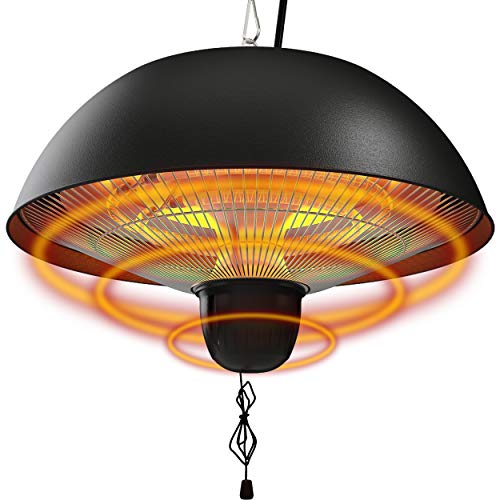
This hanging patio heater provides radiant infrared heat designed to warm people and surfaces instantly without blowing warm air. It offers three adjustable power modes (600W, 900W, 1500W) to match heating needs and site constraints. The unit is reported with an IP55 waterproof rating suitable for many outdoor applications.
Heating Method & Efficiency: Infrared carbon/halogen technology transfers heat directly to occupants, which can be more energy efficient for spot heating compared with forced-air heaters. The model includes a rope switch for simple control and advertises long lamp life. Use case: Pairing an infrared heater with a ceiling fan can provide balanced comfort by using the fan to circulate warmed air evenly in covered outdoor zones or to provide cooling when the heater is off.
Buying Guide: How To Choose A Fan + Heater Solution For Covered Outdoor Spaces
Choosing the right combination of ceiling fan and heater for an outdoor covered area requires evaluating space, environmental exposure, power availability, and comfort priorities. Below are key considerations and comparison perspectives to inform a purchase.
1. Determine The Installation Setting
- Covered vs. Open Space: Most products listed are intended for covered outdoor use (e.g., pergolas, gazebos, porches). Verify the IP rating and manufacturer guidance for open-air exposure.
- Mounting Type: Plug-in hanging fans are easier to install without hardwiring. Hardwired or dedicated-circuit heaters may need professional installation.
2. Weather Resistance And IP Ratings
- IP65 vs. IP55: IP65 means dust-tight and protected from water projected by a nozzle, while IP55 indicates dust limited ingress and protection from low-pressure water jets. Choose the protection level based on how exposed your location is to spray, rain, and humidity.
- Materials And Corrosion Resistance: Look for baked paint finishes, copper motors, and ABS blades for extended life in outdoor conditions.
3. Power Source And Cord Length
- Plug-In Convenience: Long cords (16+ ft) offer flexibility when outlets are not nearby. Confirm cord routing and safety for exterior use.
- Hardwired Options: Provide cleaner installs and may support larger units but usually require an electrician.
4. Heating Type And Placement
- Infrared vs. Forced Air: Infrared heaters (like the Paraheeter) warm people and objects directly and perform well for spot heating and energy efficiency. Forced-air heaters heat the air and may be less effective outdoors unless used in semi-enclosed spaces.
- Ceiling-Mounted Heaters: Hanging infrared units work well when installed above seating areas. Consider beam angle and mounting height for even coverage.
5. Fan Size, Airflow, And Motor Type
- Blade Sweep: 20-inch fans suit small gazebos and intimate seating; 42-inch fans suit larger covered patios. Match the blade sweep to square footage and seating arrangement.
- DC Motors: Offer quieter operation and better energy efficiency than many AC motors. DC motors often include reversible functionality for year-round air redistribution.
6. Lighting And CCT Options
- Integrated LEDs: Look for 3CCT (color temperature) options if you need flexible ambiance from warm to cool tones.
- Brightness: Lumen output matters for task or security lighting. A 2400-lumen LED provides bright illumination for larger patios.
7. Controls And Smart Features
- Remote Vs. App: Remote controls are simple and dependable; app control adds scheduling and integration with smart home systems. Confirm both if you want redundancy.
- Timers And Dimmer Functions: Useful for energy management and night-time comfort.
8. Safety And Electrical Considerations
- Cord Protection: Ensure outdoor-rated cords and weather-resistant plugs; use GFCI-protected outlets for safety.
- Clearances: Maintain recommended clearance distances from combustibles for heaters and ensure fans are installed at appropriate heights above seating.
9. Matching Fans With Heaters: Practical Pairing Tips
- Complementary Roles: Use the heater for direct radiant warmth focused on seating areas; use the fan to circulate warmed air during cooler months or to cool occupants when the heater is off.
- Control Coordination: Choose units with timers and adjustable power so you can sequence heater and fan operation for comfort and efficiency.
10. Maintenance And Longevity
- Routine Cleaning: Wipe blades and heater elements as recommended and inspect for corrosion periodically.
- Replaceable Parts: Check if bulbs or heating elements are replaceable and confirm expected lamp life for infrared heaters.
When combining an outdoor-rated ceiling fan and a hanging infrared heater, aim for compatible mounting heights, overlapping coverage, and coordinated controls to maximize comfort across seasons. Prioritize IP ratings appropriate to your exposure level and choose corded or hardwired solutions based on installation access and local electrical codes.
Tips for Getting the Best HVAC Prices
- Prioritize Quality Over Cost
The most critical factor in any HVAC project is the quality of the installation. Don’t compromise on contractor expertise just to save money. - Check for Rebates
Always research current rebates and incentives — they can significantly reduce your overall cost. - Compare Multiple Quotes
Request at least three estimates before making your choice. You can click here to get three free quotes from local professionals. These quotes include available rebates and tax credits and automatically exclude unqualified contractors. - Negotiate Smartly
Once you've chosen a contractor, use the proven strategies from our guide — How Homeowners Can Negotiate with HVAC Dealers — to get the best possible final price.