
Finding a slim wall heater that fits narrow spaces without sacrificing safety or performance requires comparing form factor, controls, and installation. Below is a concise summary table of five slim wall heaters selected for their wall-mounted designs, safety features, and smart or low-profile options.
| Product | Type / Key Feature |
|---|---|
| ENVI Plug-in Electric Panel Wall Heaters | Low-wattage, fan-less panel, plug-in, safety sensor |
| Dreo Smart Wall Heater (PTC, Oscillation) | PTC ceramic, smart controls, 30° oscillation |
| Heat Storm HS-1500-PHX-WIFI | Infrared wall-mounted, Wi‑Fi control, touchscreen |
| Dreo Wall Heater For Bathroom (ALCI) | ALCI plug, PTC ceramic, vertical oscillation options |
| Cadet Com-Pak Electric Wall Heater (CSC151TW) | Hardwired wall heater, built-in thermostat, proven design |
Content Navigation
ENVI Plug-In Electric Panel Wall Heater
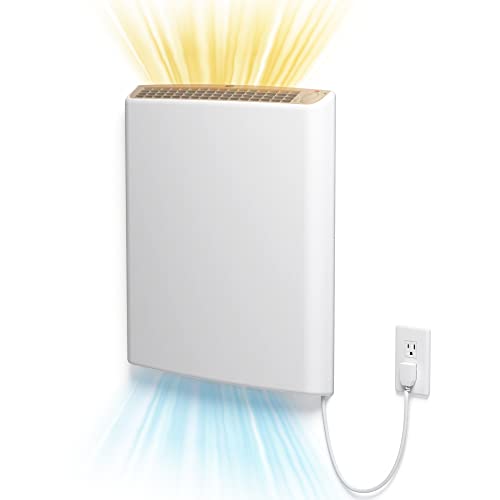
The ENVI plug-in panel is a slim, low-wattage wall-mounted heater designed for continuous use. Its patented fan-less “Stack Convection” design provides silent warmth and reduces airborne dust and allergens by avoiding forced airflow. The heater operates around 90°F surface temperature and includes a wall-sense safety sensor that cuts power if the unit is removed.
Key practical points: the unit is marketed as a simple 2-minute install that plugs into a standard outlet, making it an option for renters or rooms without hardwiring. Its low-wattage approach is aimed at targeted zone heating rather than whole-home replacement. The model emphasizes quiet operation, continuous runtime capability, and a low-disturbance LED that auto-dims for bedrooms.
Dreo Smart Wall Heater PTC

This Dreo wall heater uses a PTC ceramic heating element and an optimized airflow design to deliver fast, directed warmth. It features 30° manual oscillation to spread heat across a room and reports a low sound level (~28 dB) suitable for sleeping areas or offices.
Call 888-896-7031 for Free Local HVAC Quotes – Compare and Save Today!
Smart capabilities include control via a remote, the Dreo app, and voice integration with Alexa. The heater offers an ECO mode and temperature calibration through the app for more precise control. Installation is described as wall-mounted and intended for indoor use. This model is positioned for users who prioritize smart scheduling and app-based control alongside compact wall installation.
Heat Storm HS-1500-PHX-WIFI Infrared Heater

The Heat Storm HS-1500-PHX-WIFI is an infrared wall-mounted heater with Wi‑Fi control. Infrared heating warms objects and people directly rather than relying solely on air convection, which can be useful in spaces where you want immediate, focused warmth.
Controls include a touchscreen and included remote, plus smartphone control via Wi‑Fi. Safety features listed include tip-over shutoff and a digital thermostat. It’s designed to save floor space and suit bedrooms, kitchens, and offices. The wall-mount design and connectivity position it for users who want a connected infrared option without a large footprint.
Dreo Bathroom Wall Heater With ALCI Plug

This Dreo unit is tailored for bathrooms and wet locations by including an ALCI anti-leakage plug that cuts power on leak detection and internal overheat protection. It uses PTC ceramics and an impeller design for fast heat delivery and offers vertical oscillation options including 120° for broad coverage.
Call 888-896-7031 for Free Local HVAC Quotes – Compare and Save Today!
Smart features provide voice control (Alexa, Google Home) and app scheduling. Safety upgrades and a self-correction air outlet system are emphasized, making the model relevant where electrical safety and moisture management are priorities. The ALCI plug can simplify installation in bathrooms that accept plug-in devices and require extra leakage protection.
Cadet Com-Pak Electric Wall Heater CSC151TW

The Cadet Com-Pak CSC151TW is a traditional hardwired wall heater with a built-in thermostat, designed to heat medium-sized rooms quickly. Cadet models are commonly used for reliable, long-term wall heating in residential or light commercial settings.
Features include a heating coil element for rapid warmth, a quiet fan to distribute heat, and safety cutoffs if temperatures exceed normal operating ranges. The CSC151TW is a proven, straightforward option for installations where a permanently mounted, wired heater is appropriate and where centralized HVAC supplementation is desired.
Buying Guide: How To Choose A Slim Wall Heater
Selecting the right slim wall heater depends on installation convenience, room size, safety features, control preferences, and intended use. Below are critical considerations to compare models objectively.
1. Mounting & Installation Type
- Plug-In Panel: Easier installation, suitable for renters or rooms without dedicated wiring. Examples: ENVI plug-in panel, bathroom ALCI models for wet areas.
- Hardwired Wall Heaters: Require electrician installation but often deliver higher sustained output and a cleaner look. Example: Cadet Com-Pak series.
- Recessed Or Flush Mount: Consider wall depth and framing if replacing or recessing into drywall.
2. Heating Technology
- Convection (Panel, Coil): Heats air that circulates naturally; quiet fan-less panels are good for continuous gentle warmth.
- PTC Ceramic: Fast warm-up, self-regulating behavior that can improve efficiency and lifespan.
- Infrared: Heats objects and people directly; useful for targeted zones and immediate comfort.
3. Control And Smart Features
- Manual Thermostat: Reliable and simple for fixed settings.
- Digital/Remote/App Control: Enables schedules, remote adjustments, and integration with smart home platforms for convenience and potential energy savings.
- Voice Control: Useful if you already use Alexa/Google Home; confirm the model’s compatibility.
4. Safety Features
- Overheat Protection: Essential for all wall heaters to prevent thermal hazards.
- ALCI/GFCI Protection: Required or recommended in bathrooms and damp spaces to cut leakage current.
- Wall-Sense/Removal Switch: Useful on plug-in models to prevent operation if detached from the wall.
5. Noise And Indoor Air Quality
- Fan-less Panels produce minimal noise and avoid blowing dust, benefiting bedrooms and allergy-sensitive occupants.
- Fan-Assisted or impeller designs can move heat faster but may produce audible sound and circulate dust.
6. Output, Coverage And Energy Use
- Match heater wattage to room size; many slim wall heaters are designed for zone heating rather than whole-home replacement.
- ECO or programmable modes help limit runtime and reduce energy consumption.
- Consider whether you want continuous low-wattage heating (good for maintaining temperature) versus high-output short-duration heating (fast warmth).
7. Location-Specific Considerations
- Bathrooms: Choose ALCI or GFCI-protected models and confirm IP ratings if exposure to steam is possible.
- Bedrooms/Offices: Prioritize quiet operation and dimmable or non-intrusive indicator lights.
- Living Areas: Infrared or oscillating units can help distribute heat across open spaces.
8. Durability And Brand Support
- Look for established manufacturers with clear warranty and customer support policies, especially for hardwired installations.
- Consider replacement parts and serviceability if you plan long-term use.
When comparing slim wall heaters, weigh installation complexity, safety certifications, control flexibility, noise level, and the type of heat delivery you prefer. Each technology has trade-offs: fan-less panels excel in quiet, allergen-conscious heating; PTC units heat quickly with self-regulation; infrared units provide direct warmth; and hardwired units often offer robust, low-profile installations.
Tips for Getting the Best HVAC Prices
- Prioritize Quality Over Cost
The most critical factor in any HVAC project is the quality of the installation. Don’t compromise on contractor expertise just to save money. - Check for Rebates
Always research current rebates and incentives — they can significantly reduce your overall cost. - Compare Multiple Quotes
Request at least three estimates before making your choice. You can click here to get three free quotes from local professionals. These quotes include available rebates and tax credits and automatically exclude unqualified contractors. - Negotiate Smartly
Once you've chosen a contractor, use the proven strategies from our guide — How Homeowners Can Negotiate with HVAC Dealers — to get the best possible final price.