
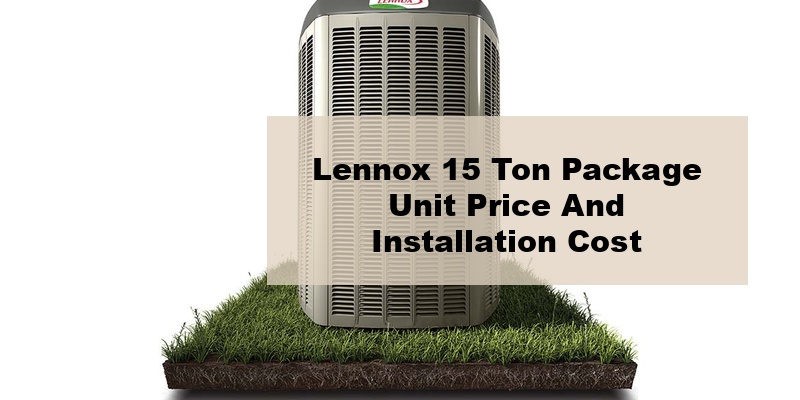
The Lennox fifteen-ton package unit represents a large, all-in-one HVAC solution designed for substantial cooling or heating loads in American settings. These units consolidate the outdoor condenser, compressor, evaporator coil, air handler, and usually an integrated control into a single cabinet. A 15-ton capacity equates to roughly 180,000 BTU per hour, making these systems common for large homes, multi-zone applications, or small commercial spaces. Price and installation cost vary based on model configuration, efficiency, ductwork, regional labor rates, and necessary electrical or gas-service upgrades. This guide provides a clear breakdown to help homeowners and managers plan effectively.
Content Navigation
- Overview Of Lennox Fifteen-Ton Package Units
- Equipment Cost: Lennox Fifteen-Ton Package Unit Price
- Installation Cost Breakdown For The Package Unit
- Regional Variations And Permits
- Warranty, Service, And Maintenance Costs
- How To Get Accurate Quotes And Plan A Project
- Cost-Saving Tips For Lennox Fifteen-Ton Packages
- Frequently Asked Questions
Overview Of Lennox Fifteen-Ton Package Units
Fifteen-ton Lennox package units are designed to meet large indoor space demands with a single, compact outdoor unit. They are well-suited for properties that require robust cooling in hot climates or reliable heating in cooler ones, depending on the heat configuration. These systems typically come in gas/electric or electric-heat configurations, offering varying efficiency levels such as standard or high-efficiency models. Because all major components are integrated, installation focuses on site prep, duct connections, electrical service adjustments, and proper venting or exhaust considerations. Energy efficiency ratings and control options influence both upfront cost and long-term operating expenses.
When evaluating Lennox fifteen-ton packages, installers consider factors such as SEER (Seasonal Energy Efficiency Ratio), EER (Energy Efficiency Ratio), and HSPF (Heating Seasonal Performance Factor) for heat-capable models. Higher efficiency units may carry a higher upfront price but can reduce monthly utility bills and improve comfort consistency. Availability of optional smart thermostats, zoning capabilities, and weather-responsive controls can also affect total installed cost. Overall, these units provide a compact, all-in-one solution that simplifies some aspects of installation while demanding careful planning for ductwork and service upgrades.
Equipment Cost: Lennox Fifteen-Ton Package Unit Price
The price of the Lennox fifteen-ton package unit itself varies with configuration, efficiency, and retailer. In general, equipment costs for the unit alone tend to fall within a broad range to accommodate different market needs and installation scenarios. For a standard fifteen-ton packaged unit with conventional efficiency, the equipment price typically falls between several thousand and well into the five-figure range. High-efficiency configurations, plus models with enhanced controls or factory-installed accessories, push the price higher. Buyers should obtain formal quotes from local Lennox distributors or licensed HVAC dealers for precise numbers.
Illustrative equipment-cost ranges (unit only, before labor and permitting):
- Low-end, standard-efficiency model: about $6,000–$9,000
- Mid-range, improved-efficiency model: about $9,000–$12,000
- High-efficiency or premium-control models: about $12,000–$15,000+
Note: These figures are typical ballpark ranges for equipment alone in the United States and can vary by region, model family, and current market conditions. The list price from a dealer often differs from the final installed price after delivery, taxes, and any promotions or financing. For accurate budgeting, request detailed quotes that separate equipment, labor, and any required site work.
Call 888-896-7031 for Free Local HVAC Quotes – Compare and Save Today!
Installation Cost Breakdown For The Package Unit
Installing a Lennox fifteen-ton package unit involves more than dropping in a new box. Labor intensity, ductwork, electrical service, gas supply, and site logistics all influence final costs. A comprehensive installation often includes permitting, equipment setup, and system commissioning. Below is a practical breakdown of what commonly drives total installation costs, with typical ranges to help with budgeting.
Ductwork And Site Preparation
Most installations require some ductwork modification or upgrades to ensure proper airflow and balanced pressure. Costs depend on current duct design, insulation needs, and accessibility. In tight spaces or complex layouts, crew time increases significantly. Expect higher costs where duct runs must be rerouted, new plenums installed, or under-floor/attic access is restricted.
Electrical And Gas Line Upgrades
A fifteen-ton unit often requires electrical service upgrades (for example, a dedicated 200-amp feed) and appropriate electrical grounding. Gas-powered configurations demand a correctly sized gas line, shut-off valves, and venting where applicable. Electrical and gas-work complexity can considerably affect labor hours and material costs, particularly in older homes or structures with limited mechanical rooms.
Permits, Startup, And Commissioning
Most jurisdictions require building or mechanical permits for new HVAC installations. Permit costs vary by locality but typically cover plan review, inspections, and compliance with codes. Startup includes system charging, refrigerant testing, airflow balancing, and control programming. Proper commissioning helps ensure efficiency and performance, but it adds a measurable portion to the overall installation budget.
Refrigerant Piping, Condensate Drain, And Controls
Trimming refrigerant lines, insulating piping, and installing condensate drainage are common tasks. Control wiring, thermostat integration, and zone controls can add to both material and labor costs. If existing controls are incompatible with the Lennox unit, plan for upgraded thermostats or building automation components as part of the project.
Support Structures And Weatherproofing
Outdoor units benefit from level pads, vibration isolation, and weatherproof clearances. Ensuring proper clearance for service access and octave-level sound control may require additional mounting materials or fencing in some areas. These items, though sometimes overlooked, can influence total cost and long-term reliability.
Call 888-896-7031 for Free Local HVAC Quotes – Compare and Save Today!
Regional Variations And Permits
Regional factors in the United States significantly impact installed prices. Climate plays a major role; hotter regions may push demand for higher-capacity or high-efficiency units, while colder areas may influence heating configuration choices. Labor rates vary by market, with metropolitan areas typically charging more. Permitting costs hinge on local government fees and inspection frequency. Additionally, some states require refrigerant handling documentation or equipment tests that affect startup time and costs. Always factor in these regional considerations when budgeting for a Lennox fifteen-ton package unit.
Warranty, Service, And Maintenance Costs
Warranty terms differ by model and installation specifics. Standard warranties often cover the compressor and major components for a designated period, with some coverage extending to the entire unit. Extended warranties may be purchased for additional protection. Routine maintenance—filter changes, coil cleaning, refrigerant checks, and system diagnostics—helps preserve efficiency and longevity, but it carries ongoing annual costs. Budget for annual service visits and potential part replacements to keep the system performing at peak levels over its lifespan.
How To Get Accurate Quotes And Plan A Project
To obtain precise Lennox fifteen-ton package unit pricing, request formal bids from multiple licensed HVAC contractors. Begin with a load calculation (Manual J) to confirm the space’s cooling and heating requirements, and verify ductwork suitability. Ensure each quote separates equipment costs, labor, permits, and any required upgrades to electrical service or gas lines. Check references, licenses, and certifications (including NATE or equivalent). Ask about lead times, warranty terms, and post-installation support. A detailed comparison aids informed decision-making and reduces hidden costs later.
Cost-Saving Tips For Lennox Fifteen-Ton Packages
- Choose the right efficiency tier that matches long-term energy costs and climate: ultra-high-efficiency models save more in hot climates but cost more upfront.
- Plan ductwork improvements during the same project to avoid rework and repeated labor charges.
- Bundle services with a single reputable installer to simplify scheduling and ensure cohesive system design.
- Explore manufacturer promotions, financing options, or utility rebates that apply to high-efficiency equipment.
- Invest in a quality thermostat or zoning controls to maximize comfort and efficiency.
Smart planning can significantly affect total cost. While upfront investments may be higher for premium configurations, long-term energy savings and improved comfort often justify the expenditure. Always request a detailed breakdown to understand where costs are allocated and what alternatives exist within your budget.
Frequently Asked Questions
Q: What defines a Lennox fifteen-ton package unit? A: It is a single, all-in-one outdoor unit with a 15-ton cooling/heating capacity, available in various configurations (gas/electric or electric heat) and efficiency levels, designed to serve large spaces.
Q: How long does installation take? A: Most installations range from a few days to a week, depending on ductwork, electrical upgrades, and permitting. Complex sites can take longer.
Q: Can I finance a Lennox package unit? A: Yes. Many dealers offer financing; check manufacturer programs, contractor options, and utility rebates to reduce out-of-pocket costs.
Q: What maintenance is required? A: Annual professional inspection, filter changes, coil cleaning, refrigerant checks, and thermostat testing are typical. Regular upkeep preserves efficiency and longevity.
Q: How do I compare quotes? A: Compare equipment specs, SEER/HSPF ratings, warranty coverage, ductwork requirements, and all-in costs. Confirm that quotes reflect the same scope of work for an apples-to-apples comparison.
Tips for Getting the Best HVAC Prices
- Prioritize Quality Over Cost
The most critical factor in any HVAC project is the quality of the installation. Don’t compromise on contractor expertise just to save money. - Check for Rebates
Always research current rebates and incentives — they can significantly reduce your overall cost. - Compare Multiple Quotes
Request at least three estimates before making your choice. You can click here to get three free quotes from local professionals. These quotes include available rebates and tax credits and automatically exclude unqualified contractors. - Negotiate Smartly
Once you've chosen a contractor, use the proven strategies from our guide — How Homeowners Can Negotiate with HVAC Dealers — to get the best possible final price.