
The following guide compares reliable cordless propane heaters suited for camping, workshops, job sites, and patios. Each selected unit is described with core features, safety systems, run-time notes, and target use cases to help choose the right portable heat source.
| Product | BTU Range | Approx. Coverage | Key Safety Feature |
|---|---|---|---|
| DEWALT F332000 Cordless Radiant Heater | 6,000 – 12,000 BTU | Up To 300 Sq. Ft. | ODS & Tip-Over |
| Mr. Heater Portable Buddy MH9BX | 4,000 – 9,000 BTU | Up To 225 Sq. Ft. | Tip-Over Safety Switch |
| DeWalt 68,000 BTU Battery Start Heater | 68,000 BTU | Large Jobsite Areas | CSA Certified Construction |
| Mr. Heater Little Buddy MH4B | 3,800 BTU | Up To 95 Sq. Ft. | ODS & Tip-Over |
| Hotdevil Portable 6,200 BTU Heater | 6,200 BTU | Up To 200 Sq. Ft. | Control Valve |
DEWALT Cordless Radiant Heater

This DEWALT model provides adjustable heat settings from 6,000 to 12,000 BTU and is rated for coverage up to 300 sq. ft. It operates on DEWALT 20V MAX or FlexVolt batteries (batteries not included) to power an integrated LED light bar, a high-velocity fan, and three USB ports.
Key listed features include dual 1 lb cylinder run-time offering up to 7 hours on low, tip-over protection, and an oxygen depletion sensor (ODS) for enclosed-space safety. The combination of radiant heat and a fan helps improve perceived warmth while offering jobsite convenience through battery-powered accessories.
Mr. Heater Portable Buddy MH9BX
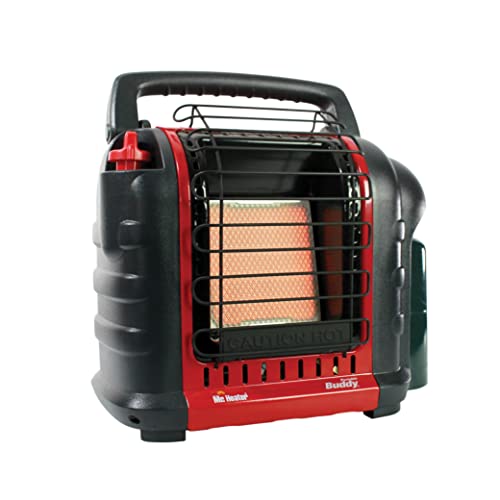
The Mr. Heater Portable Buddy delivers infrared radiant heat with adjustable output from 4,000 to 9,000 BTU, suitable for areas up to 225 sq. ft. It uses a Piezo igniter for matchless ignition and does not require batteries to start.
Call 888-896-7031 for Free Local HVAC Quotes – Compare and Save Today!
Safety features include an improved tip-over safety switch that audibly engages if the unit is disturbed. The design directly heats people and objects rather than air, which can be effective in partially open spaces like workshops, garages, and camping shelters.
DEWALT 68,000 BTU Battery Start Heater

This DEWALT space heater uses a battery-assisted start for a high-output 68,000 BTU forced-air design intended for larger job sites, garages, or covered outdoor work areas. The manufacturer highlights noise-reduction technology for quieter operation compared with typical propane forced-air units.
Features include robust industrial housing and CSA certification for construction and safety reliability. This model emphasizes sustained high heat delivery and durability rather than ultra-portable use with small 1 lb cylinders.
Mr. Heater Little Buddy MH4B
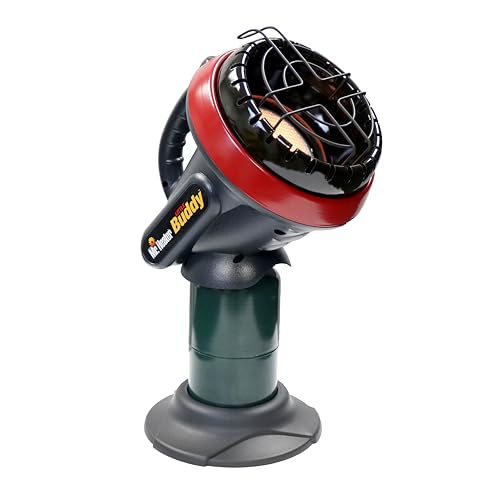
The Mr. Heater Little Buddy is a compact indoor-safe heater delivering 3,800 BTU, suitable for small enclosed spaces up to 95 sq. ft. It’s designed for tents, small trailers, or a personal workspace and includes an automatic ODS and tip-over safety shut-off.
Call 888-896-7031 for Free Local HVAC Quotes – Compare and Save Today!
Operation is simple with on/off controls and an estimated runtime of around 5.6 hours at maximum output using a standard 1 lb cylinder. The unit is optimized for portability and safe use in limited interior spaces when proper ventilation and safety practices are followed.
Hotdevil Portable 6,200 BTU Heater

This Hotdevil model is a compact outdoor/garage heater providing 6,200 BTU of radiant heat with a control valve for adjustable warmth. It claims effective coverage up to 200 sq. ft. and targets activities such as winter fishing, patio use, and small outdoor gatherings.
The unit emphasizes portability and quick setup for outdoor tasks. Features highlight a lightweight form factor and a variable control knob that allows finer temperature adjustments compared with single-setting devices.
Buying Guide: How To Choose A Cordless Propane Heater
Choosing the right cordless propane heater requires assessing heat output, runtime, safety, portability, and the intended environment. The following considerations offer multiple perspectives to match models to use cases.
1. Heat Output And Coverage
BTU rating determines potential heat output. For small enclosed spaces like tents or personal workstations, units in the 3,000–6,500 BTU range are typical. Medium areas such as garages or patios often need 6,000–12,000 BTU. High-output forced-air models (tens of thousands of BTUs) suit large jobsite areas but require ample ventilation.
2. Heating Method: Radiant vs Forced-Air
Radiant heaters (infrared) warm objects and people directly and are efficient in semi-open spaces. Forced-air heaters move warmed air and can heat larger volumes more quickly but may be louder and require more fuel.
3. Fuel Cylinder Size And Runtime
Many portable models use 1 lb disposable cylinders. Dual-cylinder designs or larger tanks extend runtime. Compare listed runtimes at high and low settings to ensure the heater meets your continuous-use needs.
4. Ignition And Power Requirements
Some units use Piezo or electric igniters. Cordless models powered by tool batteries (e.g., DEWALT 20V) can run accessories like lights and fans; check whether batteries are included. Piezo ignition is battery-free and reliable for simple starts.
5. Safety Features
Key safety systems include: ODS (Oxygen Depletion Sensor), automatic tip-over shutoff, and flame failure protection. For indoor or tent use, an ODS is critical. For outdoor and jobsite use, robust tip-over protection and audible engagement are valuable.
6. Portability And Build
Consider overall weight, footprint, and handle design. Units designed for job sites often include rugged housings and battery integration. Compact camping heaters prioritize lightweight construction and foldable stands.
7. Certifications And Standards
Look for certifications like CSA or other recognized safety/test approvals. Certified units have undergone standardized testing for construction and operation integrity.
8. Noise And User Comfort
Forced-air heaters can be noisier than radiant models. If quiet operation matters for work focus or campsite comfort, prioritize models advertising noise reduction or quieter forced-air designs.
9. Intended Environment And Ventilation
Match the heater to the environment: indoor-safe models with ODS are needed for enclosed spaces with limited ventilation. For open or well-ventilated outdoor use, tip-over protection and stable mounts are primary concerns. Never use non-indoor-safe heaters in enclosed spaces.
10. Control And Adjustability
Variable control knobs or multiple heat settings provide flexibility. If you anticipate varied conditions—windy nights, partially open shelters, or different group sizes—choose a heater with multiple settings to conserve fuel and maintain comfort.
11. Maintenance And Serviceability
Evaluate ease of cleaning, access to replacement parts (igniters, regulators), and manufacturer support. Rugged jobsite units tend to be easier to service, while very lightweight camping models may have limited repair options.
Tips for Getting the Best HVAC Prices
- Prioritize Quality Over Cost
The most critical factor in any HVAC project is the quality of the installation. Don’t compromise on contractor expertise just to save money. - Check for Rebates
Always research current rebates and incentives — they can significantly reduce your overall cost. - Compare Multiple Quotes
Request at least three estimates before making your choice. You can click here to get three free quotes from local professionals. These quotes include available rebates and tax credits and automatically exclude unqualified contractors. - Negotiate Smartly
Once you've chosen a contractor, use the proven strategies from our guide — How Homeowners Can Negotiate with HVAC Dealers — to get the best possible final price.
12. Comparative Perspectives
- For Personal Camping: Compact radiant models with ODS and long runtimes from 1 lb cylinders work well (e.g., Mr. Heater Little Buddy).
- For Small Workshops/Garages: Mid-range radiant units with higher BTU and variable control suit intermittent use (e.g., DEWALT F332000 or Hotdevil).
- For Large Job Sites: High-BTU forced-air units with battery-assist and robust housings are appropriate (e.g., DEWALT 68,000 BTU).
- For Mixed Use: Choose a heater with adjustable output, reliable safety systems, and flexible power/ignition options to handle both indoor-safe and outdoor needs.
Key Questions To Ask Before Buying
- Is the heater rated for indoor use, and does it include ODS if I plan to use it in enclosed spaces?
- What is the listed runtime on the cylinder size I plan to use?
- Does the ignition require batteries, or is it Piezo/electric with battery backup?
- How much coverage (sq. ft.) does the manufacturer state, and does that align with my space?
- Are replacement parts and customer service readily available?
Practical Safety Tips
- Always follow the manufacturer’s instructions and local regulations for propane use.
- Provide adequate ventilation when using any propane heater, even those labeled indoor-safe.
- Keep combustible materials away from the heater’s radiant or forced-air output.
- Secure cylinders properly and inspect connections and valves for leaks before each use.
- Store spare cylinders away from heat sources and direct sunlight.