
Choosing an electric baseboard heater with a fan helps circulate warm air faster and more evenly than passive convection units. Below is a quick comparison of five relevant products—two fan-forced Cadet Com-Pak units, two popular baseboard and wall heaters, and a smart thermostat accessory that works with high-voltage fan-forced baseboards to add remote control and energy scheduling.
| Product | Type / Feature | Best For |
|---|---|---|
| Cadet Com-Pak CSC202TW | Fan-Forced Wall Heater, 240/208V | Fast Heating Larger Spaces |
| Cadet Com-Pak CSC151TW | Fan-Forced Wall Heater, 120V | Compact Room Heating |
| Comfort Zone CZ650B | Electric Baseboard With Digital Thermostat | Quiet Room Heating With Thermostat |
| KING 4K1210BW K Series | Aluminum Element Baseboard Heater, 120V | Durable Hard-Wired Baseboard |
| Mysa Smart Thermostat LITE | Smart Thermostat For 120–240V Baseboards | Remote Control & Energy Scheduling |
Cadet Com-Pak Electric Wall Heater With Thermostat (CSC202TW)
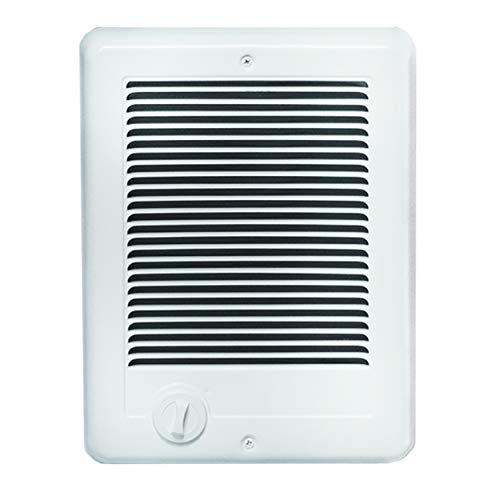
The Cadet Com-Pak CSC202TW is a complete fan-forced wall heater that lists fast heating and an efficient, quiet fan among its features. It supports 240/208V configurations and offers up to 2000/1500 watts output per the listed specs, suitable for rooms requiring faster heat delivery than passive baseboards. The product notes safety features that turn the unit off if operating temperatures exceed safe limits. Ceiling installation is possible on certain models, and the unit is intended for elevations under 10,000 feet per the product detail. This model includes an integrated thermostat for simplified control and is designed for hard-wired installation. The fan-forced design helps distribute warmed air more quickly across the room compared to convection-only units.
Cadet Com-Pak Electric Wall Heater Complete Unit (CSC151TW)

The Cadet CSC151TW is a 120V fan-forced wall heater with a built-in thermostat. Its listed spec shows it delivers 5120 BTU and 1500 watts, making it suitable for quickly heating medium-sized rooms. The product highlights an efficient and quiet fan to spread warmth evenly and safety cutouts that shut the unit off if temperatures exceed safe levels. As a complete unit with thermostat, it simplifies installation for spaces that require a wall-mounted, fan-assisted heating solution. The integrated thermostat gives localized temperature control and the fan aids in faster heat distribution versus standard baseboard convection models.
Comfort Zone Baseboard Space Heater With Digital Thermostat (CZ650B)

Call 888-896-7031 for Free Local HVAC Quotes – Compare and Save Today!
The Comfort Zone CZ650B is a convection baseboard heater that features a digital thermostat, dent-proof end panels, overheat protection, tip-over switch, and a stay-cool body. While the listing emphasizes whisper-quiet operation and precise temperature control via the digital display, it does not list a fan. The digital thermostat aids in accurate room temperature maintenance and the safety features include overheat protection and a tip-over switch for safe operation in homes and offices. This unit is designed for medium-sized rooms and offers two heat settings to adjust output. It is a good matched accessory to fan-forced installations when combined with compatible smart controls for zoning and scheduling.
KING 4K1210BW K Series Baseboard Heater 4′ / 1000W

The KING 4K1210BW is a hard-wired aluminum ribbon fin baseboard heater designed for 120V, 1000W operation. While listed as not a plug-in model, it features an aluminum ribbon fin element and a full-length safety cutout. The manufacturer notes the unit is built for permanent wiring and durable performance. The KING model is a convection-style baseboard, and while it does not list an integrated fan, it pairs with room thermostats or smart controls for zoned control. The aluminum ribbon element design provides effective heat transfer and the safety cutout offers protection against overheating. Consider this for installations where a durable, hard-wired baseboard is required and where a separate fan or blower may be used to circulate air if desired.
Mysa Smart Thermostat LITE For Electric Baseboard Heaters

The Mysa Smart Thermostat LITE is designed for high/line voltage systems including 120–240V electric baseboards and fan-forced heaters. The product listing contains a compatibility warning that Mysa requires at least four wires including a neutral or second live wire and does not work with low-voltage or two-wire setups. Key listed features include remote control via a free mobile app, Wi‑Fi programmability, and potential energy savings—Mysa claims up to 26% savings using in-app schedules. When paired with fan-forced baseboard or wall heaters, Mysa enables remote scheduling, zones, and integration with HomeKit, Alexa, or Google Home. It does not include a heater and is intended as an add-on control for compatible high-voltage units.
Buying Guide: How To Choose An Electric Baseboard Heater With Fan
Selecting the right fan-forced baseboard or wall heater depends on room size, wiring, control options, installation constraints, and safety needs. Below are the key considerations and comparison perspectives to guide your decision.
Call 888-896-7031 for Free Local HVAC Quotes – Compare and Save Today!
Heating Method: Fan-Forced vs Convection
- Fan-Forced (Blower): Actively circulates warm air, delivering heat faster and reducing stratification in the room. Often mounted as wall heaters (Com-Pak style) or fan-assisted units.
- Convection (Radiant/Baseboard): Warms air by natural rise; quieter and simpler but slower to distribute heat. Works well for continuous background heating.
Room Size And Wattage
- Estimate required wattage: roughly 10 watts per square foot for moderate climates as a baseline; adjust upward for colder rooms or poor insulation.
- Fan-forced units like the Cadet Com-Pak models typically offer higher effective heat delivery for the same wattage due to forced circulation.
Voltage, Wiring, And Compatibility
- Confirm your home’s circuit voltage: many baseboards come in 120V or 240V variants. Fan-forced wall units may require specific voltage wiring.
- Smart thermostats for high-voltage heaters (e.g., Mysa) need at least four conductors and may not work with two-wire setups—check compatibility before purchase.
Controls And Smart Features
- Built-In Thermostat: Simplifies operation—common on complete wall heater units.
- Digital Or Smart Thermostats: Offer schedules, remote control, and energy-saving optimization. For fan-forced heaters, smart thermostats designed for line-voltage systems are necessary.
Safety And Installation
- Look for overheat protection, full-length safety cutouts, and tip-over or thermal sensors where applicable.
- Hard-wired units require qualified electrical installation. Some fan-forced wall heaters are complete units and may need wall mounting and wiring per local code.
Noise And Air Movement
- Fan-assisted units produce audible airflow; check listings for quiet or whisper-quiet claims if low noise is important.
- Convection-only baseboards are quieter but slower to spread heat—consider adding a small room fan if circulation is desired without a built-in blower.
Durability And Material
- Aluminum ribbon elements and steel housings are common. Look for powder-coated finishes and sturdy end panels for longer service life.
- Full-length safety cutouts and metal junction boxes improve safety and reliability.
Comparison Perspectives
- Speed Of Heat Delivery: Fan-forced wall units (Cadet Com-Pak) > convection baseboards.
- Quiet Operation: Convection baseboards (Comfort Zone, KING) > fan-forced units; check manufacturer claims about quiet fans.
- Control Flexibility: Pairing line-voltage smart thermostats (Mysa) with heaters offers the most scheduling and remote control capability.
- Installation Complexity: Plug-in or bolt-on baseboards are simpler; hard-wired or fan-forced wall units typically require electrician installation.
When comparing models, match the heater type to your usage pattern: choose fan-forced units to rapidly warm living spaces or bathrooms, convection baseboards for silent background heating, and a compatible high-voltage smart thermostat to gain remote programming and energy management.
Tips for Getting the Best HVAC Prices
- Prioritize Quality Over Cost
The most critical factor in any HVAC project is the quality of the installation. Don’t compromise on contractor expertise just to save money. - Check for Rebates
Always research current rebates and incentives — they can significantly reduce your overall cost. - Compare Multiple Quotes
Request at least three estimates before making your choice. You can click here to get three free quotes from local professionals. These quotes include available rebates and tax credits and automatically exclude unqualified contractors. - Negotiate Smartly
Once you've chosen a contractor, use the proven strategies from our guide — How Homeowners Can Negotiate with HVAC Dealers — to get the best possible final price.