
Choosing the right garage heater thermostat ensures accurate temperature control, energy savings, and comfort while working. The table below summarizes five hard-wired and plug-in garage heaters with built-in digital thermostats or thermostat-compatible controls suitable for workshops, garages, and similar spaces.
| Product | Type | Thermostat/Control | Mount |
|---|---|---|---|
| Comfort Zone CZ230ER | Electric Fan-Forced | Digital Thermostat, Remote, 12-Hour Timer | Ceiling Hard-Wired |
| CTSC 10000W Electric Heater | Electric Fan-Forced | Digital Thermostat, Remote, Voltage Display | Ceiling Hard-Wired |
| Comfort Zone CZ225ER | Electric Fan-Forced | Digital Thermostat, Remote, 12-Hour Timer | Ceiling Hard-Wired |
| TEMPWARE 7500W Garage Heater | Electric Fan-Forced | Built-In Thermostat, ECO Mode, Timer | Ceiling Hard-Wired |
| Buyplus 1500W Greenhouse Heater | Electric Small Space | Digital Thermostat With Probe | Portable/Wall |
Comfort Zone CZ230ER 7500W Ceiling Heater

This hard-wired ceiling-mounted heater is designed for garages and workshops and includes a digital thermostat with remote control and 12-hour timer for scheduling. The fan-forced design and adjustable louvers allow directional airflow control to target work areas.
Built from heavy gauge steel, it emphasizes durability for poorly insulated spaces. The unit’s design aims to save floor space by using ceiling mounting while heating areas up to the manufacturer-stated coverage.
Safety features include overheat protection. The digital thermostat supports temperature setpoints for automated cycling, useful when maintaining consistent workshop temperatures or preventing freezing in colder climates.
CTSC 10000W Garage Heater With Voltage Display

Call 888-896-7031 for Free Local HVAC Quotes – Compare and Save Today!
The CTSC 10000W is a high-output hard-wired fan-forced heater featuring a digital thermostat, remote control, and a unique voltage display to aid troubleshooting during installation.
Three heat settings (high, low, and fan-only) allow flexible control for variable conditions. It includes ETL certification and overheat protection for safer operation in enclosed spaces.
The built-in thermostat and timer functions provide automated temperature management, suitable for maintaining workshop comfort or frost protection. The voltage readout can help identify under-voltage issues that may affect fan performance.
Comfort Zone CZ225ER 6000W Ceiling Heater

The CZ225ER is a ceiling-mounted fan-forced heater built for larger work areas with adjustable airflow and a digital thermostat with remote and 12-hour timer.
Heavy gauge steel construction provides durability in variable-temperature environments. The fan-forced design with adjustable vents helps distribute heat more evenly and reduce cold spots in garages.
Call 888-896-7031 for Free Local HVAC Quotes – Compare and Save Today!
Its digital thermostat supports precise temperature control and scheduled runtime, which can improve energy efficiency versus manual control, especially during intermittent shop use.
TEMPWARE 7500W Shop Heater With Built-In Thermostat
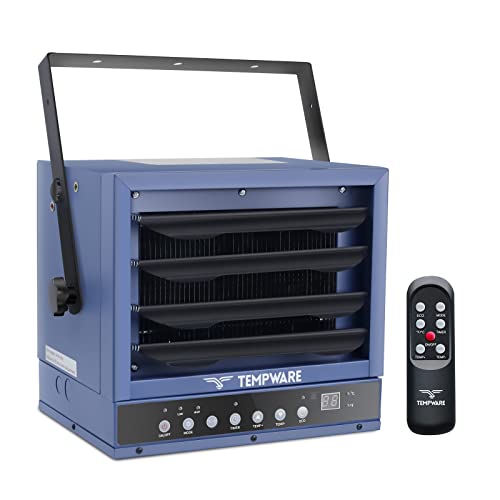
This TEMPWARE ceiling-mounted heater offers a built-in thermostat, adjustable louvers, ECO mode, and a 1–12 hour timer. Its temperature sensor supports a wide setpoint range, improving automated comfort control.
Two heat settings and an ECO mode help balance heat output and energy use. The unit includes an automatic shutoff for overheat protection and claims coverage for large garage spaces when properly installed.
The adjustable mounting angle and louvers allow directed airflow to warm specific work zones, which can reduce heating time and localized energy use.
Buyplus 1500W Greenhouse Heater With Probe Thermostat

Although sized for smaller areas, this 1500W unit includes a digital thermostat with an external waterproof probe and rapid heat-up capability. The probe allows placement where temperature matters most, such as near plants or workbenches.
Overheat protection and an adjustable temperature range make it suitable for stalls, small garages, or as supplemental heat in larger spaces. The digital probe thermostat provides targeted control where ambient sensors may not reflect workspace microclimates.
While lower-powered than ceiling units, this heater is portable and useful for targeted frost protection or spot heating where a full hard-wired heater is not practical.
Buying Guide: Choosing The Right Garage Heater Thermostat
Selecting a heater with the right thermostat and controls affects comfort, safety, and operating cost. Below are considerations to compare options across models and installation types.
1. Heater Type And Installation
- Hard-Wired Ceiling Heaters: Best For Permanent Garage/Workshop Installations. These free floor space and deliver high output, but require a 240V circuit and professional installation.
- Wall-Mounted And Portable Units: Easier To Install And Move. Suitable for smaller spaces or spot-heating. They often use 120V and may include plug-in convenience.
- Gas/Propane Heaters: High BTU Output For Large Spaces. They require ventilation considerations and safety features like ODS (oxygen depletion sensor).
2. Thermostat Type And Accuracy
- Built-In Digital Thermostats: Provide integrated control and scheduling. Look for models with precise setpoints and clear displays.
- Remote Or App Control: Offers convenience to change settings without accessing the unit. Wi‑Fi-enabled models allow remote scheduling and smart-home integration.
- External Probe Sensors: Helpful When the heater location has different temperatures than the workspace. Probes measure the target area rather than heater exhaust.
3. Control Features To Consider
- Timer And Scheduling: Useful to preheat the space before work or to limit runtime for energy savings.
- Multiple Heat Settings / ECO Modes: Allow flexible power use for milder days or for maintaining rather than raising temperature rapidly.
- Voltage/Diagnostics Displays: Helpful during installation and troubleshooting for hard-wired units to ensure correct supply voltage.
4. Safety Features
- Overheat Protection: Essential to prevent internal overheating and automatic shutoff in fault conditions.
- Tip-Over And ODS: For portable or gas units, tip-over switches and oxygen depletion sensors improve safe operation.
- Certifications: ETL or UL listings indicate third-party safety testing appropriate for enclosed workspaces.
5. Heating Capacity And Coverage
- Match the heater’s output to garage size and insulation. Higher wattage/BTU units heat larger, poorly insulated spaces more effectively.
- Ceiling-mounted fan-forced units disperse heat broadly; directional louvers help focus heat for specific work zones.
- For spot-heating, smaller units with probes may provide better localized control and energy use.
6. Energy Efficiency And Operating Cost
- Thermostat Control Reduces Run Time: Automated cycling with precise thermostats lowers unnecessary runtime compared to manual operation.
- ECO Modes And Timers: Use these to reduce power during milder temperatures or to avoid constant high-output operation.
- Insulation And Heat Loss: Improving garage insulation reduces heater load and can allow a smaller unit or lower settings to maintain comfort.
7. Installation And Maintenance
- Professional Hard-Wiring: Ceiling hard-wired heaters typically need a licensed electrician for 240V connections and secure mounting.
- Accessibility For Filters And Fans: Periodic checks of fan motors and cleaning of vents can prolong performance for fan-forced heaters.
- Placement Of Thermostat Sensor: Avoid mounting sensors near exhaust or obstructed areas to prevent false readings.
8. Comparison Perspectives
- Performance vs. Installation Cost: High-output, hard-wired heaters offer better coverage but higher installation effort. Portable units have lower upfront installation needs but limited coverage.
- Precision vs. Simplicity: Wi‑Fi or probe thermostats deliver tighter control but add complexity. Built-in digital thermostats provide a balance of control and simplicity.
- Safety vs. Output: Gas/propane heaters yield high BTU output for large garages but require stricter ventilation and safety considerations than electric units with built-in overheat protection.
Use the above factors to compare the selected products based on the size of your garage, desired automation level, available electrical service, and safety requirements. Matching thermostat type and control features to your usage pattern will maximize comfort and efficiency.
Tips for Getting the Best HVAC Prices
- Prioritize Quality Over Cost
The most critical factor in any HVAC project is the quality of the installation. Don’t compromise on contractor expertise just to save money. - Check for Rebates
Always research current rebates and incentives — they can significantly reduce your overall cost. - Compare Multiple Quotes
Request at least three estimates before making your choice. You can click here to get three free quotes from local professionals. These quotes include available rebates and tax credits and automatically exclude unqualified contractors. - Negotiate Smartly
Once you've chosen a contractor, use the proven strategies from our guide — How Homeowners Can Negotiate with HVAC Dealers — to get the best possible final price.