
Finding the right gas radiant heater depends on space size, fuel type, installation, and safety features. This guide compares five top Amazon options across residential and outdoor use cases, summarizing each model’s strengths so you can match features to your needs.
| Model | Type | Fuel | Approx. Coverage |
|---|---|---|---|
| Dyna-Glo IR30NMDG-1 | Wall Infrared | Natural Gas | Up To 1,000 Sq. Ft. |
| Mr. Heater MHVFRD20NGT | Vent-Free Radiant Wall | Natural Gas | Up To 700 Sq. Ft. |
| Bromic Smart-Heat Platinum 500 | Outdoor Radiant Patio | Natural Gas | Direct Radiant Coverage |
| Mr. Heater MHVFDF30RTT | Vent-Free Dual Fuel | Natural Gas / Propane | Up To 1,000 Sq. Ft. |
| Mr. Heater Big Maxx MHU80NG | Unit Heater | Natural Gas | Up To 2,000 Sq. Ft. |
Dyna-Glo IR30NMDG-1 30,000 BTU Natural Gas Infrared Wall Heater

This wall-mounted infrared heater is built for continuous natural gas operation and uses infrared technology to heat objects and people directly, rather than only warming air. The unit’s rated output is 30,000 BTU, with manufacturer guidance for coverage up to about 1,000 square feet. Infrared radiant heating is effective when you want focused warmth for workspaces, garages, or open-plan interiors.
Key features include natural gas-only configuration and infrared radiant transfer that mimics the way sunlight heats surfaces. Installation requires proper ventilation clearance and a compatible gas supply. This model is optimized for places where a dedicated natural gas connection is available and conversion to other fuels is not permitted.
Mr. Heater MHVFRD20NGT Vent Free Radiant 20,000 BTU Natural Gas Heater

This vent-free radiant wall heater delivers a 20,000 BTU output and is designed for supplemental heating in homes, garages, and sunrooms. The unit uses multiple burner tiles for radiant warmth and is specified to cover up to 700 square feet in typical conditions.
Call 888-896-7031 for Free Local HVAC Quotes – Compare and Save Today!
Safety is an emphasized aspect of this model: it includes an automatic low-oxygen shut-off system (ODS) to cut gas flow if oxygen levels fall. Because it’s vent-free, the heater relies on indoor combustion air and should be used in accordance with local codes and manufacturer ventilation guidance. This makes it appropriate for supplemental indoor heating where venting is not desired or practical.
Bromic Heating BH0110003-1 Smart-Heat Platinum 500 Radiant Infrared Patio Heater

The Bromic Smart-Heat Platinum 500 is a premium outdoor radiant patio heater with a high-performance burner and contemporary stainless steel styling. It produces nearly 39,800 BTU and is engineered to deliver direct infrared heat to people and surfaces, ideal for patios, outdoor dining, and semi-exposed areas.
Notable design attributes include a tinted ceramic glass face for improved radiant output and wind resistance rated up to 12 mph for more consistent outdoor performance. This model is best suited to permanent outdoor installations where aesthetics, focused radiant coverage, and reliable performance in breezy conditions are priorities.
Mr. Heater MHVFDF30RTT 30,000 BTU Radiant Vent Free Dual Fuel Heater
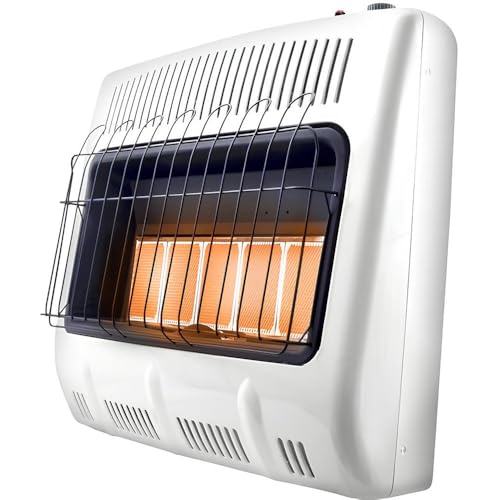
This 30,000 BTU vent-free radiant heater supports both natural gas and propane, offering flexibility when fuel availability varies. Rated coverage is up to 1,000 square feet, using infrared tiles to generate direct warmth to occupants and surfaces.
Call 888-896-7031 for Free Local HVAC Quotes – Compare and Save Today!
Safety and versatility features include an oxygen depletion sensor (ODS) plus a two-step fuel connection system and a fuel-type selector knob to minimize incorrect hookups. The dual-fuel capability suits locations where either propane or natural gas may be preferred for cost or convenience reasons, and the heater is targeted at applications like additions, sunrooms, and cabins.
Mr. Heater F260560 Big Maxx MHU80NG Natural Gas Unit Heater
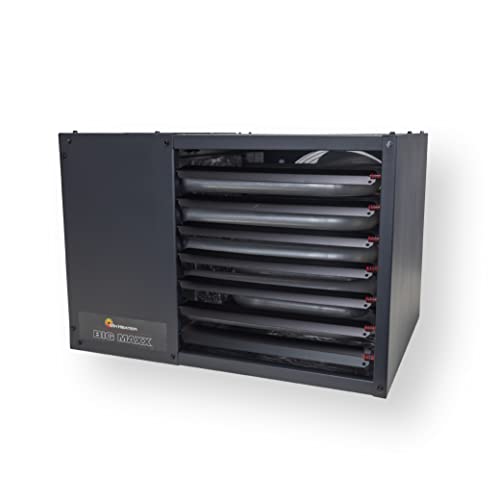
The Big Maxx MHU80NG is a high-capacity 80,000 BTU natural gas unit heater intended for large garages, workshops, and light commercial spaces up to 2,000 square feet. This forced-air unit differs from radiant panels by circulating warmed air, allowing faster temperature equalization in enclosed volumes.
Included components and guidance note two mounting brackets and an LP conversion kit, though the unit is configured for natural gas in its standard form. Installation requires attention to clearance (minimum 8 feet from floor to base) and appropriate venting/ducting per the model’s category and local code. This model is chosen for whole-space heating where high output and air movement are needed rather than localized radiant comfort.
Buying Guide: How To Choose A Gas Radiant Heater
Selecting a gas radiant heater requires matching the heater’s technology and features to your application. Below are key considerations to compare models objectively.
Heating Method: Radiant Versus Forced-Air
Radiant Heaters heat objects and people directly using infrared energy. They provide immediate localized warmth and can be more efficient for outdoor or partially open spaces. Forced-air unit heaters (like the Big Maxx) warm room air and are better for distributing heat evenly in fully enclosed, large spaces.
Fuel Type And Flexibility
Check whether the unit is natural gas only, propane only, or dual-fuel. Dual-fuel heaters offer flexibility if fuel availability may change. Confirm whether fuel conversion is allowed and whether conversion kits are included or sold separately.
BTU Rating And Coverage
Match the heater’s BTU output to the area size and insulation level. Smaller radiant wall units (20k–30k BTU) suit 600–1,000 sq. ft. spaces for localized warmth. High-output unit heaters (60k–80k BTU) are appropriate for large garages and workshops up to 2,000 sq. ft. These are guideline figures; actual performance varies with insulation, ceiling height, and layout.
Installation And Clearance Requirements
Wall-mounted infrared and vent-free units require specific clearances from combustibles and surrounding surfaces. Follow manufacturer instructions for mounting height and distance. Unit heaters and outdoor patio models often require more complex installation, possibly by a licensed technician.
Vent-Free Versus Vented Systems
Vent-free heaters release combustion products into the conditioned space and rely on oxygen depletion sensors (ODS) for safety; they’re efficient but subject to local code restrictions. Vented or direct-vent units exhaust outdoors and may be required in certain jurisdictions or for continuous indoor use.
Safety Features
Look for ODS, tip-over switches, electronic ignition, and fuel-error prevention mechanisms. Dual-fuel models that include a two-step fuel connection or selector knobs reduce installation risks. For indoor units, safety sensors and proper maintenance are critical for safe operation.
Outdoor Use And Wind Resistance
Outdoor radiant patio heaters should be rated for wind resistance and have durable weather-resistant materials. Models with ceramic glass faces or wind-tolerant burners sustain performance in breezy conditions and are better for terrace or patio use.
Durability And Materials
Stainless steel, coated housings, and ceramic faces increase longevity, especially in outdoor settings. Indoor wall heaters often prioritize compactness and serviceability, while higher-end patio units emphasize finish and corrosion resistance.
Maintenance And Serviceability
Consider accessibility for cleaning burner tiles, replacing ignition components, and servicing sensors. Vent-free heaters may require periodic tile inspection; unit heaters can require filter and blower maintenance for efficient operation.
Noise And Comfort Preferences
Radiant heaters are typically quiet, since they don’t use fans. Unit heaters with blowers create airflow and some noise; choose based on tolerance for mechanical sound in garages, workshops, or living areas.
Code Compliance And Local Regulations
Verify local building and fire codes for vent-free heater usage and required clearances. Some areas restrict vent-free appliances in sleeping rooms or require CO detection when using gas heaters indoors.
Comparison Perspectives
- Small Indoor Rooms and Supplemental Heat: Vent-free 20k–30k BTU radiant wall units provide targeted warmth with high efficiency.
- Outdoor Patios and Aesthetics: Specialized patio models with ceramic glass and wind resistance offer direct comfort and improved styling.
- Large Garages and Workshops: High-BTU unit heaters with forced air are better for whole-space heating and rapid temperature control.
- Fuel Availability Concerns: Dual-fuel units add flexibility if you switch between propane and natural gas.
When evaluating models, weigh coverage area, fuel type, installation complexity, safety features, and whether localized radiant comfort or whole-space heating is the primary goal. Use manufacturer specifications and local code guidance to confirm suitability for your installation scenario.
Tips for Getting the Best HVAC Prices
- Prioritize Quality Over Cost
The most critical factor in any HVAC project is the quality of the installation. Don’t compromise on contractor expertise just to save money. - Check for Rebates
Always research current rebates and incentives — they can significantly reduce your overall cost. - Compare Multiple Quotes
Request at least three estimates before making your choice. You can click here to get three free quotes from local professionals. These quotes include available rebates and tax credits and automatically exclude unqualified contractors. - Negotiate Smartly
Once you've chosen a contractor, use the proven strategies from our guide — How Homeowners Can Negotiate with HVAC Dealers — to get the best possible final price.