
Compact In-Wall Gas Heaters provide targeted warmth for rooms, garages, and basements without central HVAC changes. Below is a quick comparison of five relevant heaters selected for different needs, fuel types, and venting configurations.
| Product | Type | Max BTU | Coverage | Venting |
|---|---|---|---|---|
| Mr. Heater Big Maxx MHU80NG | Unit Heater | 80,000 | Up To 2000 Sq. Ft. | Vertical/Horizontal |
| Dyna-Glo IR30NMDG-1 | Infrared Wall Heater | 30,000 | Up To 1,000 Sq. Ft. | Direct/Unvented (Natural Gas Ready) |
| ProCom MN300HBA-B | Ventless Blue Flame | 30,000 | Up To 1,400 Sq. Ft. | Ventless |
| ProCom MN300TBA-B | Ventless Blue Flame With Thermostat | 30,000 | Up To 1,400 Sq. Ft. | Ventless |
| Comfort Glow 25,000 BTU | Direct Vent Wall Heater | 25,000 | Up To 825 Sq. Ft. | Direct Vent |
Mr. Heater Big Maxx MHU80NG Unit Heater
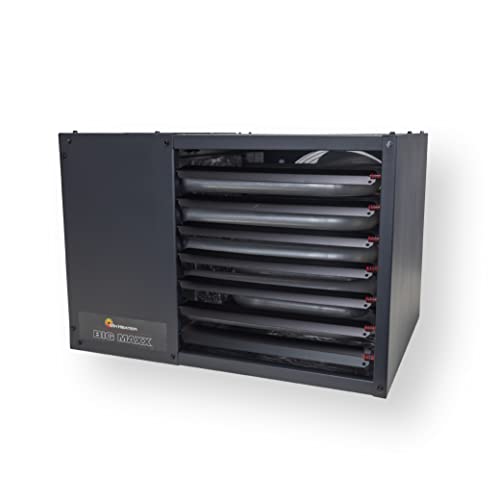
Overview: The Mr. Heater Big Maxx MHU80NG is a high-capacity natural gas unit heater delivering 80,000 BTU suitable for garages, workshops, and large spaces up to 2,000 sq. ft.
Key Features: Includes two angle brackets and a liquid propane conversion kit; thermostat, hose, and regulator are not included. Physical dimensions are 29.33” L x 15.50” W x 26.37” H. Requires minimum 8 ft. clearance from floor to base and operates at 120 V drawing ~2.3 amps.
Venting And Use: Designed for natural gas use with Category 1 vertical and Category 3 horizontal venting options, making it adaptable for different installations where a fixed vent run is feasible.
Dyna-Glo IR30NMDG-1 Infrared Wall Heater

Call 888-896-7031 for Free Local HVAC Quotes – Compare and Save Today!
Overview: The Dyna-Glo IR30NMDG-1 is an infrared natural gas wall heater producing up to 30,000 BTU, intended to heat objects and people directly rather than only warming room air.
Key Features: Uses infrared technology to radiate heat similar to the sun; rated for up to 1,000 sq. ft. This model is natural gas ready and does not permit fuel conversion, so fuel choice must match the installation.
Venting And Application: Infrared units are effective in spaces with high ceilings or intermittent occupancy, providing fast, localized warmth. Consider mounting height and clearances for optimal radiant heating coverage.
ProCom MN300HBA-B Ventless Blue Flame Heater

Overview: The ProCom MN300HBA-B is a ventless blue flame heater that operates on natural gas only and produces 30,000 BTU, covering spaces up to 1,400 sq. ft.
Key Features: Manual control with three heat settings (Low/Medium/High), push-button Piezo ignition, and an Oxygen Depletion Sensor (ODS) for automatic shutoff if oxygen levels drop.
Call 888-896-7031 for Free Local HVAC Quotes – Compare and Save Today!
Venting And Use: Being ventless, this unit does not require external venting or electricity, which makes it installable in locations without ductwork, but it does add combustion products to the conditioned space and may require adequate ventilation and compliance with local codes.
ProCom MN300TBA-B Ventless Heater With Thermostat
Overview: The ProCom MN300TBA-B is a ventless blue flame heater similar to the MN300HBA-B but includes an integrated thermostat for controlled temperature maintenance.
Key Features: Produces 30,000 BTU, heats up to 1,400 sq. ft., and offers High/Medium/Low thermostat control. The unit ships with wall-mount hardware and base feet for floor placement.
Venting And Use: Thermostat control can reduce cycling and fuel use compared to manual-only units. As a ventless design, it requires consideration of indoor air quality, clearance, and local regulations concerning ventless gas appliances.
Comfort Glow 25,000 BTU Direct Vent Wall Heater

Overview: The Comfort Glow direct vent wall heater provides 25,000 BTU with a sealed combustion system for spaces up to 825 sq. ft. It is designed for installations where indoor air quality and sealed combustion are priorities.
Key Features: Sealed burn system, matchless Piezo ignition, built-in pressure regulator, and safety pilot that stops gas flow if the pilot is extinguished. Dimensions are approximately 26.5 H x 32.25 W x 8.75 D.
Venting And Use: Direct venting pulls combustion air from outside and exhausts directly outdoors, improving indoor air quality and meeting stricter installation codes compared to ventless units.
Buying Guide: How To Choose An In-Wall Gas Heater
Selecting the right in-wall gas heater depends on fuel type, venting, space size, safety features, and local codes. Consider the following factors to narrow choices objectively.
Tips for Getting the Best HVAC Prices
- Prioritize Quality Over Cost
The most critical factor in any HVAC project is the quality of the installation. Don’t compromise on contractor expertise just to save money. - Check for Rebates
Always research current rebates and incentives — they can significantly reduce your overall cost. - Compare Multiple Quotes
Request at least three estimates before making your choice. You can click here to get three free quotes from local professionals. These quotes include available rebates and tax credits and automatically exclude unqualified contractors. - Negotiate Smartly
Once you've chosen a contractor, use the proven strategies from our guide — How Homeowners Can Negotiate with HVAC Dealers — to get the best possible final price.
Fuel Type And Availability
- Natural Gas vs. Propane: Confirm the fuel available at your property. Some units are natural gas only, while others offer LP conversion kits. Do not attempt fuel conversion unless the model and kit explicitly support it.
- Conversion Accessories: Check whether the heater includes or supports conversion kits and whether additional parts like regulators or hoses are required.
Venting Requirements
- Direct Vent (Sealed Combustion): Best for indoor air quality; combustion air and exhaust are isolated from the room.
- Ventless (Unvented): Easier to install and cheaper initially but releases combustion byproducts into the room, requiring good ventilation and adherence to local regulations.
- Unit Heaters With Flexible Venting: Larger unit heaters may support vertical or horizontal venting; plan flue routing and clearances before purchase.
BTU Output And Room Size
- Match the heater’s BTU rating to the square footage and insulation level. Higher BTU ratings suit larger, less insulated spaces.
- For radiant or infrared units, consider how heat is distributed; they warm objects directly and may feel warmer at lower air temperatures in zoned areas.
Controls And Thermostat Options
- Manual Controls: Simpler, lower cost, but require user intervention for temperature changes.
- Built-In Thermostats: Maintain a set temperature, reduce cycling, and can improve comfort and fuel efficiency.
- Compatibility With External Thermostats: Verify if the unit supports wall thermostats for centralized control.
Safety Features And Certifications
- ODS (Oxygen Depletion Sensor): Recommended for ventless units to shut off on low oxygen conditions.
- Sealed Combustion: Direct vent and sealed systems enhance safety and are often required for certain living spaces.
- Certifications: Look for EPA, ANSI, or CSA listings as applicable and confirm compliance with local building codes.
Installation Considerations
- Clearance And Mounting: Verify manufacturer clearances from floor, ceiling, and sidewalls. Some units require minimum floor clearances or clearance to combustibles.
- Electrical Requirements: Some heaters need power for fans, ignition, or controls; others operate without electricity.
- Professional Installation: Gas appliances typically require licensed installers to ensure safe gas connections, proper venting, and code compliance.
Indoor Air Quality And Ventilation
- Ventless Units Add Moisture And Combustion Products: Consider additional ventilation or ensure the space is suitable for ventless operation.
- Direct Venting Reduces Indoor Impact: For enclosed living spaces, direct vent units provide cleaner indoor air compared to ventless designs.
Performance And Efficiency Perspectives
- Radiant/Infrared vs. Convective: Infrared warms occupants and objects directly and can be efficient for high-ceiling, spot-heating scenarios. Convective and blue flame units distribute heat into the air and are effective for general space heating.
- BTU Efficiency: Higher BTU output doesn’t always equate to higher comfort if heat distribution is poor. Balance BTU with heat delivery method and room layout.
Maintenance And Longevity
- Plan for periodic inspection of pilot assemblies, burners, and vent paths. Replace filters, seals, and safety components per manufacturer guidance.
- Check warranty and availability of replacement parts for long-term serviceability.
Regulatory And Code Compliance
- Confirm local building codes and utility rules that apply to ventless appliances or to venting routes for direct/vented units.
- Obtain permits and professional inspections when required to ensure safe operation and resale compliance.