
Radiant natural gas heaters deliver direct, sun-like warmth by heating objects and people rather than only conditioning air. The table below summarizes five well-reviewed vent-free and infrared natural gas radiant heaters selected for supplemental heat in homes, garages, patios, and cabins.
| Product | BTU | Coverage | Fuel |
|---|---|---|---|
| Mr. Heater MHVFRD20NGT | 20,000 | Up To 700 Sq. Ft. | Natural Gas |
| Comfort Glow 30,000 BTU | 30,000 | Up To 1,250 Sq. Ft. | Natural Gas |
| Mr. Heater MHVFRD10NG | 10,000 | Up To 300 Sq. Ft. | Natural Gas |
| Dyna-Glo IR30NMDG-1 | 30,000 | Up To 1,000 Sq. Ft. | Natural Gas |
| Mr. Heater MHVFDF30RTT | 30,000 | Up To 1,000 Sq. Ft. | Natural Gas / Propane |
Content Navigation
Mr. Heater 20,000 BTU Radiant Heater

Overview: The Mr. Heater MHVFRD20NGT is a vent-free radiant natural gas wall heater rated at 20,000 BTU. It uses infrared-style radiant heat to warm objects and people, providing a direct heating effect rather than relying solely on convection.
Key Features: High-efficiency radiant output, multiple burner tiles for even radiant distribution, automatic low-oxygen shut-off (safety ODS sensor), and a stated coverage of up to 700 sq. ft. Designed for indoor locations including garages, sunrooms, and cabins.
Installation & Use: Wall-mount design intended for vent-free applications; local codes and combustion air requirements should be confirmed. The unit is positioned for supplemental heat and does not require electricity for radiant operation.
Comfort Glow 30,000 BTU Radiant Heater

Call 888-896-7031 for Free Local HVAC Quotes – Compare and Save Today!
Overview: The Comfort Glow model delivers 30,000 BTU of radiant heat for larger spaces and is marketed as a vent-free infrared natural gas heater for indoor use.
Key Features: Rated to heat up to 1,250 sq. ft., operates without electricity (useful for outages), built-in thermostat control, and piezo ignition. The heater ships ready for wall mounting; a separate floor mount kit is available if a different configuration is needed.
Installation & Use: Intended for permanent wall installation with recommended clearances and combustion-air considerations. The lack of electrical dependency makes this unit suitable for emergency or off-grid heating scenarios when natural gas is available.
Mr. Heater 10,000 BTU Radiant Heater
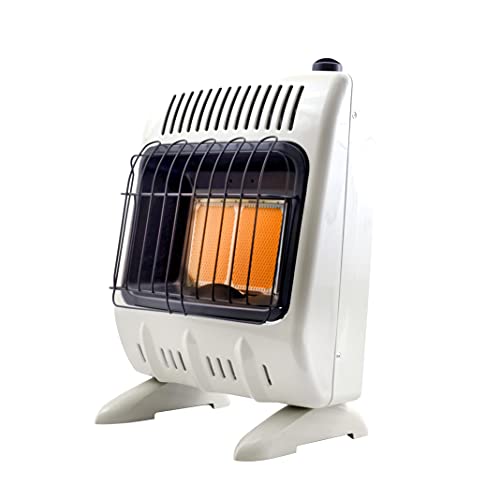
Overview: The Mr. Heater MHVFRD10NG is a compact vent-free radiant natural gas wall heater producing 10,000 BTU, intended for small rooms and supplemental zones.
Key Features: Uses multiple burner tiles and infrared-style heating to warm objects first; rated coverage up to 300 sq. ft. Includes an automatic low-oxygen shut-off safety feature. Compact profile for tighter installations in offices, bedrooms, or small workshops.
Call 888-896-7031 for Free Local HVAC Quotes – Compare and Save Today!
Installation & Use: Wall-mount unit suited for smaller spaces. Verify ventilation and local code allowances for vent-free appliances before installation. The smaller output is intended for zone heating or limited-area comfort.
Dyna-Glo 30,000 BTU Infrared Wall Heater

Overview: The Dyna-Glo IR30NMDG-1 is a natural gas infrared wall heater rated at 30,000 BTU. It emphasizes direct radiant heating to warm people and objects.
Key Features: Natural gas-ready configuration (fuel conversion not permitted), infrared radiant technology that heats surfaces first, and a manufacturer-stated capacity to heat up to 1,000 sq. ft. Designed as a wall-mounted radiant option for larger rooms and open spaces.
Installation & Use: Installation requires adherence to vent-free appliance codes. Because it delivers high BTU output, it is intended for larger indoor or semi-enclosed spaces where radiant heating is preferable to forced-air solutions.
Mr. Heater 30,000 BTU Dual Fuel Radiant
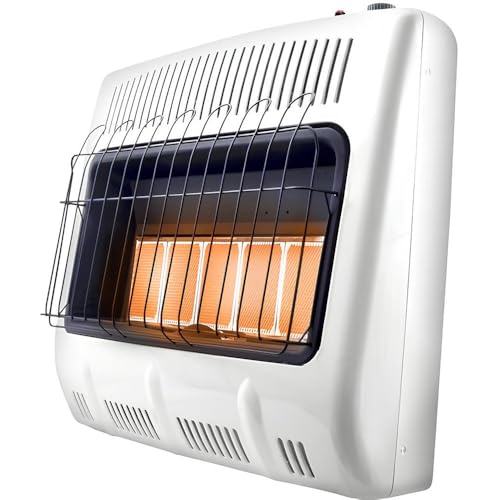
Overview: The Mr. Heater MHVFDF30RTT is a radiant vent-free heater rated at 30,000 BTU with dual-fuel capability for natural gas or propane operation, enabling installation flexibility.
Key Features: High-efficiency radiant output covering up to 1,000 sq. ft., automatic low-oxygen shut-off, patented two-step fuel connection to reduce wrong-fuel hook-ups, and a fuel-type selector knob. Provides radiant heating similar to sun-like warmth.
Installation & Use: Dual-fuel capability requires correct fuel selection and following the manufacturer’s conversion procedures. Suitable for additions, sunrooms, and cabins where fuel availability or portability is a consideration.
Buying Guide For Radiant Natural Gas Heaters
Heating Output (BTU) And Coverage: Match heater BTU to the conditioned area. Smaller rooms often require 5,000–15,000 BTU, mid-size rooms 15,000–30,000 BTU, and larger spaces may require 30,000 BTU or more. Manufacturers provide approximate square footage coverage — consider ceiling height and insulation when estimating.
Radiant vs. Convection: Radiant heaters warm objects and people directly, providing perceptible comfort at lower air temperatures. Convection heaters heat the air, which is better for whole-room uniformity. Choose radiant natural gas if you need targeted, immediate warmth in frequently used zones.
Vent-Free (Ventless) Considerations: Vent-free radiant heaters are common for natural gas applications because they deliver heat without flue piping. Check local codes and building regulations; some jurisdictions restrict vent-free appliances. Confirm adequate combustion air and clearances.
Safety Features: Look for automatic low-oxygen shut-off (ODS) and certified safety mechanisms. Dual-fuel units should include clear fuel selection systems and safeguards to prevent incorrect hook-ups. Follow manufacturer safety and clearance instructions.
Fuel Flexibility: Single-fuel natural gas units are optimized for permanent gas supply. Dual-fuel models (natural gas/propane) add versatility but require correct conversion and installation procedures.
Installation Requirements: Wall-mount vs. floor-mount options affect placement. Confirm required clearances to combustibles, mounting height, and whether a floor mount kit is necessary. Professional installation is recommended where codes or gas connections require licensed work.
Thermostat & Controls: Some models include integrated thermostatic control or onboard settings for modulation; others are simple on/off burners. Thermostatic units can improve comfort and efficiency in frequently used spaces.
Power Dependency: Many vent-free natural gas radiant heaters operate without electricity, which is beneficial for power outage resilience. If the model has electronic ignition or fans, confirm whether batteries or power are required.
Efficiency & Operating Characteristics: Radiant heaters are often marketed with high combustion efficiency and direct warmth. Consider how quickly you need warmth, whether you need uniform room temperature, and how the heater’s radiant pattern aligns with furniture and seating.
Durability & Materials: Look for corrosion-resistant finishes if installing in damp or semi-outdoor spaces. Patio use may require weather-rated or outdoor-specific models with appropriate wind tolerance and materials.
Code Compliance & Permits: Verify local building codes regarding vent-free natural gas appliances and obtain permits if required. Some areas prohibit vent-free heaters in sleeping areas or new construction.
Comparison Perspectives: Compare units by BTU per square foot, whether they are vent-free vs. vented, fuel flexibility, and safety features. For targeted zone heating, lower-BTU radiant units often deliver more efficient comfort. For larger spaces or more even distribution, higher-BTU radiant models or multiple units may be preferable.
Maintenance: Periodic inspection of burners, pilot/ignition components, and gas connections is recommended. Keep combustion air pathways clear and follow the manufacturer’s service schedule.
Tips for Getting the Best HVAC Prices
- Prioritize Quality Over Cost
The most critical factor in any HVAC project is the quality of the installation. Don’t compromise on contractor expertise just to save money. - Check for Rebates
Always research current rebates and incentives — they can significantly reduce your overall cost. - Compare Multiple Quotes
Request at least three estimates before making your choice. You can click here to get three free quotes from local professionals. These quotes include available rebates and tax credits and automatically exclude unqualified contractors. - Negotiate Smartly
Once you've chosen a contractor, use the proven strategies from our guide — How Homeowners Can Negotiate with HVAC Dealers — to get the best possible final price.