
Choosing the right radiant heater thermostat matters for comfort, safety, and energy efficiency. The table below summarizes five relevant Amazon options covered in this guide, including line‑voltage thermostats for radiant floors, programmable touchscreen models, and a heater with a built‑in thermostat for radiant room heat.
| Product | Type | Key Feature |
|---|---|---|
| Honeywell TH115-AF-GA/U | Line‑Volt Programmable Thermostat | 7‑day programming, floor sensor, built‑in GFCI |
| Programmable Thermostat For House Radiant Underfloor Heating (BOWSEN) | Underfloor Programmable Controller | Dual sensing, built‑in Class A GFCI, 120/240V |
| OJ Microline UTN4 Radiant Floor Thermostat | Non‑Programmable Floor Thermostat | Simple dial control, Class A GFCI, dual voltage |
| nVent Nuheat Home Programmable Touchscreen | 7‑Day Programmable Touchscreen Thermostat | 3.5″ color touchscreen, energy monitoring, GFCI |
| Heatstar Vent Free Radiant Propane Heater | Radiant Propane Heater With Built‑In Thermostat | Top‑mounted thermostat, blower, wall or freestanding |
Honeywell TH115-AF-GA/U Radiant Heating Thermostat

The Honeywell TH115-AF-GA/U is a line‑voltage programmable thermostat designed for electric radiant floor systems and other line‑voltage electric heating. It supports 120/240V systems and offers a 7‑day programmable schedule to tailor heat periods by day.
- Floor Sensor Compatibility: Accepts a floor sensor to control slab or tile surface temperatures.
- GFCI Integration: Built to be used with grounded systems and includes safety features appropriate for wet areas.
- Use Cases: Suitable for radiant underfloor heating and other electric line‑voltage radiant applications.
This model emphasizes scheduling flexibility and floor sensing for comfort and efficient operation. Installation requires knowledge of line‑voltage wiring and adherence to local electrical codes.
Programmable Thermostat For House Radiant Underfloor Heating (BOWSEN)
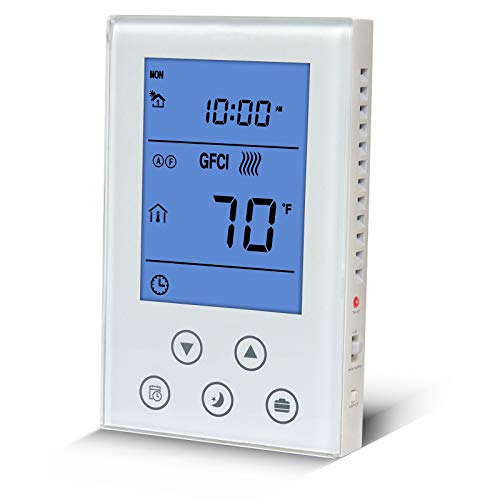
The BOWSEN underfloor thermostat is a dedicated controller for electric radiant floor systems. It supports 120V and 240V circuits with a maximum current rating appropriate for common floor heating loads.
Call 888-896-7031 for Free Local HVAC Quotes – Compare and Save Today!
- Dual Sensing: Includes both air and floor sensors for accurate temperature control.
- Built‑in Class A GFCI: Integral ground fault protection to meet safety standards for underfloor installations.
- Power Handling: Rated up to 3600W at 240V, with warnings and diagnostics when GFCI trips.
The unit is positioned toward systems that require robust safety features and clear diagnostic messages. It includes a self‑adaption function to stabilize floor temperatures over time.
OJ Microline UTN4 Radiant Floor Heat Thermostat

The OJ Microline UTN4 is a non‑programmable floor thermostat built for simplicity and compliance. It includes a Class A GFCI and is c‑UL listed for the U.S. and Canada.
- Simple Operation: Dial or button selection to set desired temperature—no programming required.
- Dual Voltage: Compatible with 120V, 208V, and 240V systems to cover a wide range of installations.
- Included Sensor: Comes with a floor sensor for direct floor temperature regulation.
This model is suitable for installations where user simplicity and code‑compliant GFCI protection are priorities. It’s commonly used in retrofit or straightforward new floor heating projects.
nVent Nuheat Home AC0056 Programmable Touchscreen Thermostat

The nVent Nuheat Home thermostat is a feature‑rich programmable controller with a full‑color 3.5″ touchscreen. It is designed for electric radiant floor applications and includes advanced user controls.
Call 888-896-7031 for Free Local HVAC Quotes – Compare and Save Today!
- 7‑Day Programmable: Allows customized schedules by day to match occupant routines.
- Energy Monitoring: Built‑in tracking helps users observe runtime and energy use.
- GFCI Protection: Equipped with Class A GFCI and includes an extra floor sensor from OJ Electronics.
Suited for homeowners who want an intuitive interface and scheduling flexibility, the Nuheat Home provides a visually guided setup and ongoing energy awareness features.
Heatstar 30000 Btu Vent Free Radiant Propane Heater With Thermostat And Blower

The Heatstar vent‑free propane unit is a room heater incorporating a top‑mounted mechanical thermostat and blower to distribute radiant warmth. It’s categorized as a radiant room heater rather than a floor thermostat.
- Adjustable Thermostat: On‑unit control to maintain a set room temperature.
- Installation Options: Can be wall‑mounted or used freestanding with included feet.
- Ignition & Controls: Battery‑operated electronic ignition and simple mechanical thermostat operation.
As a fuel‑based radiant heat option with an integrated thermostat, this unit serves spaces where electric radiant floor systems are not available or practical. Proper ventilation and compliance with local codes are required for safe operation.
Buying Guide: Choosing A Radiant Heater Thermostat
When selecting a radiant heater thermostat, consider the following core factors to match system type, safety requirements, and user needs.
Tips for Getting the Best HVAC Prices
- Prioritize Quality Over Cost
The most critical factor in any HVAC project is the quality of the installation. Don’t compromise on contractor expertise just to save money. - Check for Rebates
Always research current rebates and incentives — they can significantly reduce your overall cost. - Compare Multiple Quotes
Request at least three estimates before making your choice. You can click here to get three free quotes from local professionals. These quotes include available rebates and tax credits and automatically exclude unqualified contractors. - Negotiate Smartly
Once you've chosen a contractor, use the proven strategies from our guide — How Homeowners Can Negotiate with HVAC Dealers — to get the best possible final price.
System Compatibility
- Voltage Matching: Verify whether your radiant system is 120V or 240V, and choose a thermostat rated for that voltage and amperage.
- Load Capacity: Confirm the thermostat’s wattage/current rating covers the total heating cable or mat load to avoid overloading.
- Type Of Radiant Heat: Underfloor electric systems require floor‑rated thermostats with sensors and often GFCI; room radiant heaters use line or built‑in thermostats suited for appliances.
Safety And Code Requirements
- GFCI Protection: Many jurisdictions require Class A GFCI for electric underfloor systems—use a thermostat with integrated GFCI or ensure an external GFCI circuit is installed.
- Certifications: Look for c‑UL/us listing or equivalent certifications for compliance and inspection approval.
- Installation Standards: Line‑voltage work often requires a licensed electrician; follow local electrical and building codes.
Control Features
- Programmable vs Non‑Programmable: Programmable (7‑day or multi‑event) thermostats offer energy savings and schedule control. Non‑programmable units provide simplicity for users who prefer manual setpoints.
- Dual Sensing: Thermostats with both floor and air sensors allow more precise comfort control, useful where floor surface temperature must be limited.
- Interface: Touchscreens and color displays simplify programming; basic dials reduce complexity and potential user error.
Energy Efficiency & Monitoring
- Scheduling: Use programmability to avoid heating unused periods and reduce energy use.
- Energy Monitoring: Some thermostats report runtime or energy consumption to help optimize settings.
Installation & Maintenance
- Sensor Placement: Floor sensors must be installed according to manufacturer guidelines—typically at mid‑point of heating cable runs and embedded in thinset or sensor well.
- Wiring Access: Confirm wall box depth and mounting requirements for larger thermostats with GFCI modules.
- Testing GFCI: If the thermostat contains GFCI, test on installation to verify proper operation and know how to reset it.
Use Case Comparisons
- Simple Retrofits: Choose a non‑programmable thermostat with integrated GFCI (like OJ Microline) for quick replacements and minimal setup.
- Energy‑Minded Homes: Programmable touchscreen units (Nuheat, Honeywell) provide scheduling and energy usage feedback for optimized performance.
- High Load Systems: For larger floor loads, confirm the thermostat’s amperage and use supplemental contactors or sub‑feeds as required by the wiring design.
- Room Radiant Heating: When using a fuel or portable radiant heater with thermostat (Heatstar), ensure ventilation, clearance, and install per manufacturer safety rules.
Final Selection Checklist
- Match voltage and wattage to your heating system
- Confirm GFCI availability and code compliance
- Decide between programmable control and simple manual operation
- Ensure proper sensor type and placement for floor systems
- Factor installation complexity and whether a licensed electrician is required