
Wall-mounted panel heaters with built-in or integrated thermostats deliver controlled, space-saving warmth for bedrooms, offices, and other small spaces. Below is a quick comparison of selected models that balance energy efficiency, thermostat control, and installation types.
| Model | Type | Thermostat/Control | Typical Coverage |
|---|---|---|---|
| EconoHome Wall Heater Panel | Convector Panel (Hardwire/Wall) | Built-In Thermostat (41–86°F) | Up To 120 Sq Ft (400W) |
| Dreo Smart Wall Heater WH719S | PTC Electric Oscillating Wall Heater | Adjustable Thermostat, App, Voice | Room Sized Up To Medium (1500W peak) |
| Dreo Smart Wall Heater IP24 | PTC Electric Wall Heater (IP24) | Adjustable Thermostat, Remote, App | Small To Medium Rooms |
| ENVI Plug-In Electric Panel Heater | Low-Wattage Fanless Panel (Plug-In) | Comfort-Level Thermostat / Sensor Safety | Targeted Zones / Continuous Use |
| Heat Storm HS-1500-PHX-WIFI | Infrared Wall-Mounted Heater (Wi‑Fi) | Digital Thermostat, Wi‑Fi Control | Bedrooms, Offices, Kitchens |
Content Navigation
EconoHome Wall Heater Panel With Thermostat

The EconoHome panel is a low-wattage convector heater designed for steady ambient warmth. It lists 400 watts and a thermostat range of 41–86°F, making it suitable for rooms up to about 120 sq ft. The unit emphasizes energy efficiency (0.6 kW/hr) and comes cETL approved with overheat protection. The thin panel profile (23.5 x 23.5 x ¼”) supports wall mounting or hardwiring where allowed.
Key technical notes: the heater provides primarily convection heat with some radiant output, may require hardwiring for permanent installation, and is backed by a manufacturer warranty. The exterior is intended to remain warm, not hot, and the product targets continuous, low-energy operation rather than rapid, high-output heating.
Dreo Smart Wall Heater WH719S

Dreo’s WH719S is a high-output PTC ceramic wall heater that incorporates 120° vertical oscillation to spread warm air more evenly. It supports a wide thermostat range (41–95°F) with 1°F accuracy and includes smart controls via app and voice (Alexa/Google). The model includes a remote and 24-hour timer for scheduled operation.
Call 888-896-7031 for Free Local HVAC Quotes – Compare and Save Today!
Performance highlights: the oscillation and PTC element aim for rapid warm-up and improved distribution compared to static panels. This heater is positioned for users who want app-based scheduling, precise temperature control, and the option for stronger short-term heating in medium-sized rooms.
Dreo Smart Wall Heater IP24

The Dreo IP24 model emphasizes precise temperature control and quiet operation. It uses a PTC heating system with optimized airflow (noted low noise around 28 dB) and provides a 30° manual oscillation option. Smart controls include a remote, app control, and voice compatibility.
This unit focuses on targeted, efficient warmth with features such as ECO mode and an app calibration function for accurate temperature readings. The IP24 designation suggests splash resistance suitable for certain indoor locations that need extra protection, though installation recommendations should be followed closely.
ENVI Plug-In Electric Panel Heater
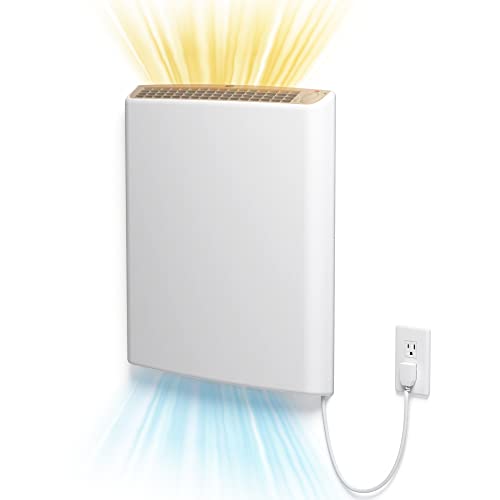
ENVI’s plug-in panel is a low-wattage, fan-less wall heater designed for continuous, quiet operation. The design emphasizes cool-to-touch surface temperatures (about 90°F) and safety with a wall-sense sensor that cuts power if the unit is removed. Its fan-less “stack convection” approach avoids blowing dust and allergens.
Call 888-896-7031 for Free Local HVAC Quotes – Compare and Save Today!
Use cases: intended for 24/7 supplemental heating in bedrooms or rooms requiring silent operation. The plug-in format simplifies installation—no hardwiring—making it attractive for renters or finished spaces where minimal disruption is important. The design prioritizes safety and continuous comfort rather than high-speed heat delivery.
Heat Storm HS-1500-PHX-WIFI Infrared Heater

The Heat Storm HS-1500-PHX is an infrared wall-mounted heater with Wi‑Fi-enabled controls and a digital thermostat. Infrared panels heat objects and people directly rather than only warming the air, which can feel efficient in targeted zones. The unit includes remote control, touchscreen, and smartphone control for scheduling and temperature management.
Safety and design: the product notes tip-over and overheat protection and a space-saving mount. Infrared heating tends to be effective for specific seating areas and rooms where direct warmth is desired without rapid air circulation.
Buying Guide: How To Choose A Wall Mounted Panel Heater With Thermostat
This buying guide highlights key considerations to compare panel heaters with thermostats across different needs and installation scenarios.
Tips for Getting the Best HVAC Prices
- Prioritize Quality Over Cost
The most critical factor in any HVAC project is the quality of the installation. Don’t compromise on contractor expertise just to save money. - Check for Rebates
Always research current rebates and incentives — they can significantly reduce your overall cost. - Compare Multiple Quotes
Request at least three estimates before making your choice. You can click here to get three free quotes from local professionals. These quotes include available rebates and tax credits and automatically exclude unqualified contractors. - Negotiate Smartly
Once you've chosen a contractor, use the proven strategies from our guide — How Homeowners Can Negotiate with HVAC Dealers — to get the best possible final price.
Heat Type And Response
- Convection Panels: Warm the air, creating steady ambient heat. Best for whole-room background warmth and quieter operation.
- PTC Ceramic Heaters: Faster warm-up and stable output; often paired with fans or oscillation to distribute heat.
- Infrared Panels: Heat objects and people directly; efficient for spot heating and avoiding air movement.
Thermostat Functionality
- Built-In Mechanical/Electronic Thermostat: Simple local control for maintaining set temperature ranges.
- Digital Thermostat With Display: Greater accuracy and programmable settings; useful for timed comfort.
- Smart/App/Wi‑Fi Control: Remote scheduling, voice control, and integration with home automation; useful for users who want remote or automated management.
Power, Coverage, And Efficiency
- Match heater wattage to room size: lower-wattage panels (e.g., 400W) work for small rooms; higher-output units (e.g., 1500W equivalents) are needed for larger or colder rooms.
- Consider energy-efficient modes and accurate thermostats to reduce runtime and energy use.
- Fan-assisted or oscillating models can make lower-power units feel more effective by improving distribution.
Installation And Mounting
- Hardwired Units: Offer permanent installation and cleaner aesthetics but usually require an electrician.
- Plug-In Units: Simpler to install and ideal for renters; ensure outlet placement supports wall mounting safely.
- Check wall construction and clearance requirements for safe mounting and heat dissipation.
Safety Features
- Look for overheat protection, tip-over switches (for free‑standing or convertible models), and cool-touch surfaces if children or pets are present.
- Wall-sense or removal sensors are valuable for plug-in panels to cut power if dislodged.
- Certifications (ETL/UL) indicate compliance with recognized safety standards.
Noise And Air Quality
- Fan-less designs are silent and reduce dust circulation—preferable for bedrooms and allergy sufferers.
- Fan-assisted or oscillating units improve heat spread but may add low-level noise; review dB ratings when quiet operation is important.
Control And Convenience
- Remote controls and digital timers simplify day-to-day use.
- Smart features allow scheduling and remote control, which can improve comfort management and energy savings.
- Precise thermostat resolution (1°F steps) supports tighter temperature control and potential energy savings.
Durability, Warranty, And Maintenance
- Check manufacturer warranty length and terms for protection against defects.
- Fan-less units generally have lower maintenance; fan-based heaters may require occasional dusting or servicing.
- Consider replacement parts availability and support reputation for long-term reliability.
Comparison Perspectives
- Efficiency-Focused: Choose a low-wattage, well-thermostatted panel or ECO mode features to minimize energy use for continuous heating.
- Fast-Heat Focused: Opt for PTC ceramic or higher-wattage models with oscillation to quickly raise perceived temperature.
- Quiet/Sleep Use: Prefer fan-less convection panels with auto-dimming lights and silent operation.
- Smart Home Integration: Select Wi‑Fi models with app control and voice assistant compatibility for remote scheduling and automation.