
Choosing the right gas warehouse heater depends on space size, mounting preference, ventilation, and fuel type. The table below summarizes five gas heaters suited for warehouse, garage, and large-shop applications selected from Amazon listings for comparison.
| Model | Type | Max BTU | Fuel | Coverage |
|---|---|---|---|---|
| Mr. Heater F260560 Big Maxx MHU80NG | Unit Heater | 80,000 BTU | Natural Gas | Up To 2000 Sq. Ft. |
| Reznor UDXC-60 | Ceiling/Hanging Forced Air | 60,000 BTU (two output levels) | Propane (LP) | Commercial/Industrial Areas |
| Dyna-Glo IR30NMDG-1 | Infrared Wall | 30,000 BTU | Natural Gas | Up To 1,000 Sq. Ft. |
| ProCom MN300TPA-B (Infrared) | Ventless Infrared | 30,000 BTU | Natural Gas | Up To 1,400 Sq. Ft. |
| ProCom MN300TBA-B (Blue Flame) | Ventless Blue Flame | 30,000 BTU | Natural Gas | Up To 1,400 Sq. Ft. |
Mr. Heater Big Maxx MHU80NG Natural Gas Unit Heater
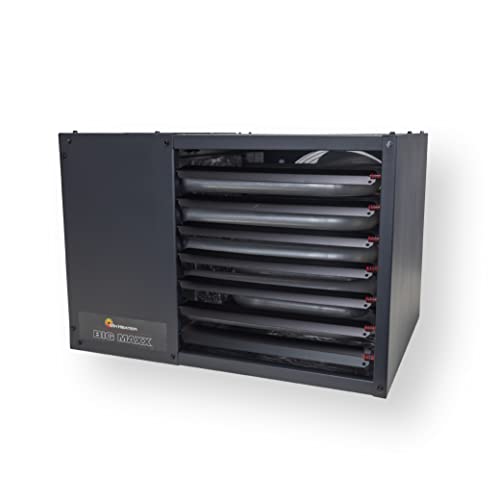
This Mr. Heater model is an 80,000 BTU natural gas unit heater designed for larger spaces such as warehouses and big workshops. The unit ships with two angle brackets and a liquid propane conversion kit, though thermostat, hose, and regulator are not included. Dimensions are 29.33” L x 15.50” W x 26.37” H, and the manufacturer rates it for coverage up to 2,000 sq. ft.
The heater operates at 120 V with 2.3 amps and requires at least 8 ft. clearance from floor to base. It supports category 1 vertical and category 3 horizontal venting configurations and is specified for natural gas use (LP conversion kit included for propane conversion). This model suits mounted installations where centralized forced-air warmup is needed for high-ceiling spaces.
Reznor UDXC-60 Propane Garage And Warehouse Heater

The Reznor UDXC-60 is a propane-fueled forced-air heater designed for indoor commercial and industrial spaces. It offers dual heating outputs—low and high—rated for two different output levels that adapt to milder or colder conditions. The product description highlights an 83% thermal efficiency rating for effective fuel utilization.
Call 888-896-7031 for Free Local HVAC Quotes – Compare and Save Today!
UDXC units can be ceiling-hung or bracket-mounted and include threaded-nut suspension points for hanging. The model is positioned for workshops, warehouses, and factories where quiet forced air and low static propeller technology are desirable. Mounting hardware may be required separately depending on the installation method selected.
Dyna-Glo IR30NMDG-1 Natural Gas Infrared Wall Heater

The Dyna-Glo IR30NMDG-1 is a 30,000 BTU infrared wall heater that radiates heat to warm objects and people directly, rather than relying solely on air temperature. Infrared heating can feel warmer at lower ambient air temperatures and is useful for targeted heating zones within larger warehouses.
The unit is natural gas ready (no fuel conversion permitted) and is rated to heat up to 1,000 sq. ft. Infrared technology may reduce perceived chill in specific work areas and can be an efficient choice where spot heating rather than whole-space warmup is required.
ProCom MN300TPA-B Ventless Infrared Space Heater With Thermostat

This ProCom unit is a compact 30,000 BTU ventless infrared heater with thermostat control and included wall mount and base feet. The unit is specified for natural gas and is sized for up to 1,400 sq. ft. use in smaller warehouse sections or offices inside larger facilities.
Call 888-896-7031 for Free Local HVAC Quotes – Compare and Save Today!
Key features include manual high/medium/low thermostat settings and a sleek profile for flexible installation. As a ventless infrared heater, it requires attention to indoor combustion air and local codes; oxygen depletion sensors and proper ventilation practices should be considered for continuous indoor use.
ProCom MN300TBA-B Ventless Natural Gas Blue Flame Space Heater

The ProCom MN300TBA-B is a ventless blue flame natural gas heater offering up to 30,000 BTU and thermostat control. Rated for up to 1,400 sq. ft., this unit is intended for rooms, offices, or smaller warehouse zones where direct air heating is acceptable and venting is limited.
Blue flame units heat the air directly and typically provide even ambient warming. This model includes wall mounting hardware and base feet. As with other ventless appliances, ensure compliance with local building and ventilation codes and consider oxygen depletion sensors for safety in enclosed areas.
Buying Guide For Gas Warehouse Heaters
Selecting a gas heater for a warehouse requires evaluating size, mounting, fuel type, ventilation, and safety features. The guide below covers key factors and comparison perspectives to help determine the right fit for your facility.
Space Size And Heat Output
- Calculate the cubic footage to estimate required BTU. High ceilings increase volume and may require greater output or multiple heaters.
- Unit heaters like the Mr. Heater 80,000 BTU are suited for large open areas, while 30,000 BTU infrared units work best for smaller zones or spot heating.
Fuel Type: Natural Gas Vs. Propane
- Natural Gas is often cheaper for facilities with pipeline access and provides steady supply for continuous operation.
- Propane (LP) is portable and useful where natural gas lines are absent; ensure tanks, regulators, and safe supply plumbing are properly sized.
- Check whether the unit supports fuel conversion or ships with conversion kits if switching fuels is anticipated.
Ventilation And Exhaust Considerations
- Vented Unit Heaters (category-rated) require proper flue or exhaust pathways to the outdoors and are generally preferred for large warehouses to remove combustion byproducts.
- Ventless Heaters (blue flame or infrared) do not require flues but introduce combustion products into the space; use them where code permits and ensure adequate make-up air and oxygen depletion protection.
- Infrared units warm objects and people directly, which can be efficient for specific workstations or aisles.
Mounting And Placement
- Ceiling-Mounted Forced-Air Units (e.g., Reznor UDXC) distribute warm air over a wide area and reduce floor-space usage; they are ideal for open warehouses.
- Wall-Mounted Infrared Or Blue Flame Units are better for targeted heating near workstations, loading areas, or offices inside the warehouse.
- Consider clearance requirements from the manufacturer for safe installation and airflow.
Efficiency And Operating Costs
- Look for thermal efficiency ratings to compare fuel-to-heat conversion. Higher efficiency reduces fuel consumption over time.
- Forced-air units can cycle fans and controls that add small electrical loads; ventless and infrared models may require minimal or no electricity.
Safety Features And Code Compliance
- Verify presence of oxygen depletion sensors (ODS), automatic shutoff, and compatible thermostat controls for safe indoor operation.
- Confirm local building and fire codes for venting, indoor combustion appliance allowance, and required clearances.
- Install CO detectors and ensure make-up air when using ventless heaters continuously in enclosed spaces.
Durability, Maintenance, And Serviceability
- Choose commercial-grade units with accessible burners and filters for routine maintenance.
- Check availability of replacement parts, conversion kits, and local service technicians for timely upkeep.
Installation Complexity
- Professional installation is recommended for vented unit heaters due to gas and venting work.
- Some ventless units offer simpler installation but may still require gas-line hookups and code approvals.
Comparison Perspectives
- For Whole-Warehouse Heating: High-BTU vented unit heaters or ceiling-mounted forced-air models provide more even distribution and safer combustion handling.
- For Spot Or Zoned Heating: Infrared or blue-flame wall units give rapid localized warmth with potentially lower fuel use when full-space heating is unnecessary.
- For Fuel Flexibility: Consider models with conversion kits if switching between natural gas and propane is likely.
Use the technical specifications and installation requirements from manufacturers to cross-check suitability for your warehouse layout, occupant safety, and local codes before purchase.
Tips for Getting the Best HVAC Prices
- Prioritize Quality Over Cost
The most critical factor in any HVAC project is the quality of the installation. Don’t compromise on contractor expertise just to save money. - Check for Rebates
Always research current rebates and incentives — they can significantly reduce your overall cost. - Compare Multiple Quotes
Request at least three estimates before making your choice. You can click here to get three free quotes from local professionals. These quotes include available rebates and tax credits and automatically exclude unqualified contractors. - Negotiate Smartly
Once you've chosen a contractor, use the proven strategies from our guide — How Homeowners Can Negotiate with HVAC Dealers — to get the best possible final price.