
Choosing between gas, electric, or dual-fuel heaters depends on space, fuel availability, and installation constraints. This guide compares five widely available gas and electric heating options — including forced-air unit heaters, wall-mounted blue-flame heaters, and tank/tankless water heaters with electric elements — to help you match performance to need.
| Product | Type | Primary Fuel | Key Output |
|---|---|---|---|
| Mr. Heater Big Maxx MHU50NG | Unit Heater | Natural Gas | 50,000 BTU |
| Mr. Heater Big Maxx MHU80NG | Unit Heater | Natural Gas | 80,000 BTU |
| Mr. Heater MHVFBF30NGT | Vent-Free Wall Heater | Natural Gas | 30,000 BTU |
| Dometic WH-10GEA | Gas / Electric Water Heater | Gas + Electric | 10-gallon, 10,000 BTU burner |
| Rheem 18kW 240V Tankless Electric | Tankless Electric Water Heater | Electric | Up To 4.4 GPM |
Content Navigation
- Mr. Heater Big Maxx MHU50NG Natural Gas Unit Heater
- Mr. Heater Big Maxx MHU80NG Natural Gas Unit Heater
- Mr. Heater MHVFBF30NGT Vent Free Blue Flame Wall Heater
- Dometic WH-10GEA 10-Gallon Gas/Electric Water Heater
- Rheem 18kW 240V Tankless Electric Water Heater
- Buying Guide: Choosing Between Gas, Electric, And Dual-Fuel Heaters
Mr. Heater Big Maxx MHU50NG Natural Gas Unit Heater
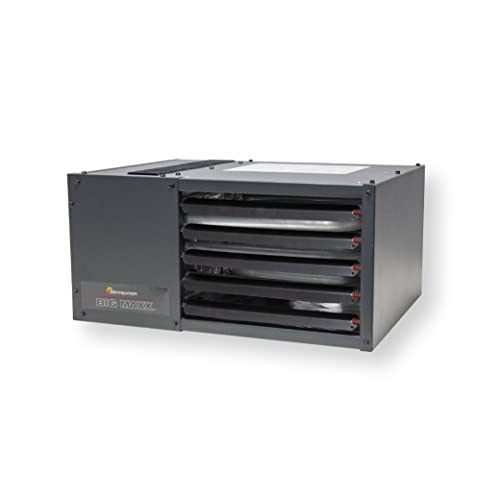
Type: Natural gas forced-air unit heater intended for garages, workshops, and commercial spaces.
Notable Features: 50,000 BTU output, heats up to approximately 1,250 sq. ft., powered exhaust allowing vertical or horizontal venting, external access to thermostat and gas connections.
This unit is designed for spaces that require high-output spot or general heating. The powered exhaust provides flexible venting configurations, which can simplify installation where traditional chimneys are unavailable. External service access aims to reduce maintenance time. Clearance and venting requirements must be followed for safe operation. Electrical connection is limited to ignition and controls rather than primary heating.
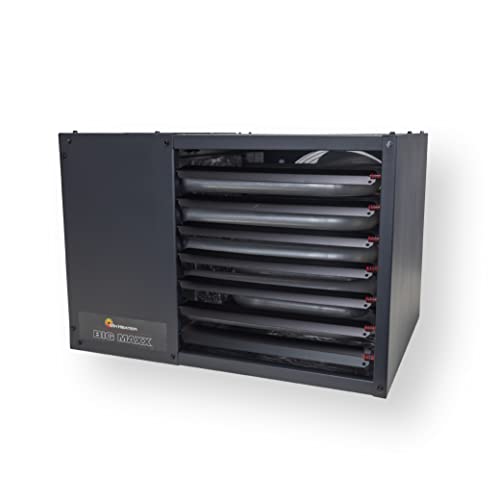
Mr. Heater Big Maxx MHU80NG Natural Gas Unit Heater
Call 888-896-7031 for Free Local HVAC Quotes – Compare and Save Today!
Type: Heavy-duty natural gas unit heater for larger spaces.
Notable Features: 80,000 BTU output, coverage up to about 2,000 sq. ft., includes two angle brackets and LP conversion kit, supports Category 1 vertical and Category 3 horizontal venting, 120 V electrical for fan/controls.
The MHU80NG delivers higher heat output for larger garages, light commercial areas, and workshops. It ships with mounting brackets and conversion components to adapt to LP fuel if needed. The unit’s venting categories allow flexible flue routing; installers should confirm clearances and local code compliance. Electrical usage is minimal and typically limited to fan and ignition systems.
Mr. Heater MHVFBF30NGT Vent Free Blue Flame Wall Heater
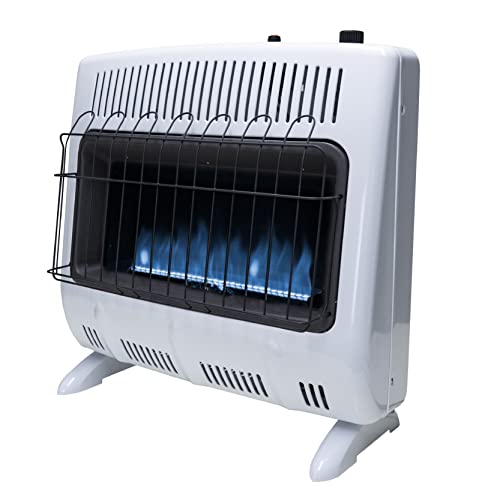
Type: Vent-free wall-mounted blue-flame natural gas heater for rooms and enclosed spaces.
Notable Features: Up to 30,000 BTU, thermostatic control, built-in electric ignition battery included, suitable for spaces up to ~1,000 sq. ft., efficient blue-flame burner for convection heat.
Call 888-896-7031 for Free Local HVAC Quotes – Compare and Save Today!
Vent-free heaters provide convection heating without a flue, making installation simpler in suitable rooms. This model includes thermostat control and electric ignition, which reduces pilot gas use. Vent-free operation requires adherence to combustion air, vent-free appliance codes, and monitoring of indoor air quality. These units distribute gentle convection heat rather than focused forced-air blowing.
Dometic WH-10GEA 10-Gallon Gas/Electric Water Heater

Type: Combination gas and electric water heater commonly used in RVs and mobile applications.
Notable Features: 10-gallon tank, electronic ignition burner delivering ~10,000 BTU, lightweight aluminum tank that does not require anode, designed for mobile installations where dual fuel flexibility is valuable.
This product suits RV owners who want both gas and electric heating modes for water. The electronic ignition simplifies starting without a standing pilot. The aluminum tank design reduces weight and avoids anode maintenance, which can be advantageous in mobile settings. Consider installation space, venting for gas mode, and electric circuit availability when selecting this model.
Rheem 18kW 240V Tankless Electric Water Heater
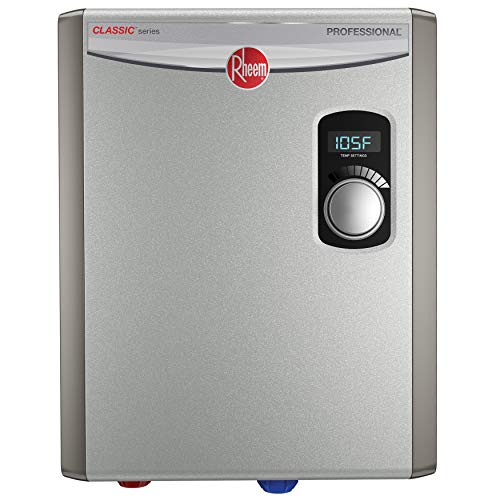
Type: Electric tankless point-of-use or whole-home water heating option depending on demand and plumbing setup.
Notable Features: 18kW at 240V, external digital thermostatic control with LED display, advanced self-modulation to adjust power to demand, two field-serviceable copper immersion heating elements, flow rate up to 4.4 GPM.
Tankless electric heaters provide on-demand hot water without standby losses. This Rheem model uses electronic controls and self-modulation to match output to flow, improving efficiency. Key considerations include adequate 240V electrical supply and breaker capacity, expected flow rates for simultaneous fixtures, and installation location relative to plumbing runs to reduce waiting time for hot water.
Buying Guide: Choosing Between Gas, Electric, And Dual-Fuel Heaters
Determine Application And Space
Identify whether you need space heating (garage, room, workshop) or water heating (domestic or RV). Space heaters are rated by BTU and recommended coverage area. Water heaters are rated by tank volume or flow rate (GPM) and recovery speed.
Fuel Availability And Cost
Assess local availability of natural gas, propane, or reliable electric service. Gas units usually offer higher BTU output per dollar installed for large spaces; electric models simplify installation in areas without gas lines.
Installation And Venting Requirements
Forced-air unit heaters and tank water heaters often require venting and clearances. Vent-free appliances remove the flue but must meet local codes and room air requirements. Tankless electric heaters need adequate electrical service and breaker capacity.
Efficiency And Operating Modes
Look for self-modulation and on-demand operation in tankless models to reduce energy waste. Dual-fuel water heaters provide operational flexibility—use electric power when available and gas off-grid or for faster recovery.
Output And Capacity
For space heating, use BTU ratings and square-foot guidance while accounting for insulation, ceiling height, and climate. For water heating, choose tank size for storage needs or GPM for simultaneous fixtures; higher BTU or kW translates to faster recovery or higher flow at temperature rise.
Controls, Safety, And Maintenance
Prioritize units with accessible controls, thermostats, and serviceable components. For gas appliances, confirm ignition type (electronic vs. pilot), combustion air requirements, and availability of replacement parts. Electric units benefit from simple maintenance but require periodic electrical inspections.
Installation Costs And Professional Requirements
Factor in labor, permits, and possible gas line or electrical panel upgrades. Gas venting and clearances often require certified plumbers or HVAC technicians. Electric upgrades may require an electrician to install a dedicated 240V circuit and proper breakers.
Tips for Getting the Best HVAC Prices
- Prioritize Quality Over Cost
The most critical factor in any HVAC project is the quality of the installation. Don’t compromise on contractor expertise just to save money. - Check for Rebates
Always research current rebates and incentives — they can significantly reduce your overall cost. - Compare Multiple Quotes
Request at least three estimates before making your choice. You can click here to get three free quotes from local professionals. These quotes include available rebates and tax credits and automatically exclude unqualified contractors. - Negotiate Smartly
Once you've chosen a contractor, use the proven strategies from our guide — How Homeowners Can Negotiate with HVAC Dealers — to get the best possible final price.
Comparison Perspectives
- Performance: Gas unit heaters deliver high BTU for large spaces; electric heaters provide consistent output where gas isn’t available.
- Flexibility: Dual-fuel water heaters and LP-convertible units allow switching fuels when needed.
- Efficiency: Tankless and modulating electric models eliminate standby losses; vented gas may lose heat through flues.
- Installation Complexity: Vent-free and electric options are often simpler; vented gas and high-BTU units require more complex installation.