
Choosing an eco-friendly electric heater means balancing energy efficiency, safety features, and the right capacity for your space. Below is a concise comparison of selected models that emphasize low energy use, smart controls, and targeted heating. The table summarizes each product’s core purpose so you can jump to the detailed review that fits your needs.
| Product | Type | Best For |
|---|---|---|
| EcoSmart ECO 11 Electric Tankless Water Heater | Tankless Water Heater | Point-of-use hot water, small spaces |
| EcoSmart ECO 27 Tankless Water Heater | Tankless Water Heater | Whole-house electric hot water |
| Stiebel Eltron Tempra 20 Plus | Tankless Water Heater | Continuous flow for larger households |
| Dreo Space Heater, 1500W PTC | Portable Room Heater | Quick, efficient room heating with smart controls |
| FLANUR Portable Space Electric Heater | Portable Room Heater | Quiet, eco mode and convertible fan/heater |
Content Navigation
EcoSmart ECO 11 Electric Tankless Water Heater

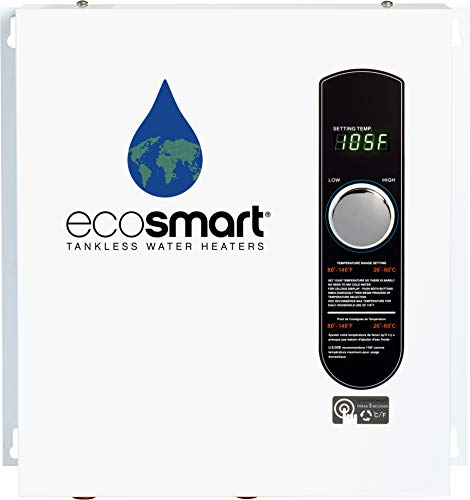
The EcoSmart ECO 11 is a compact tankless electric water heater designed for point-of-use applications. It offers endless on-demand hot water and uses self-modulating technology to adjust power draw based on flow and temperature needs. This keeps energy use focused only when hot water is required.
Key features include continuous temperature monitoring that maintains performance within 1°F, a compact 11.5 x 8 x 3.75 inch footprint for wall or point-of-use installation, and claim of up to 99% thermal efficiency because it eliminates tank standby losses. The listed amperage draw is 54 A, which is relevant for electrical circuit planning.
Considerations: this unit works best where inlet water temperatures are moderate; sizing and the house electrical service should be checked to ensure adequate current capacity. The ECO 11 emphasizes space savings and targeted energy use for small-demand scenarios like single sinks or small apartments.
EcoSmart ECO 27 Tankless Water Heater
Call 888-896-7031 for Free Local HVAC Quotes – Compare and Save Today!
The EcoSmart ECO 27 is a higher-capacity electric tankless heater intended for whole-house hot water applications where 240V single-phase power is available. With 27 kW output it supports multiple fixtures simultaneously in many climates.
Features call out 240V operation, single-phase electrical compatibility, and 27 kW heating capacity. The design follows EcoSmart’s self-modulating approach to reduce wasted energy by matching output to demand rather than maintaining tank temperature.
Considerations: the ECO 27 typically requires a robust electrical service and professional installation. For homes replacing gas or storage-tank systems, this electric model offers consistent flow and on-demand hot water, but confirm load capacity, circuit breakers, and local electrical codes before purchase.
Stiebel Eltron Tempra 20 Plus

The Stiebel Eltron Tempra 20 Plus is an electric tankless heater featuring Advanced Flow Control to maintain temperature stability under varying flow conditions. It’s positioned as a compact whole-house solution with auto modulation for energy savings.
Key features include continuous flow control that reduces flow when demand exceeds capacity to prevent temperature drop, electronic activation with a digital temperature display, and interior solid copper heating elements. The unit requires no venting and carries energy-saving claims via auto-modulation and precise control.
Call 888-896-7031 for Free Local HVAC Quotes – Compare and Save Today!
Considerations: the Tempra 20 Plus is designed for quieter operation and has a memory function for preset temperatures. Evaluate household peak hot water demand and electrical service to ensure the unit meets simultaneous fixture needs. The model emphasizes stable output and efficient use of electricity for whole-house or large-demand points.
Dreo Space Heater With Thermostat

The Dreo portable heater is a 1500W PTC ceramic unit designed for rapid room heating with improved circulation. It pairs fast warm-up performance with an enhanced NTC chipset for precise thermostat control and an array of safety features.
Highlighted features: Hyperamics 1500W PTC system and heat funnel design for faster and farther air circulation, digital thermostat with a wide temperature range (41–95°F) adjustable in ±1°F steps, and multiple safety protections including tilt detection, overheat protection, V0 flame-retardant materials, and ETL certification.
Considerations: portable PTC heaters convert electrical input to targeted heat quickly and often maintain efficient energy use when paired with precise thermostats and timers. This unit is marketed for office or bedroom use where focused heating and safety certifications are priorities.
FLANUR Portable Space Electric Heater
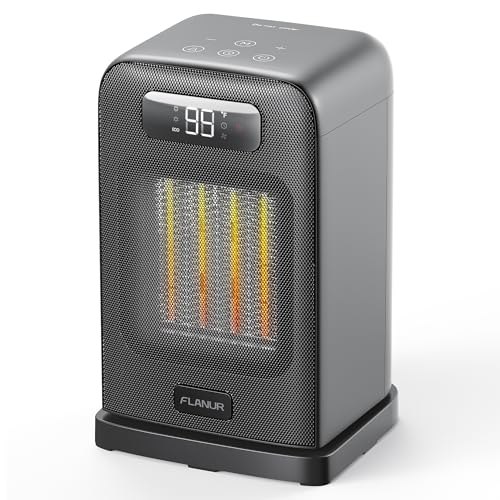
The FLANUR portable heater is a 2-in-1 heater and fan that emphasizes quiet operation and an ECO mode designed to reduce power use. It uses PTC ceramic heating elements and includes a timer and remote control for convenience.
Key features include dual heat power levels (1500W/900W), an ECO mode that intelligently adjusts output to save energy, temperature control from 41°F to 95°F, safety features like tip-over and overheat shutoffs, and a 24-hour auto-off timer.
Considerations: This model is aimed at users who want flexible seasonal use (heating and fan) with quiet performance (under 35 dB listed) and integrated safety. The combination of programmable timers and ECO setting helps minimize energy consumption during intermittent use, offering efficient spot heating for bedrooms and small offices.
Buying Guide: How To Choose An Eco Electric Heater
Choosing the right eco electric heater requires evaluating efficiency, application, capacity, and safety. Below are the main considerations and comparative perspectives to help you make an informed choice.
Heating Type And Application
- Tankless Electric Water Heaters (EcoSmart, Stiebel Eltron): Best for supplying on-demand hot water and reducing standby energy loss compared to storage tanks. Ideal for point-of-use or whole-house depending on kW capacity.
- Portable Space Heaters (Dreo, FLANUR): Designed for zone heating—efficient when you heat only the occupied room rather than the entire home. Choose PTC ceramic types for fast warm-up and stable temperature control.
- Pool or Specialty Heaters: These are targeted products with heat pump or electric heater designs; match capacity to pool size and climate for efficiency.
Energy Efficiency Metrics
- Self-Modulating Technology: Adjusts power to demand—reduces wasted electricity. Common on tankless models.
- Thermal Efficiency: Tankless units typically cite thermal efficiencies near 90%–99% because they avoid standby losses. For portable heaters, efficiency is about converting watts to space heat; programmable thermostats and ECO modes improve effective efficiency.
- Coefficient Of Performance (COP): Relevant for heat pumps (pool heaters); a higher COP indicates more heat output per unit of electricity consumed.
Capacity And Sizing
- Tankless Water Heaters: Match kW rating and expected flow rates to household demand. For whole-house service in colder climates, higher kW models may be required. Verify your home’s voltage and breaker capacity (e.g., 240V, amperage).
- Portable Heaters: Use room square footage as a guide. A 1500W heater typically covers small to medium rooms effectively; larger spaces may need multiple units or a central system.
Electrical Requirements And Installation
- Confirm household electrical service: some tankless models need high amperage and multi-breaker circuits. Professional electrical assessment is recommended.
- Portable units require standard outlets but check for dedicated circuits if multiple high-watt devices run simultaneously.
Control Features And Practicality
- Thermostats And Timers: Precision thermostats, digital displays, and programmable timers improve comfort while reducing wasted runtime.
- Remote Control & Smart Modes: Remote operation, ECO modes, and fan settings add convenience and energy savings for portable heaters.
- Space And Mounting: Tankless units save space via wall mounting; portable units are valued for mobility.
Safety And Certification
- Look for certifications such as ETL, UL, or equivalent. Safety features like tip-over protection, overheat shutoff, and flame-retardant materials reduce risk in portable heaters.
- For water heaters, verify built-in protections and compliance with local plumbing/electrical codes. Ground-fault protection (GFCI) may be required in certain installations.
Durability And Maintenance
- Tankless heaters often require periodic descaling in hard water areas to maintain efficiency. Check manufacturer guidance on maintenance intervals.
- Portable heaters benefit from dust-free operation and regular cleaning of vents to preserve airflow and safety sensors.
Comparison Perspectives
- Operational Cost Perspective: Zone heating with portable heaters can lower bills when you avoid heating unused rooms. Tankless water heaters reduce energy by eliminating tank standby losses.
- Environmental Perspective: Less total electricity consumption—achieved by precise control, ECO modes, and on-demand operation—reduces carbon impact compared to inefficient continuous systems.
- Practical Installation Perspective: Tankless whole-house electric systems may require costly electrical upgrades, while portable heaters offer immediate, low-cost deployment.
Final selection should weigh your primary goal—water heating vs. space heating—alongside electrical capacity, safety needs, and whether targeted zone heating or whole-home service is desired. Reviewing installation requirements and certification details will ensure a practical, energy-conscious purchase.
Tips for Getting the Best HVAC Prices
- Prioritize Quality Over Cost
The most critical factor in any HVAC project is the quality of the installation. Don’t compromise on contractor expertise just to save money. - Check for Rebates
Always research current rebates and incentives — they can significantly reduce your overall cost. - Compare Multiple Quotes
Request at least three estimates before making your choice. You can click here to get three free quotes from local professionals. These quotes include available rebates and tax credits and automatically exclude unqualified contractors. - Negotiate Smartly
Once you've chosen a contractor, use the proven strategies from our guide — How Homeowners Can Negotiate with HVAC Dealers — to get the best possible final price.