
Overview: This guide compares five explosion-proof and shatter-resistant heaters and heat sources suitable for aquariums, ponds, lab work, and specialty tanks. Each selection highlights safety features, power range, and intended application to help choose the right unit for enclosed or flammable-prone environments.
| Product | Type | Key Safety Feature |
|---|---|---|
| hygger ECO Fish Tank Heater 800W | Submersible Aquarium Heater | Auto shutoff, dry-run & overheat protection |
| hygger Ceramic Submersible 300W | Submersible Aquarium Heater With External Controller | E01 dry-burn, HH overheat protection, ceramic core |
| hygger Double Quartz 800W | Double-Tube Submersible Heater | Dual independent heating systems, sealed waterproof shell |
| boxtech Aquarium Heater 50W | Small Submersible Quartz Heater | Shatterproof quartz glass, UL-listed cord |
| WUTA 200ml Stainless Steel Alcohol Lamp | Laboratory Alcohol Burner | Thickened stainless body, brass screw cap to prevent leakage |
hygger ECO Fish Tank Heater 800W

This 800W submersible heater is aimed at large freshwater aquariums, turtle tanks, and ponds (120–180 gallons). It features an auto shutoff when overheated and dry-run protection that stops heating when removed from water, reducing risk of damage or thermal stress. The unit supports an ECO mode that reduces power use once target temperature is reached, then cycles at low energy to maintain stability. The compact rod measures about 9.6 inches and is designed for continuous submersion in freshwater environments.
hygger Ceramic Submersible 300W
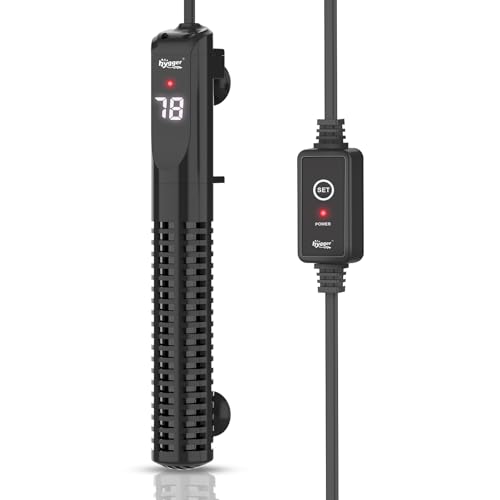
This model uses a ceramic core and an external digital controller with a two-digit display for precise temperature control (64°F–95°F). Safety features include dry-burn (E01), overheat (HH) protection, and fault alerts (E02). The shatterproof ABS shell and robust heating element help reduce rupture risk. Available in multiple wattages, the 300W unit is suitable for medium tanks and offers stable, efficient heating with an emphasis on safety and monitoring.
hygger Double Quartz 800W

Call 888-896-7031 for Free Local HVAC Quotes – Compare and Save Today!
The double quartz design provides redundancy with two independent heating rods and separate temperature control chips. If one rod or control fails, the other can continue heating, lowering the risk of sudden temperature loss. The unit’s multiple heating wires disperse heat evenly at 360°, and the sealed waterproof plastic and removable outer shell simplify maintenance. This unit is intended for large tanks and applications where continuous operation and redundancy are priorities.
boxtech Aquarium Heater 50W

The boxtech 50W heater is intended for small aquariums (3–15 gallons). It uses a heat-resistant quartz glass casing that is described as shatterproof and explosion-proof, paired with a UL-listed power cord. The thermostat is adjustable between 68°F and 90°F and the unit auto-starts/stops based on set temperature. The compact footprint and quartz construction make it suitable for nano tanks where reliable, low-wattage heating is required and glass durability is a concern.
WUTA 200ml Stainless Steel Alcohol Lamp

This stainless steel alcohol burner is designed for laboratory and craft use and advertises a thickened 304 stainless body and brass screw cap to reduce deflagration and prevent fuel leakage if overturned. It includes cotton wicks and a cap for flame control. As a direct-flame heat source, it is best suited for controlled lab or craft settings where open flame is acceptable and users need a compact, durable burner with reduced risk of fuel spillage.
Buying Guide: Choosing The Right Explosion-Proof Heater
Selecting an appropriate explosion-proof or shatter-resistant heater requires matching performance and safety features to your application. Below are key considerations and comparison perspectives.
Call 888-896-7031 for Free Local HVAC Quotes – Compare and Save Today!
Application And Environment
- Aquariums And Ponds: Use fully submersible units with dry-run and overheat protection. Wattage should match tank volume—higher gallons require higher wattage or dual systems.
- Laboratory Or Workshop: For small-scale heating tasks, purpose-built alcohol lamps or laboratory burners with robust containment are appropriate. Ensure ventilation and flame control.
- Redundancy Needs: For critical habitats (breeding, sensitive species), prefer dual-heating or redundant controls to avoid sudden temperature loss.
Safety Features To Prioritize
- Dry-Run Protection: Automatically shuts off when not submerged to prevent overheating and element failure.
- Overheat Protection: Detects excessive internal temperatures and cuts power to prevent damage or fire risk.
- Shatterproof/Explosion-Proof Materials: Quartz glass, ceramic cores, stainless steel, or reinforced ABS shells reduce rupture risk under thermal stress.
- Sealed/Waterproof Electronics: Look for sealed chips and waterproof housings to protect against moisture ingress and corrosion.
- UL/Third-Party Safety Listings: UL listings or equivalent certifications indicate compliance with recognized safety standards.
Power And Sizing
- Wattage Per Gallon Rule: Smaller tanks require less wattage; large tanks or outdoor ponds need higher wattage or multiple heaters. Use manufacturer recommendations to match tank volume.
- Placement And Heat Distribution: Consider heater placement and whether you need even 360° heat dispersion or localized radiant heating.
Control And Monitoring
- External Controllers: Digital external controllers provide precise temperature setting and easier monitoring without disturbing the heater.
- Fail Alerts: Models that provide fault codes or alarms (e.g., E01, E02) help diagnose dry-run or sensor failures quickly.
Durability And Maintenance
- Material Selection: Ceramic and thick quartz resist thermal shock; stainless-steel casings offer mechanical durability.
- Serviceability: Removable shells, replaceable components, and clear instructions reduce downtime and extend lifespan.
Comparison Perspectives
- Performance vs. Safety: Higher wattage heaters deliver faster temperature recovery but require robust safety features to mitigate risk.
- Redundancy vs. Cost: Dual-rod or dual-control systems add safety for critical applications but can be more complex to install.
- Open Flame vs. Electric: Alcohol lamps provide portable direct heat for lab work but introduce open-flame hazards; electric submersible heaters eliminate open flame but need proper electrical protection.
Final Note: Match the heater’s rated environment, safety systems, and wattage to the specific needs of the tank or workspace. Regular monitoring, proper installation, and adherence to manufacturer instructions are essential to maintain safety and heater longevity.
Tips for Getting the Best HVAC Prices
- Prioritize Quality Over Cost
The most critical factor in any HVAC project is the quality of the installation. Don’t compromise on contractor expertise just to save money. - Check for Rebates
Always research current rebates and incentives — they can significantly reduce your overall cost. - Compare Multiple Quotes
Request at least three estimates before making your choice. You can click here to get three free quotes from local professionals. These quotes include available rebates and tax credits and automatically exclude unqualified contractors. - Negotiate Smartly
Once you've chosen a contractor, use the proven strategies from our guide — How Homeowners Can Negotiate with HVAC Dealers — to get the best possible final price.