
Intro: Choosing the right infrared greenhouse heater helps protect sensitive plants from cold snaps while maintaining humidity and energy efficiency. Below is a quick comparison of five heaters suited for greenhouses, grow tents, and small to medium outbuildings.
| Product | Type | Key Features |
|---|---|---|
| Dr Infrared DR-268 Smart | Wall/Ceiling/Chain Mount | IPX5 Water Resistance, Digital Thermostat, Multi-Mount |
| DR. INFRARED DR218 1500W | Ceiling/Wall Mount | 1500W Single Setting, IPX4 Splash Protection, 150 sq ft Coverage |
| SURJUNY Wall Mounted Infrared | Outdoor/Indoor Wall Heater | IP34 Waterproof, 1500W Rapid Heat, Durable Aluminum |
| Buyplus Greenhouse Heater | Wall Mount With Thermostat | 1500W, Digital Thermostat, Overheat Protection, 3s Fast Heat |
| Joanolga Greenhouse Heater | Electric Grow Tent Heater | 1500W, Digital Thermostat Probe, Two Modes, Overheat Protection |
Dr Infrared Heater DR-268 Smart Greenhouse Heater

This model Is Marketed For Indoor And Outdoor Use With IPX5 Water Resistance, making it suitable for humid greenhouse spaces where occasional moisture occurs. The unit Provides clean, odorless infrared heat suitable for plant areas, sheds, and grow tents.
Included Is A corded temperature probe and a built-in digital display that allows selectable Auto Mode or Manual Mode to maintain target temperatures. Multiple mounting options (wall, ceiling, or hanging chain) make it adaptable to different greenhouse layouts. The combination of probe-based control and weather resistance makes this model appropriate where precise ambient control and moisture tolerance are required.
DR. INFRARED DR218 1500W Infrared Heater

The DR218 Is A 1500W Infrared Unit Designed For Greenhouses, Garages And Workshops. It Has A single power setting and Is Rated IPX4 For Splash Protection, supporting installation in areas where light moisture or splash may occur.
Call 888-896-7031 for Free Local HVAC Quotes – Compare and Save Today!
Manufacturer Specifications Note Heating Coverage Around 150 Sq. Ft. The simplified control layout can suit greenhouses that need consistent baseline warmth without frequent setpoint changes. The design emphasizes straightforward operation and reliable heat output for small to medium spaces.
SURJUNY Wall Mounted Infrared Heater
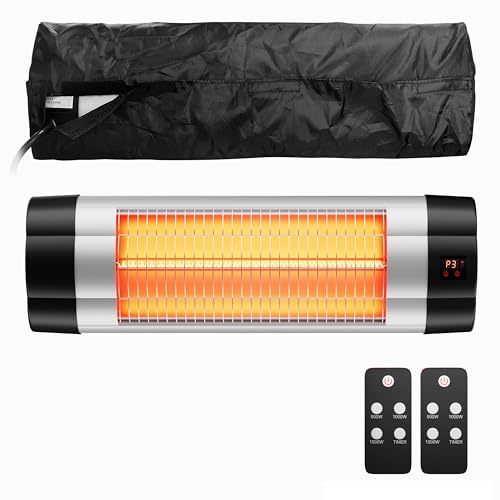
The SURJUNY Unit Is Marketed As An Indoor/Outdoor Wall Heater With IP34 Waterproofing, Rapid 1-Second Warmth, And A Durable Aluminum Housing. Its build quality targets exposure to elements such as rain, dust, and snow when mounted in protected greenhouse bays or covered patios.
Features Include two remote controls (spare included) and a mounting bracket for angling heat toward plant benches. The focus On Rapid Heating And Robust Housing Can Be Advantageous For partially enclosed greenhouse structures where fast recovery from cold air infiltration is useful.
Buyplus Greenhouse Heater With Digital Thermostat

The Buyplus Heater Is A 1500W Unit With An Integrated Digital Thermostat And Waterproof Temperature Probe. It Claims Coverage Up To 215 Square Feet And Offers 3-Second Fast Heating for quick response to drops in ambient temperature.
Call 888-896-7031 for Free Local HVAC Quotes – Compare and Save Today!
Safety Features Include Overheat Protection Through A Self-Resetting Breaker. The adjustable thermostat range (roughly 40°F–108°F) Enables growers To Set Desired Temperatures Accurately. This model Is Suitable For Grow Tents, Flower Rooms, And Small Greenhouses Where probe-based feedback and automatic control are preferred.
Joanolga Greenhouse Heater With Digital Thermostat

This 1500W Greenhouse Heater Provides Two Modes (fan-only and fan+heater) And Includes A Separate Digital Thermostat Probe For Accurate Temperature Sensing. The unit reports approximately 5118 BTU output and low-noise operation.
Built-In Overheat Protection And An Adjustable Thermostat Range Make The Joanolga Model Appropriate For Controlled Greenhouse Environments, where maintaining specific day/night temperatures or protecting seedlings during cold nights is important.
Buying Guide: How To Choose An Infrared Greenhouse Heater
Selecting the right heater depends on greenhouse size, mounting options, moisture exposure, temperature control needs, and safety features.
1. Heating Output And Coverage
Match the heater wattage and BTU output to greenhouse volume. 1500W units commonly cover small to medium spaces (roughly 100–215 sq ft depending on insulation). For larger or poorly insulated greenhouses, consider multiple units or higher-capacity systems.
2. Temperature Control Method
Thermostat control is critical for plant health. Probe-based digital thermostats (external sensor) provide more accurate ambient readings than built-in indicators alone. Look for adjustable ranges and clear displays for setpoint accuracy.
3. Mounting Flexibility And Directional Heat
Wall, ceiling, or hanging options affect heat distribution. Mounting height and angle influence how evenly heat reaches benches or pots. Units with adjustable mounts or hanging chains allow targeted warm zones.
4. Water Resistance And Environmental Rating
Greenhouses are humid environments. Choose IP-rated units appropriate to exposure: IPX4/IP34 handle splashes and dust; IPX5 offers stronger water resistance. Higher ratings reduce corrosion and electrical risk in humid conditions.
5. Safety Features
Essential protections include overheat shutoff, tip-over switch (for portable units), and self-resetting breakers. Proper wiring and GFCI circuits in greenhouse electrical systems are recommended to mitigate moisture-related hazards.
6. Heat Type And Efficiency
Infrared heaters transfer radiant heat directly to objects and plants rather than heating air. This can be efficient in drafty greenhouses or where targeted localized heat is preferred. Consider units combining infrared elements with PTC or fan assistance for quicker distribution.
7. Noise And Air Movement
Some heaters include fans to distribute heat; others are silent radiative models. Fan-assisted units improve circulation but introduce noise and potential humidity change. Decide based on plant sensitivity and workspace comfort.
8. Installation And Maintenance
Check mounting hardware, cord length, and whether professional installation is needed. Regularly inspect for rust, loose wiring, and proper probe placement. Keep vents and sensors free of debris for accurate operation.
9. Control Features And Connectivity
Basic digital thermostats provide reliable automatic control. Some models offer remote controls or app/Wi‑Fi connectivity for convenience. Evaluate whether remote management is necessary for your setup; connectivity can help preheat before arrival but requires secure network configuration.
10. Coverage Scenarios And Redundancy
For critical crops or overnight protection, consider redundancy (two smaller units) rather than a single large heater. Multiple heaters provide more even distribution and backup in case of a single unit failure.
Comparison Perspectives
From A Durability Perspective: Look For Higher IP Ratings And Robust Housing When Placing Heaters In Humid Or Semi-Exposed Greenhouses.
From A Control Perspective: Models With External Temperature Probes And Digital Thermostats Offer Better Accuracy For Plant Microclimates.
From An Installation Perspective: Wall Or Ceiling-Mounted Units Save Floor Space And Reduce Tip-Over Risk; hanging or angled mounts improve bench-level warmth.
From A Safety Perspective: Overheat Protection And Proper Electrical Safeguards (GFCI Circuits) Are Essential In Humid Growing Environments.
Tips for Getting the Best HVAC Prices
- Prioritize Quality Over Cost
The most critical factor in any HVAC project is the quality of the installation. Don’t compromise on contractor expertise just to save money. - Check for Rebates
Always research current rebates and incentives — they can significantly reduce your overall cost. - Compare Multiple Quotes
Request at least three estimates before making your choice. You can click here to get three free quotes from local professionals. These quotes include available rebates and tax credits and automatically exclude unqualified contractors. - Negotiate Smartly
Once you've chosen a contractor, use the proven strategies from our guide — How Homeowners Can Negotiate with HVAC Dealers — to get the best possible final price.