
Choosing a programmable space heater means balancing safety, energy efficiency, and precise temperature control. The table below summarizes five well-reviewed options selected for different room sizes and needs. Each product entry links to the Amazon listing and highlights core features for quick comparison.
| Product | Type | Power | Programmable Features |
|---|---|---|---|
| GiveBest Programmable Space Heater | Plug-In Ceramic | 450W | LED Display, Thermostat, Timer, Rotatable Plug |
| Dreo Space Heater | PTC Ceramic Portable | 1500W | Digital Thermostat, Remote, 12H Timer, Multiple Modes |
| Brightown Wall Space Heater | Wall/Plug-In Ceramic | 450W | Precise Thermostat, LED Display, 1–12H Timer |
| PELONIS Oscillating Tower Heater | Tower Ceramic | 1500W | Programmable Thermostat, 12H Timer, ECO Mode |
| De’Longhi Dragon Oil-Filled Radiator | Oil-Filled Radiator | 1500W | Digital Panel, 24H Programmable Timer, Radiant Surface |
GiveBest Programmable Space Heater With LED Display

This compact plug-in model uses 450 watts to deliver targeted warmth with low energy draw. The heater includes an LED display showing set temperature and a built-in thermostat that cycles to maintain between 60–90°F. A timer allows scheduled shutoff, and the 180° rotatable plug adapts to different outlet orientations. It is ETL listed and designed to avoid overloading household circuits, making it suitable for small rooms, bathrooms, or offices where circuit load is a concern.
Relevant features: low wattage for energy savings, adjustable temperature range, LED readout, rotatable plug, ETL listing. Consider this unit for compact areas and users who prioritize low power consumption and plug-in convenience.
Dreo Space Heater Portable Electric Heater

The Dreo model is a 1500W PTC ceramic heater designed for fast warm-up and broader air circulation. It uses a Hyperamics PTC system and a heat funnel design to push warm air farther than many compact heaters. Safety features include a tilt-detection sensor, overheat protection, flame-retardant materials, and an ETL safety plug.
Call 888-896-7031 for Free Local HVAC Quotes – Compare and Save Today!
Programmable controls include a precise digital thermostat with 1°F increments from 41–95°F, a 12-hour timer, multiple modes, and a remote. This heater is intended for bedrooms, offices, and living areas where quick, efficient heat and fine temperature control are priorities. The combination of strong output and safety certifications makes it suitable for larger small rooms and typical indoor use.
Wall Space Heater 450W With Programmable Thermostat

Brightown’s wall-style plug-in heater uses a ceramic PTC heating element for rapid warm-up in about three seconds. The unit supports precise thermostat control with 1°F adjustments across a 60–90°F range and a visible LED digital display. A programmable timer offers up to 12 hours of scheduled operation with automatic shutoff.
Designed for mounting or plugging into an outlet, this heater is useful for dorm rooms, offices, or small living spaces where a slim profile and precise temperature control matter. Overheat protection and ETL certification are included. Its design emphasizes fast heating and temperature accuracy rather than high-room coverage.
PELONIS Oscillating Ceramic Tower Heater

PELONIS offers a 1500W tower heater with wide oscillation and a tall form factor for broader coverage. The unit’s ceramic element promises quick heat and a consistent temperature, aided by enhanced venting and a 75° oscillation that helps distribute warmth across larger rooms.
Call 888-896-7031 for Free Local HVAC Quotes – Compare and Save Today!
Programmable features include a digital panel with 1°F adjustments, remote control, an extended 12-hour timer, and an ECO mode for energy-sensitive operation. Safety protections include tip-over and overheat detection. This model is suited to living rooms or large bedrooms where oscillation and higher output improve even heat distribution.
De’Longhi Dragon Digital Oil-Filled Radiator Heater
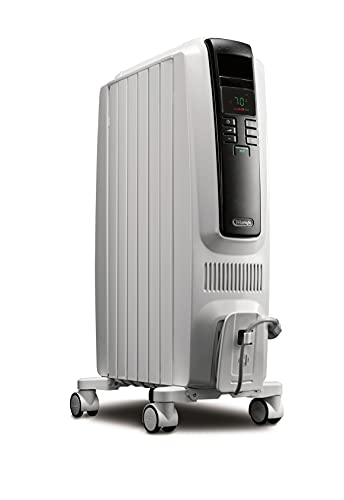
The De’Longhi Dragon is an oil-filled radiator with a large radiant surface intended to deliver gentle, sustained warmth. The design increases radiant surface area to improve heat transfer, and the unit supports fast convection distribution for steady temperature maintenance across a room.
Controls include a digital control panel, LED display, and a full-featured 24-hour programmable timer, allowing precise scheduling. Oil-filled radiators run quietly and retain heat after switching off, which can be advantageous for continuous low-energy heating and bedrooms. Built-in safety features and multiple modes target whole-room comfort rather than rapid spot heating.
Buying Guide: How To Choose A Programmable Space Heater
When selecting a programmable space heater, focus on four primary areas: heating performance, programmability, safety features, and energy efficiency. Each factor affects suitability for different rooms and use cases.
Heating Performance And Room Size
- Power Rating: 1500W units deliver the strongest output and are suitable for larger rooms up to ~220 ft² depending on insulation. Low-watt models (around 450W–800W) are better for small spaces, bathrooms, and office cubicles.
- Heat Type: Ceramic/PTC heaters heat quickly and are good for spot warming. Tower models offer wider coverage via oscillation. Oil-filled radiators provide sustained, even heat and lower surface temperatures.
Programmability And Controls
- Thermostat Precision: Look for 1°F increments if you want fine control over temperature; many programmable models now offer this level of adjustment.
- Timers: Timers from 1–12 hours cover most needs; 24-hour programmable timers are useful for daily schedules and overnight adjustments.
- Remote And Modes: Remote control and multiple modes (ECO, High/Low, Oscillation) add convenience for different situations.
Safety Features
- Tip-Over Protection: Required for mobile units in homes with pets or children; tower and portable heaters should include tip-over shutoff.
- Overheat Protection: Prevents internal damage and reduces fire risk.
- Certifications: ETL or UL listing indicates third-party safety testing; flame-retardant materials and safety plugs add protection.
Energy Efficiency And Operating Cost
- Wattage vs. Usage: Higher wattage heats faster and can be more effective in poorly insulated spaces. Lower-wattage heaters use less power and are cost-efficient for mild climates or intermittent use.
- Thermostatic Control: A programmable thermostat reduces run time by cycling to maintain a set temperature, cutting energy use compared to manual high/low settings.
- ECO Modes: Energy-saving modes modulate output and can reduce consumption over extended use.
Noise, Placement, And Installation
- Noise Level: Oil-filled radiators are quiet; fan-based ceramic heaters produce some airflow noise that may matter in bedrooms or offices.
- Placement: Maintain clearances around heaters. Wall plug-in models and compact plug-in units minimize floor space usage. Tower units require floor space but improve distribution.
- Circuit Load: Low-watt plug-in heaters reduce risk of overloading shared circuits. For large multi-device circuits, confirm outlet capacity before using multiple high-watt heaters.
Durability And Maintenance
- Build Quality: Check for stable housing, secure controls, and cord integrity. Brands often differ in long-term reliability.
- Filter/Cleaning: Most ceramic heaters are low maintenance; tower heaters with grills can trap dust and benefit from periodic cleaning.
- Warranty And Support: Manufacturer support and warranty length matter for longer-term ownership.
Comparison Perspectives
- Small Room/Office: Favor compact 450W–800W plug-in heaters with programmable thermostats and timers for energy-efficient spot heating.
- Large Bedroom/Living Room: Consider 1500W tower heaters or oil-filled radiators for consistent whole-room warmth and better coverage.
- Noise-Sensitive Areas: Oil-filled radiators provide quiet operation; ceramic models with low fan speeds may also be acceptable.
- Safety-Focused Households: Prioritize units with tip-over and overheat protection plus third-party certification.
Using these considerations, match the heater type and features to your room size, usage pattern, and safety expectations. Programmable thermostats and timers are key to balancing comfort with energy savings.
Tips for Getting the Best HVAC Prices
- Prioritize Quality Over Cost
The most critical factor in any HVAC project is the quality of the installation. Don’t compromise on contractor expertise just to save money. - Check for Rebates
Always research current rebates and incentives — they can significantly reduce your overall cost. - Compare Multiple Quotes
Request at least three estimates before making your choice. You can click here to get three free quotes from local professionals. These quotes include available rebates and tax credits and automatically exclude unqualified contractors. - Negotiate Smartly
Once you've chosen a contractor, use the proven strategies from our guide — How Homeowners Can Negotiate with HVAC Dealers — to get the best possible final price.