
Propane floor heaters come in many forms: portable radiant units, floor-standing patio heaters, and high-output infrared or blue-flame wall/vent-free models that can serve larger floor areas. Below is a concise comparison of the most relevant propane floor and portable heaters selected for performance, safety features, and coverage.
| Product | Type | BTU Range | Typical Coverage |
|---|---|---|---|
| Mr. Heater Portable Buddy MH9BX | Portable Radiant (Floor/Table) | 4,000–9,000 | Up To 225 Sq. Ft. |
| Mr. Heater 4,000–18,000 LP Heater | Portable Floor Unit With Dual Tank Connection | 4,000 / 9,000 / 18,000 | Up To 450 Sq. Ft. |
| Thermo Tiki Deluxe Propane Patio Heater | Floor-Standing Outdoor Pyramid Heater | ~38,000 | Up To 15′ Diameter |
| Dyna-Glo IR12PMDG-1 Infrared Vent Free | Infrared Vent-Free Wall/Floor-Serving | 6,000–12,000 | Up To 300 Sq. Ft. |
| Dyna-Glo 30,000 BTU Blue Flame Vent Free | Blue-Flame Vent-Free Wall/Room Heater | 24,000–30,000 | Up To 1,000 Sq. Ft. |
Mr. Heater Portable Buddy MH9BX
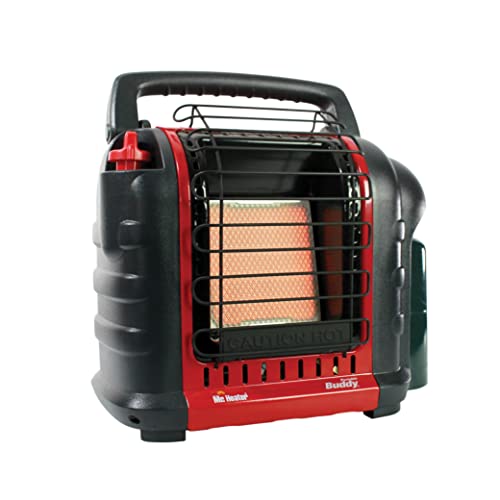
Type: Portable radiant propane heater suitable for indoor-safe use in conditioned spaces like garages, campers, and workshops. BTU Output: Adjustable 4,000 to 9,000 BTU.
This unit uses infrared/radiant heat to warm objects and people directly rather than heating all air in a room. It features a Piezo igniter so no batteries are required and includes enhanced tip-over safety. The heater is intended for spaces up to about 225 square feet, making it a compact floor or tabletop option for spot heating. The construction includes a carry handle and metal housing for portability. Safety interlocks are designed to interrupt gas flow in unsafe orientations.
Mr. Heater 4000 To 18000 BTU Portable LP Gas Heater
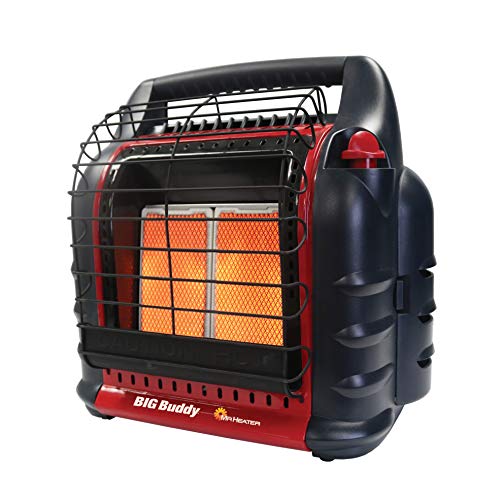
Type: Variable-output portable propane heater designed for indoor and outdoor use with optional dual tank connection. BTU Settings: 4,000, 9,000, or 18,000 BTU.
Call 888-896-7031 for Free Local HVAC Quotes – Compare and Save Today!
This unit provides flexible output levels for different heating needs and can be used on the floor, porch, or in an open workshop. It supports larger propane tanks (up to 40 lbs) when using an additional hose and filter, enabling extended run times without frequent tank changes. The heater uses a piezo ignition and includes automatic shutoff for tip-over events. Its single-knob control simplifies switching between settings, and the higher 18,000 BTU setting increases coverage to roughly 450 square feet in ideal conditions.
Thermo Tiki Deluxe Propane Outdoor Patio Heater

Type: Floor-standing pyramid-style outdoor patio heater with dancing flame column. BTU Output: Rated around 38,000 BTU true output.
Designed for outdoor floor use, this heater uses a ceramic-glass heating column to create a visible flame and radiant warmth across a wide area. It is engineered with commercial-grade materials and weather-resistant finishes for exterior durability. Built-in safety features include a tilt shutoff and protective mesh around the heating column. The Thermo Tiki is optimized for open-air patios and decks and provides a large heated radius (commonly up to a 15′ diameter) suitable for groups or open seating arrangements.
Dyna-Glo IR12PMDG-1 12,000 BTU Infrared Vent Free

Type: Infrared vent-free wall heater capable of effectively warming floors and furniture by radiant transfer. BTU Output: 6,000–12,000 BTU.
Call 888-896-7031 for Free Local HVAC Quotes – Compare and Save Today!
This Dyna-Glo model radiates heat to surfaces first, which makes it effective for quickly warming floors and occupants in the space. It is a vent-free design, meaning combustion products are managed by the room air and units often include safety features required by vent-free installations. The variable heat output allows for staging power to match room size, with a typical coverage of up to 300 square feet. Note: local code and ventilation requirements may affect installation and suitability for living spaces.
Dyna-Glo 30,000 BTU Blue Flame Vent Free Wall Heater

Type: Blue-flame vent-free unit that convects heat to warm room air, effective for larger spaces when placed to serve floor areas. BTU Output: 24,000–30,000 BTU.
Blue-flame technology convects warmed air throughout a room in a manner similar to central heating, which can raise floor temperatures across large spaces. This model’s higher output is intended for rooms up to about 1,000 square feet depending on insulation and ceiling height. As a vent-free installation, it requires attention to local codes, clearances, and oxygen depletion or other safety shutoffs. It is designed to be wall-mounted but functions to heat the floor area below and throughout the room.
Buying Guide: Choosing The Right Propane Floor Heater
Selecting a propane floor heater requires assessing space, safety, installation, and operation factors. Below are key considerations to compare models and make an informed purchase.
1. Heater Type And Heat Delivery
- Radiant/Infrared Heaters: Directly heat people and objects. Good for spot heating and outdoor use; effective on cool floors because they warm surfaces first.
- Convection/Blue-Flame Heaters: Heat air to raise overall room temperature. Better for continuous whole-room warmth and for evenly warming floor space over time.
- Floor-Standing Patio Heaters: High-output outdoor units that provide wide-area radiant warmth; not typically intended for indoor living spaces.
2. BTU Output And Coverage
Match BTU output to room size and insulation. Lower BTU portable units (4,000–9,000) are ideal for small enclosed spaces or spot heating. Mid-range units (10,000–18,000) suit garages and workshops. High-output heaters (24,000–38,000+) are used for larger or outdoor areas. Consider ceiling height, insulation, and drafts when estimating coverage.
3. Indoor Safety Features
- Tip-Over Switch: Shuts off gas if a portable unit falls—critical for floor-mounted portable heaters.
- Oxygen Depletion Sensor (ODS): Required on many indoor vent-free units to shut off gas if oxygen levels drop.
- Overheat Protection: Prevents operation if components exceed safe temperatures.
4. Venting, Installation, And Local Codes
Vent-free units rely on room air for combustion; check local building codes and manufacturer installation requirements. Wall-mounted vent-free models may require specific clearances from the floor and surrounding materials. Outdoor floor-standing units must be used only outdoors where combustion air is plentiful and manufacturer clearance rules are met.
5. Fuel Connection And Runtime
Consider tank size and whether the unit supports larger tanks or dual-tank connections for longer run times. Portable units with piezo ignition are convenient; battery-powered electronic ignition systems offer reliable starts for some vent-free models.
6. Durability And Environment
For outdoor floor heaters, weather-resistant finishes and rust-resistant materials matter for longevity. Indoor units should have finishes appropriate for indoor air quality and easy-to-clean surfaces.
7. Mobility And Placement
Portable floor heaters should be stable on the floor, include handles or wheels for movement, and have secure hose/tank connections if using larger tanks. Floor-standing patio heaters require stable bases and consideration of wind and tipping risk.
8. Maintenance And Servicing
Look for heaters with accessible burner components for cleaning and recommended professional servicing intervals for vent-free combustion units. Follow manufacturer guidelines for replacement parts and inspections.
Comparison Perspectives
- Small Indoor Spaces: Portable radiant units (like the Portable Buddy) offer efficient spot warming with essential safety interlocks.
- Large Garages/Workshops: Mid-range portable units with higher BTU settings or convertible hookups provide broader coverage and longer run times.
- Outdoor Entertaining: Floor-standing patio heaters such as pyramid-style models deliver broad radiant heat and aesthetic flame effects suitable for open patios.
- Whole-Room Heating: Vent-free blue-flame or infrared wall units deliver room-level warmth, but must be validated against local vent-free codes and ventilation needs.
When evaluating models, balance heating method, safety features, and intended location. Always follow manufacturer installation instructions and local regulations to ensure safe, effective use of propane floor heating equipment.
Tips for Getting the Best HVAC Prices
- Prioritize Quality Over Cost
The most critical factor in any HVAC project is the quality of the installation. Don’t compromise on contractor expertise just to save money. - Check for Rebates
Always research current rebates and incentives — they can significantly reduce your overall cost. - Compare Multiple Quotes
Request at least three estimates before making your choice. You can click here to get three free quotes from local professionals. These quotes include available rebates and tax credits and automatically exclude unqualified contractors. - Negotiate Smartly
Once you've chosen a contractor, use the proven strategies from our guide — How Homeowners Can Negotiate with HVAC Dealers — to get the best possible final price.